
Saturday, November 14, 2015


Thursday, November 12, 2015
More Holiday Fare

 Hubby and I plan to spend Thanksgiving with friends rather than relatives this year. By now, I'm so accustomed to a family holiday dinner that's akin to pro tag-team wrestling, I barely remember how one eats in a relaxed and civilized setting. This time, I won't sit down while beaming mental death threats to the Tactless Relative and silently pleading with the Always-Leaves-the-Table-in-a-Huff Relative. During the meal, I won't keep a foot cocked for delivering an under-the-table kick to my husband, who inevitably brings up the one topic I specifically warned him against, or take part in the traditional political discussion that degenerates into yelps and yells.
Instead of a fateful family dinner destined to burn itself into our memories, perhaps this Thanksgiving can include a discussion of memory, probability and destiny, and free will and fate––and the books that deal with these topics.
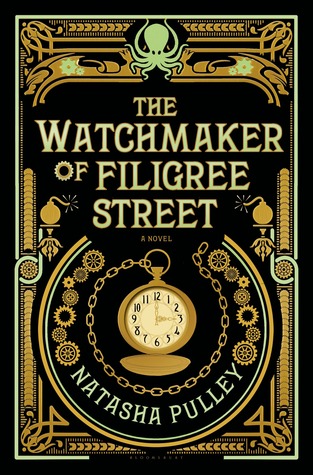 One example is Natasha Pulley's intricate first novel, The Watchmaker of Filigree Street (Bloomsbury USA, July 2015). We tag along with Nathaniel Steepleton, a Home Office telegraph clerk in 1883 London. We take side excursions to Japan during the Meiji Restoration and Oxford, where we meet young physicist Grace Carrow, chafing under the restrictions society and family place on her research into the propagation of wave-based light, and her suave friend, Akira Matsumoto, who is related to the Japanese emperor.
These people are all linked through Keita Mori, a London watchmaker originally from Japan, whose talents involving time go far beyond his abilities to make enchanting clockwork devices. (I would kill to own Mori's little clockwork octopus pet, Katsu.) One of Mori's products, an exquisite pocket watch, mysteriously appears in Thaniel's room and enables him to escape a Fenian bombing without injury. Is Keita behind the bombing? And, in general, is Keita a good or bad guy, and what does it mean to become close to him? Like clockwork, Thaniel and Grace maneuver to answer these questions––and others about the nature of loneliness, love, and loyalty––in a hybrid of mystery/steampunk/speculative fiction. The atmospheric setting includes Victorian methods of detection, the struggle for women's suffrage, Gilbert and Sullivan music, and the experiences of Japanese immigrants in London. The puzzles of The Watchmaker of Filigree Street's characters and plot reveal themselves slowly, but, for the reader who is willing to wait, what you'll discover is a charming and thought-provoking read.

Tuesday, November 10, 2015
Holiday Fare
 |
| Dakotaraptor illustration by Emily Willoughby |
One of the joys of bringing up my son was getting turned on to dinosaurs when he was obsessed with them in elementary school. I'm thrilled when a new dinosaur is discovered, such as the huge raptor whose 66-million-year-old remains were found recently in South Dakota. Dakotaraptor steini was 16 feet long, winged and feathered, but couldn't fly. This inability probably wasn't much consolation to its prey, however, because it could run and leap like the dickens, and its front and rear limbs sported what paleontologist Robert DePalma calls "essentially grappling hooks" for slicing and dicing flesh. Whoa. Think about how challenging appendages like that would make shaking hands, changing the sheets, blowing your nose, and using a keyboard. I admit they would come in handy for making fruit salad and slicing bread into cubes for Thanksgiving stuffing.  Thanksgiving is November 26th. While you're preparing for the holiday, don't forget something to read. Over the next few days, I'll tell you about some books you might want to consider. If you're traveling, you'll need a book for the trip; if you're staying put and playing host, you'll need one for that moment when––after spending hours scrubbing and tidying––you come to your senses and remember your guests want to share the festivities rather than conduct a germaphobic's field test of your premises. Don't think about your cleanliness-obsessed mom or your anal-retentive Uncle Mortimer, and ditch the dust cloth, pour yourself a glass of wine, and curl up with a book. Then, at the end of the Big Day, whether you've played host or guest, you'll also need a book to occupy your mind before you fall asleep. After all, you don't want to just lie there wondering if you'll be able to get your jeans zipped up in the morning, do you?
  We'll begin with an ingenious cat-and-mouse game––among a bunch of hit men hunting their targets and each other. The hero of Chris Holm's riveting The Killing Kind (Mulholland Books, September 2015) is Michael Hendricks, who adores his girlfriend and couldn't stand to see an animal suffer. This sweetie pie joined the US Army and became a super-duper special ops soldier. When his unit was destroyed in Afghanistan, Hendricks was assumed dead. He sneaked back to the United States, but he felt too contaminated by violence to even let his grieving girlfriend know he's still alive. Now Hendricks lives off the grid and tries "to make things right, one murder at a time."
This means Hendricks calls a crime syndicate's targets for assassination––if he deems them morally worth saving––and offers to protect them for 10 times what their assigned hit man would make. Of course, Hendricks doesn't know what the pro killer looks like or exactly when the murder is scheduled to happen, so Hendricks usually must wait until the hit is attempted to take out the hitter. Eventually the syndicate bosses discover what's going on, and Hendricks himself becomes prey.
Holm's intelligent writing is perfect for this plot. It makes for an action thriller that's neither boringly shallow nor mind-numbingly convoluted. The Killing Kind has its gory moments, but it's not a senseless blood bath. The point of view skips around among various well-drawn and entertaining characters, allowing us to get to know each one and adding to the suspense. I cared whether Hendricks lived or died, right up to the cinematic ending. Please, somebody, make this into a movie.

Friday, November 6, 2015
Review of Heda Margolius Kovály's Innocence: Or, Murder on Steep Street
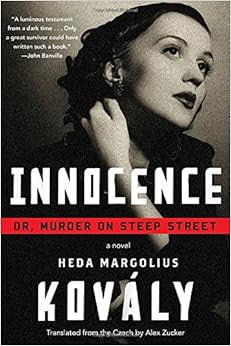
 Innocence: Or, Murder on Steep Street, by Heda Margolius Kovály (Soho Crime, June 2, 2015)
After World War II, Czechoslovakia had a brief period of democracy until 1948, when it fell to a Communist coup and became a satellite of the USSR. Like so many European Communist states during the Stalin era, party apparatchiks could suddenly find themselves accused of imaginary crimes against the state and lose their positions or even their lives. State Security officials and their informants monitored and reported on activities of ordinary citizens, so that one never knew if co-workers, friends or even family members could be trusted not to be informers.
That’s the background of Heda Margolius Kovály's Innocence, Or Murder on Steep Street. Helena Novákova's world is turned upside down when she loses her job at a publishing house and her husband is arrested and imprisoned as a spy. He isn't, but truth isn't a priority in the paranoid security state.
 |
| Fruit and vegetable store in 1950s Prague |
At the same time that we read about the dual lives of the various Horizon staff members, another thread is Helena's attempts to find help for her husband. These two threads come together in an unexpected way. It's intriguing, but the wrap-up is murky and strays past enigmatic to confusing. In a few other places the writing lacks clarity. Overall, though, I still found it a very readable and atmospheric story.
 |
| credit: Marie Šechtlová |
Knowing Kovály's own story isn't necessary to appreciate this stark story of pervasive falsity and fear, but I think it does add something when you know how close this was to home for her. She and her first husband were Holocaust survivors who made it home to Prague, where her husband became an enthusiastic Communist. He was caught up in the infamous Slánský show trials and was executed. When you know that, Helena's thoughts and actions are especially moving.
Notes: I received a free advance review copy of the book. Versions of this review may appear on Amazon, BookLikes and other reviewing sites under my usernames there.
Friday, October 30, 2015
Do androids dream of electric detectives?
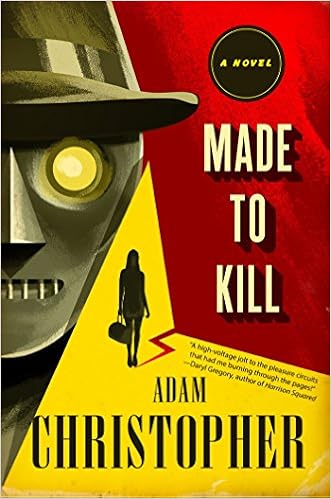 Made to Kill, by Adam Christopher (L.A. Trilogy, Book 1; Tor Books, November 3, 2015)
In this alternative version of 1965 Los Angeles, the great experiment of doing menial jobs with "machine men" is over. Raymond Electromatic, a whole new model of machine man, rolled off the line just when the government shut down the experiment and all its products. Now Raymond is the world's last––and only––robot.
Raymond and his wisecracking computer partner, Ada, are the creations of scientist Dr.Thornton, who sets up Ada as the back-office brains and Raymond as the front-office muscle in the Electromatic Detective Agency. Once Thornton has passed on, their prime directive is to make money. Ada has figured out that murder for hire is a lot more lucrative than private detection, so now Ray's real job is hit-robot.
But here's the thing. Even though Ray was top of the line for his time, that doesn't mean he and Ada are all that advanced in some ways. When I say Ada is the back-office brains, I mean her hardware takes up nearly all the space in the back office. Ray's hard-wired with lots of fundamental knowledge, but his short-term memory runs on a tape that he has to give back to Ada every night for her to add to her racks of day-memory tapes. He starts each day with a clean tape and no memory of what he did the day before.

Ray's a bit of a movie buff, so he's interested in a case that takes him into Hollywood. What he didn't bargain for is finding a weird sort of cult among the movie world's upper crust. This group seems to be planning something really big; something involving Russians. And even though this is an alternative 1965, Russians are just as ominous as they were in our 1965.
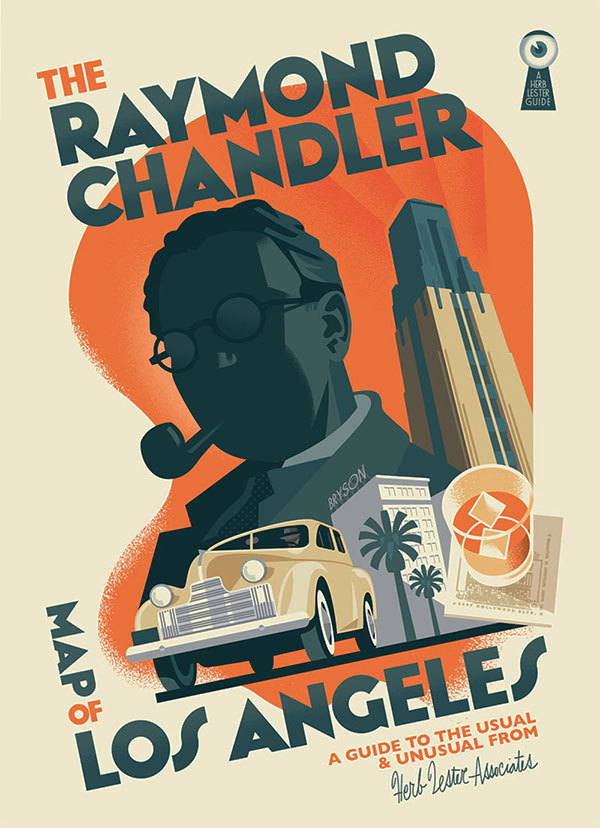 Adam Christopher's goal here seems to be to write a Raymond Chandler novel with a robot protagonist. (I doubt it's coincidence that the robot protagonist and Chandler have the same first name.) And he does it fairly well. The hardboiled dialog is there, and Ray's deadpan wit makes him a believable mechanical Marlowe.
Compared to Chandler, though, this is more lightweight fare, a quick, fun read. And it's best to treat it that way and not think too much about the fact that most of the time there's not a compelling reason in the way the story is presented to have Ray be a robot at all. Or that there are way too many sentences including the words "I frowned on the inside" or someone "made a sound like" a cement mixer, a beehive, steam engine brakes, a cat pawing at a mouse inside an air vent, two rocks going for a joyride in a clothes washer, a garbage truck grinding its gears, a sewing machine on overdrive, a clutch slipping and at least a couple of dozen other things. I also would have liked to see more development of the alternative world of 1965, other than just a couple of tantalizing glimpses.
Still, I had fun reading the story, despite its significant drawbacks. The tone is funny with an edge, I grew fond of Ray and the time zipped by as I read. One other thing I should mention; though this is billed as the first in a trilogy, it stands on its own, so there is none of that cliffhanger stuff that makes me want to throw a book against the wall.
Note: I received a free advance review copy of the book. Versions of this review may appear on Amazon, BookLikes and other reviewing sites under my usernames there.
Friday, October 23, 2015
Review of Ian Caldwell's The Fifth Gospel
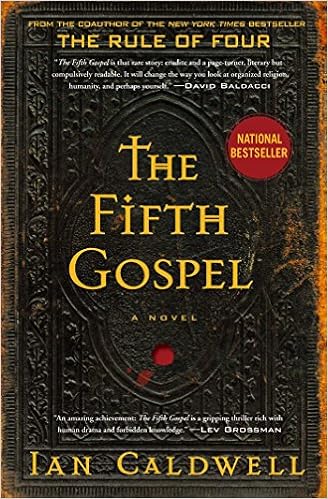 The Fifth Gospel, by Ian Caldwell (Simon & Schuster, March 3, 2015)
Father Alex Andreou is a Greek Catholic priest, which means that he is a subject of the Roman Catholic pope, but otherwise follows the traditions of the Greek Orthodox Church. As a Greek Catholic priest, he was allowed to enter the priesthood as a married man.
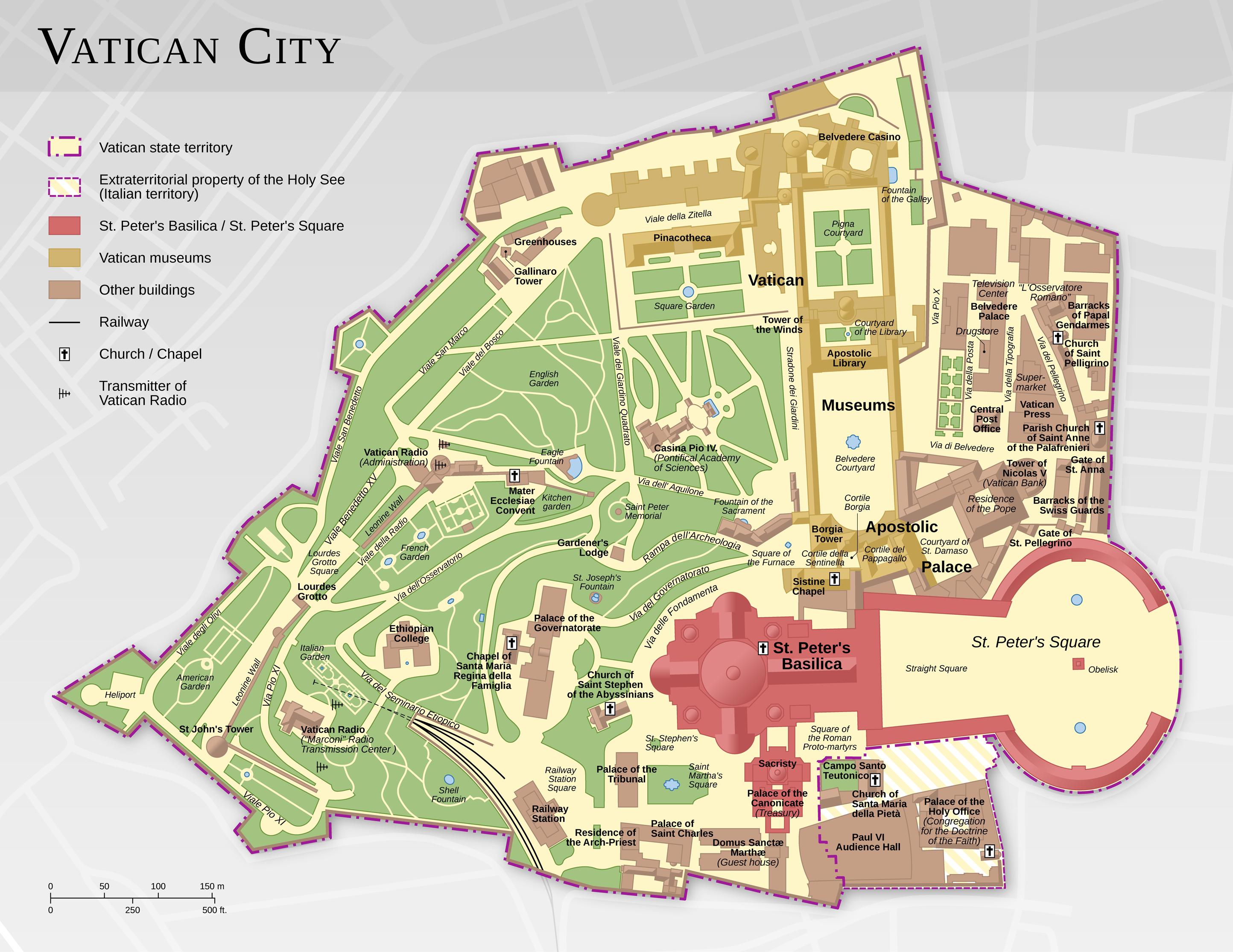
The priesthood is Alex’s family business and the Vatican is his world. His father was the seventh in a generational line of Greek Catholic priests. Alex lives in his childhood apartment in Vatican City, along with his five-year-old son, Peter. Alex’s wife, Mona, suffered a breakdown from postpartum depression not long after Peter’s birth and left her family.
Alex’s adored older brother, Simon, is a charismatic Roman Catholic priest who is a Vatican diplomat. Like his father and then Pope John Paul, his passionate ambition is to heal the centuries-long schism between the Roman Catholic and Greek Orthodox churches. At the time this novel is set, the Pope is crippled with Parkinson’s disease and nearing his death, but still absorbed with this goal of rejoining the sects.
 |
| A Greek Catholic priest and his family |
Ugo is an old friend of Simon’s whom Alex was tutoring in Gospel theology to help Ugo with an exhibit at the Vatican about the Shroud of Turin. Years earlier, the Shroud had been claimed by scientists to be carbon-dated as being from medieval times and could not have been the burial shroud of Jesus. Ugo promises his exhibit will shatter what the world thought it knew about the Shroud. As if the murder isn’t enough of a shock, Alex and Simon return to Alex’s apartment to find that someone has come into the apartment and rifled Alex’s belongings, while Peter and his caretaker cowered in the bedroom closet.
With Simon reluctant to fill Alex in on what might have been behind these two crimes, Alex begins his own investigation, calling on the many old friends and acquaintances who work at the Vatican as Swiss Guards, drivers and clerics. But the real solution may be the subject of Nogara’s exhibit and, for that, Alex’s expertise in the history of the Gospels is critical.
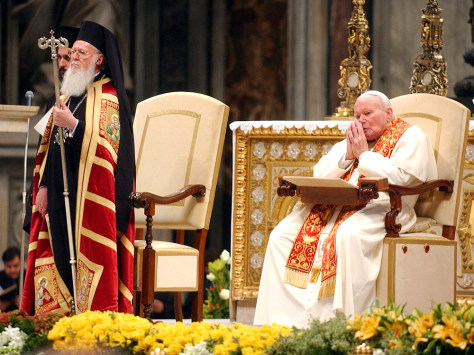 |
| Pope John Paul returns religious relics stolen in the Crusades to Orthodox Patriarch Bartholomew |
 |
| credit: Interview magazine |
A note about the audiobook: The narrator is Jack Davenport. If you watched the NBC series Smash, he played the libidinous English director. He has a voice like Irish Coffee and, to be honest, he could read me an insurance contract and I’d keep listening.
Friday, October 9, 2015
Review of Sascha Arango's The Truth and Other Lies
 The Truth and Other Lies, by Sascha Arango (Atria Books, June 23, 2015)
Henry Hayden is one of those very successful writers who pumps out one best-selling thriller after another. His success saved the publishing house that discovered his first manuscript, he's charming to the fans who seek him out in the coastal village where he lives with his quiet wife, Martha, and he is modest and generous. Now, which of these things isn't true? As we find out right off the bat, it isn't Henry who is the writer, but Martha––though not a soul besides the couple knows that.
When Betty, Henry's editor and mistress tells him she's pregnant, Henry's carefully-arranged life threatens to unravel. Henry's quick fix goes awry and he has to engage in more and more complex schemes to avoid exposure of his current misdeeds––and the revelation of his past by an old acquaintance who promises to turn into a nemesis.
You might have figured out by now that Henry is a sociopath and this is one of those books (like Patricia Highsmith's Tom Ripley novels, for example) that invites us to identify with the amoral lead character. It was hard to do that at first; Henry is just too cold. But as we learn more about Henry, a bit of a thaw comes. Even if it's only admiration of Henry's skill at constructing complex schemes to wriggle out of trouble.
 |
| illustration from The New York Times |
There isn't much sense of place; in fact, I couldn't tell you where this is supposed to be set, other than that it's a coastal town and it's somewhere in Europe. I would also say that it's not nearly as skilled in roping the reader into "sympathy for the devil" as Phil Hogan’s A Pleasure and a Calling (one of my favorite reads of last year), but it's a quick and entertaining read.
Note: I received a free advance review copy of the book. Versions of this review may appear on Amazon, BookLikes and other reviewing sites under my usernames there.
Subscribe to:
Posts (Atom)