Showing posts with label Bond James. Show all posts

Friday, October 18, 2013

Review of William Boyd's Solo

Solo by William Boyd

In a New York Times book review of William Boyd's James Bond novel, Solo, Olen Steinhauer (one of my favorite modern espionage writers) writes that "[Ian] Fleming’s Bond was only rarely a fully fleshed character. More often, he was a catalog of likes and dislikes, and it’s this very hollowness that has allowed later generations to imbue him with their own sensibilities." I think Steinhauer has it exactly right. Bond has continued for 60 years now, in books and movies, and each generation enjoys a different Bond; one suitable for that age's zeitgeist.

Though Boyd sets Solo in 1969, when Bond is a 45-year-old agent, the book reflects both present-day concerns and the weary cynicism we now have about governments and their minions. After Bond celebrates his forty-fifth birthday on his own, drinking champagne and martinis in the Dorchester Hotel restaurant, his boss, M, gives him a new mission. Disguised as a journalist for the French international agency Agence Presse Libre, James is to head for the African nation of Zanzarim, currently in a nearly stalemated civil war.


The war began when oil was discovered in the southern part of the country, and the country's two dominant tribes go to war, with the south attempting to split off into a new nation, called Dahum. The Zanzarim forces from the north are much better equipped, but the scrappy southerners have been holding them at bay for two years––though at the cost of a famine that has left nearly all of Dahum, except its capital city, graveyards and waiting rooms for death. This could all be present-day Africa, unfortunately; not much has changed in the last few decades. The reader recognizes the scenario immediately.
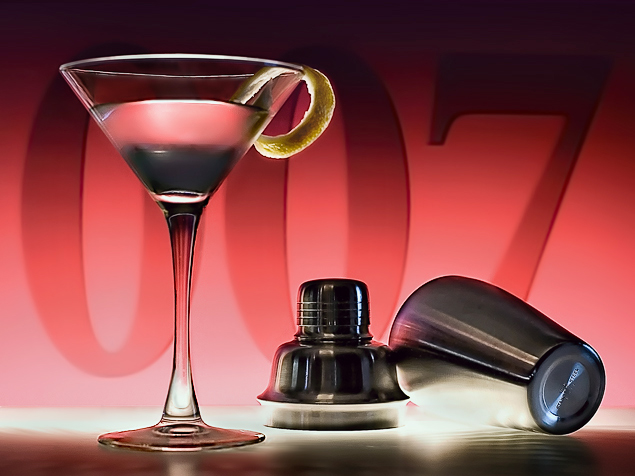
Anyone familiar with the Bond books and movies will recognize a great deal more than the African scenario. Martinis? Check. Gadgetry? Check (though this book is not remotely the Q playground that some other stories have been.) Beautiful women? Check. Being around Bond too much becomes dangerous to one's health? Check. Relentless and creepy villain? Check. Evocative and unforgettable character names? Check.

Bond's assignment is to make the leader of the Dahumian forces, Brigadier Solomon Adeka, "less effective"––a classic intelligence-game euphemism. Of course, there are plenty of zigs and zags along the way, and many memorable characters. Bond's intelligence contact in Zanzarim, the beautiful half-Zanzari/half-Scottish Blessing Ogilvie-Grant; dangerous Rhodesian mercenary Jakobus Breed, whose previous battle injuries have given him a permanently open and deceptively weeping left eye; local helpers with the monikers Christmas and Sunday; and Bond's "fellow" journalists, including one bloated, misogynist sot from the Daily Mail named Geoffrey Letham and a London stringer named Digby Breadalbane (doesn't that sound like a J. K. Rowling name?) who is grateful for Bond's treating him to beer and cigarets.

When Bond's mission is over, he can't shake the desire to get personal vengeance on those who betrayed him in Zanzarim. That quest takes him to Washington, D. C. The U.S. setting allows Boyd to make a few tart observations about how easy it is for Bond to obtain some pretty serious firepower, and how Americans don't have a clue how to make coffee. (A refreshing change from the usual British complaints that Americans don't make tea according to their strict rituals.)

William Boyd's choice of Africa for his setting was a good one. This is almost home ground for him, since he was born in Ghana himself, in 1952, and was a teenager when Biafra, in southern Nigeria, attempted to secede, triggering a bitter three-year war and blockade, which caused horrific famine in Biafra. And, of course, there have been all too many incidents of war, tribal violence and related mass starvation in Africa since then.


As espionage thrillers go, this is on the more thoughtful end of the spectrum. You'll find action scenes, sure, but this isn't an action-fest and there are no catalog-worthy verbal sketches of elaborate spy gear. It being a Bond novel, we do have descriptions of cars and guns, but not in the near-pornographic detail you see in some of the Bond movies.
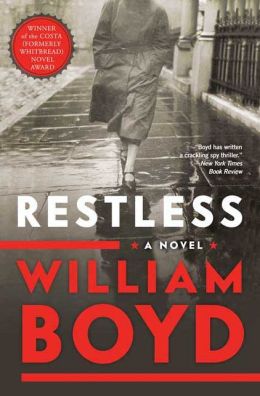
Boyd is much more interested in the life of an intelligence agent; what it does to the psyche to have a life of lies and to know that anyone who gets close may pay a heavy price. The Bond of Solo would fit right in if he were dropped down in Boyd's previous books, Restless or Waiting for Sunrise. A perennial issue in Boyd's books is the nature of identity, and though that's not a dominant theme in this book, it is present––which seems only right for James Bond.

Boyd is also a better writer than Ian Fleming. There is a bit of a clunker scene of lengthy exposition toward the end of the book, but there are moments of real beauty in Boyd's prose, and he brings introspection and complexity to his Bond. Boyd's Bond is a fallible man, and far from invincible. If you're looking for a thoughtful, somewhat melancholy spy thriller, Solo is a good choice.

Note: Versions of this review may appear on Amazon, Goodreads, BookLikes and other reviewing sites under my usernames there.

Friday, April 27, 2012

Happy Hour

Some detectives are devotés of ale and beer, like Colin Dexter's Inspector Morse, Reginald Hill's Andy Dalziel and Rex Stout's Nero Wolfe. Others, like Lord Peter Wimsey, are wine experts. The whisky-drinking PI is a cliché of the hardboiled subgenre. The troubled alcoholic detective, like Lawrence Block's Matt Scudder, Ian Rankin's John Rebus and Jo Nesbø's Harry Hole, has become commonplace.

But what about a detective who just enjoys a good cocktail––and who might give us some tips?

Nick and Nora Charles

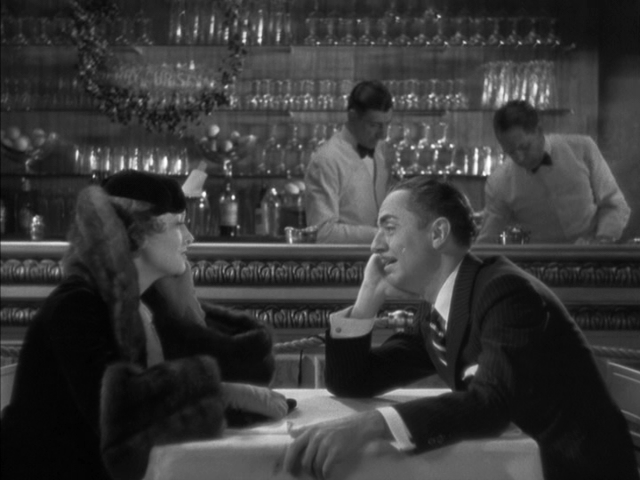
I have to start my quest with Dashiell Hammett's Nick and Nora Charles. No characters in detective fiction are better known for drinking cocktails. In the film of The Thin Man, Martinis and Rye Highballs seem to be their tipples of choice. The Charleses have a glass in hand even more in the book than in the movie, but Hammett has the frustrating habit of referring to "a drink" or "a cocktail" rather than enlightening us, mixology-wise.

We do get the occasional tantalizing references to Scotch and a soda siphon and, elsewhere, to a cocktail shaker, but that's about it. It appears we'll have to look for inspiration elsewhere.

James Bond

On screen, James Bond is legendary for his shaken-not-stirred Martinis. In Ian Fleming's books, he does drink a lot of Martinis; oddly, sometimes with gin, sometimes with vodka. I don't know anybody in real life who goes from one kind to the other. You're either a real Martini drinker––in which case you make it with gin (80-proof, not 90-proof jet fuel)––or you have a fear of flavor, in which case you make it with vodka.

But here's where it gets truly strange. One drink that Agent 007 orders in Casino Royale is a complete invention, made with gin and vodka. Today, we call it the Vesper:

Vesper Martini

3 ounces Gordon's Gin
1 ounce vodka
1/2 ounce Kina Lillet


Shake well with ice, strain into a deep champagne goblet and garnish with lemon peel.

Don't get the idea that Ian Fleming's James Bond is just a Martini man, though. He knows his way around every shelf behind the cocktail bar. Bond enjoys his Bourbon and Scotch, and even indulges in mixed drinks that verge on the girly side, like the Old Fashioned and the Stinger. I like to indulge in classic cocktails like the Old Fashioned myself, and a Stinger hits the spot every now and then. Maybe you'd enjoy one.

Stinger

1-3/4 ounces brandy
3/4 ounce white creme de menthe

Pour ingredients into an Old Fashioned glass with crushed ice and stir, or shake ingredients with ice and strain into a cocktail glass.

Phryne Fisher

Kerry Greenwood's Phryne Fisher is a 1920s femme fatale and a private investigator in Melbourne, Australia. It wouldn't be quite proper for even a convention-breaker like Phryne to hang around cocktail bars. Fortunately, she doesn't have to. She has a liquor cabinet at home that would rival any cocktail bar's and, more important, she has that supreme mixologist, Mr. Butler, on hand 24 hours a day.

Like most modern authors, Kerry Greenwood is media savvy and has created a website for Phryne. She also knows what's important in life and has an entire section of the site devoted to Mr. Butler's concoctions. Some of these are classics, like the Old Fashioned, the Sidecar and the Martini. For parties, Mr. Butler likes to serve Champagne Punch or Sherry Cobbler.

When mixing cocktails for empty-headed blondes, he prescribes a Fallen Angel, made with gin, lemon juice, creme de menthe and a dash of bitters; or a Maiden's Prayer, made with gin, Cointreau and orange juice. For the more discerning drinker, Mr. Butler suggests the Negroni.

Negroni

1 ounce gin
1 ounce sweet vermouth
1 ounce Campari

Pour ingredients into a tumbler filled with ice, add sparkling water and stir gently.

Despite his expertise with a cocktail shaker, Mr. Butler never touches mixed drinks. He prefers a good aged port.


Philip Marlowe

The Gimlet, a shimmering, mesmerizingly pale-green libation, is said––according to one dubious-sounding legend––to have been created by a surgeon in the British Navy named Gimlette. The drink is a mixture of gin and lime juice, which would presumably have been handy for battling scurvy. It probably didn't help so much for scrambling up the rigging, though. Anyway, skip forward in time and head west to the U.S., where Raymond Chandler made the Gimlet a favorite of his detective, Philip Marlowe.

In The Long Goodbye, Marlowe declared that a real Gimlet is half gin and half Rose's Lime Juice. I'm shaking my head at that one. I can't figure out how a tough guy like Marlowe could drink something as godawful sweet as that. Maybe he needed that much sweetened lime juice to overpower the taste of bathtub gin?

We are lucky enough these days to have excellent gin available to us, with flavorful botanicals. I like to let the gin shine by using this recipe:

Gimlet

3 ounces gin (Back River Gin if it's available to you)
1/2 ounce fresh lime juice
1/2 ounce Rose's Lime Juice

Shake with ice and strain into a chilled Martini glass. Garnish with a lime wedge.


Bonus

I'll leave you with a recipe for my husband's favorite Martini, a smooth and golden beauty, and a reminder that no matter what time it is as you read this, it's five o'clock somewhere!

The Perfect Cocktail

1-1/2 ounces gin
1-1/2 teaspoon sweet vermouth
1-1/2 teaspoon dry vermouth
dash of bitters

Shake with ice and strain into a chilled Martini glass.