Showing posts with label Wolfe Nero. Show all posts

Monday, March 25, 2013

International Waffle Day

Yes, folks, March 25th is International Waffle Day. Observing this holiday means eating waffles for breakfast or waffling about decisions or issues. Or reading books in which characters do these things.
Andrew Pyper: Lost Girls (2000). An astonishingly fun and thought-provoking read narrated by a cynical, cocaine-snorting, and Keats-spouting Bartholomew Crane of Toronto's criminal law firm Lyle, Gederow & Associate (better known as "Lie, Get 'Em Off & Associate"). Teacher Thom Tripp is accused of murdering two teenage girls, whose bodies haven't been found, and Crane travels to the decrepit North Country town of Murdoch to take on his defense. There, Crane's usual disregard of the truth and own little-remembered past get a workout as he investigates his client's bizarre story of the girls' disappearance at Lake St. Christopher.

This literary legal mystery/psychological suspense/thriller is Canadian lawyer Pyper's debut novel. It has a nice touch of the frightening supernatural and an entertainingly acerbic lawyer/sleuth. Lost Girls was a New York Times Notable Book and won the 2000 Edgar and Arthur Ellis Awards for Best First Novel.

Peter Guttridge: City of Dreadful Night (2010). Whether you'll enjoy this complex and compelling book, the first in Guttridge's Brighton series, all depends. Can you handle a plot's coincidence and the ambiguity of a tale left dangling at the end? If you can, and you like gritty British police procedurals set in the present, but that take a look at an unsolved real-life crime in the past, this may be something for you.

An armed police raid at a house in Brighton and Hove, a seaside resort in East Sussex, England, goes wrong, and four people are killed. Chief Constable Robert Watts is forced to resign, and his marriage ends when his affair with DS Sarah Gilchrist, who participated in the raid, becomes known. Despite his superiors' warnings to back off, Watts digs into the web of political and criminal relationships behind the botched raid and the deaths in its aftermath. Meanwhile, a diary related to an unclosed 1934 case, in which parts of a woman's body were discovered in trunks left at Brighton railroad stations, surfaces and may involve Watts's father, a former cop, and the father of Watts's old friend and government fixer, William Simpson. Helping Watts investigate are DS Gilchrist; a young reporter named Kate Simpson, who is William Simpson's daughter; and James Tingley, Watts's old MI5 friend. I'm looking forward to seeing these characters again in the next series book, 2011's The Last King of Brighton.
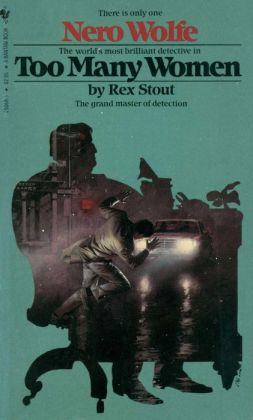
Rex Stout: Too Many Women (1947). Private eye extraordinaire Nero Wolfe considers Archie Goodwin an expert on young women. So when the president of Naylor-Kerr, Inc. asks Wolfe to investigate rumors about Wally Moore's hit-and-run death that are distracting his employees, Wolfe sends Archie to work undercover as an efficiency expert in the engineering firm's warehouse, which is full of beautiful young women. Although Archie goes through these obstructive women like a dolphin goes through waves, Wolfe doesn't decide to close the investigation before several more people die. It's an enjoyable mystery, as well as an interesting look at women in the post-WWII workforce.

Stout's Nero Wolfe books form an utterly charming traditional series, a slice of Americana set from its beginning in 1934 with Fer-de-Lance, to its conclusion, A Family Affair, in 1975. (An omnibus of earlier novellas, Death Times Three, was published in 1985.) Its main characters––Nero Wolfe, a gourmet food-, books-, and orchids-loving brainiac of a detective who refuses to leave his Manhattan brownstone on business, and Archie Goodwin, his competent right-hand man of action––are supported by a great cast of regulars who include Wolfe's household help, several New York City cops, a band of self-employed detectives hired by Wolfe, the doctor next door, and Archie's lovely inamorata, Lily Rowan. Stout supposedly published his first drafts, and the writing has a casual elegance and spontaneity that's fun to read.

Philipp Meyer: American Rust (2009). Sister Mary Murderous had no sooner reminded me of this book when I saw Meyer's The Son appear on Publishers Weekly's list of most anticipated books for Spring 2013. I'm not waffling when I say this: American Rust is wonderful.

It's set in the same economically devastated Pennsylvania country as K. C. Constantine's first-rate Mario Balzic series (see Maltese Condor's review of Constantine's The Man Who Liked Slow Tomatoes here). Buell's steel mill is shuttered, and many people have moved away. Isaac English and his older sister, Lee, were the smartest kids in their high school. When Lee goes to Yale, Isaac is left to take care of their disabled father. Now Lee is married and gone for good, and Isaac is desperate to leave Buell for his dream of studying astrophysics in California. Early one morning, Isaac packs his books into a backpack, robs his father's desk of $4,000, and walks to the house of his best friend Billy Poe. Billy is a none-too-smart, hot-tempered ex-high school football star on probation for assault. The two set out on foot. A chance meeting with transients in an abandoned factory where Isaac and Billy take shelter from a snowstorm leaves a man dead and Isaac's dream in pieces.

Meyer has been compared to John Steinbeck, Cormac McCarthy, and William Faulkner. American Rust is about the unraveling of the American Dream. With beautiful prose, Meyer examines the price of loyalty and the constrained choices suffered by the working class. The book's characters––especially Isaac; Billy's self-sacrificing mother Grace, who earns minimum wage sewing wedding dresses for the wealthy and has her own dreams of returning to college; and Grace's lover, the sheriff––are three-dimensional enough to break your heart.
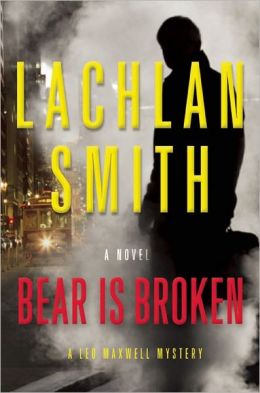
Lachlan Smith: Bear Is Broken (2013, Mysterious Press/Grove). Leo Maxwell has just received notice that he passed the California bar exam. He hopes the days of being called "Monkey Boy" by his 12-years-older brother, Teddy, are now a thing of the past. Teddy hasn't even congratulated Leo when they walk into a San Francisco restaurant to have lunch before closing arguments in one of Teddy's trial cases. Teddy is a highly successful criminal defense attorney, beloved by San Francisco's criminal class, but reviled by its cops and prosecutors, who insist that his success must be based on bribes and perjury. Leo and Teddy are waiting for their order when someone walks up behind Leo, shoots Teddy in the head, and disappears into a waiting car. While Teddy lies in a coma, Leo tries to understand his enigmatic brother, who was responsible for him after their mother died when Leo was 10 years old. Just how much of a rogue is Teddy? Leo now deals with Teddy's ex-wife, investigator, and clients. He also decides he can't trust the cops to adequately pursue the attempted murderer, so he will investigate himself. Leo opens Pandora's box.

Like Canadian writer Andrew Pyper, Lachlan Smith is a lawyer, and following his legal sleuth in the courtroom and in his sleuthing is enlightening as well as entertaining. Bear Is Broken is much less literary than Pyper's Lost Girls, and Leo is much less cynical than Pyper's Barth Crane, but both books involve a young lawyer's coming of age and evoke a tragic past. In this debut novel, Smith writes with unusual clarity and assurance as Leo shuffles a deck of likely suspects and plays a game of Solitaire. Smith slows the denouement a bit with a few too many details, but this by no means spoils the book's worth. I really liked it for its close and compassionate look at the tragic consequences of crime and at a San Francisco attorney who learns about himself and the nature of family loyalties. I'm happy that this is the first book of a proposed series.

On this important day, when we honor waffles and waffling, especially in crime fiction, be sure to get your fill of both. You may need to decline a second serving of breakfast, but there's nothing to stop you from being a glutton in your reading.

Monday, September 3, 2012

Working Our Way Into Fall

Thanks, guys
On the first Monday of September we celebrate Labor Day. It's a federal holiday in the United States, our day to thank American workers. We do this by relaxing our butts off with backyard barbecues or carpools to the park for soccer and baseball. We eat hamburgers and watermelon and drink beer or lemonade. We say so long to summer and gird our loins for the hard jobs of fall. Suffering when our favorite football team loses. Cleaning the rain gutters and stacking wood for the fireplace. Explaining trigonometry to our kids. Finding good books for nights that are becoming long and cold.

Today, I'm not only saluting my fellow American workers, I'm mentioning some of them in crime fiction.

Steve Ulfelder's Purgatory Chasm is a hardboiled paean to working off a debt, whether it's money owed, a verbal promise to a friend or a responsibility to family. The narrator protagonist, Conway Sax, was once a NASCAR driver but his drinking ended that career. At one time he owned his own car repair shop but a prison sentence for manslaughter shuttered it. Conway's out on parole and remodeling an old house he owns in Framingham, Massachusetts. He wants to sell it and use the proceeds to open an automotive garage.

Ten years ago, an Alcoholics Anonymous group called the Barnburners saved Conway's life. He pays them back by doing odd jobs or those that require "muscle." The inner circle of this group have become his friends. When one of them, Tander Phigg Jr. (at least his first name isn't Ripe or Fresh), asks for help, Conway agrees despite feeling that Phigg is one of those people who don't have to be drunk to be assholes. Phigg says he's paid $3500 in advance for the restoration of his 1980 Mercedes-Benz 450SEL 6.9. It's been in Das Motorenwerk for months and the owner is giving him the runaround. Phigg wants it back.

Fall in New England is beautiful
This is easier said than done, even for a tough man like Conway, who employs a tire iron across someone's knees as naturally as he uses it to change a flat. For his trouble, Conway receives a fist-sized lump on his head and finds Phigg dead.

Nobody can criticize Conway for being a quitter. He wants to keep his promise to Phigg, even though Phigg's in no position to complain if he doesn't. Conway also feels pressured to solve the mystery of Phigg's death, because his criminal record leaves him open to suspicion. Conway begins by researching Phigg's past. Unlike Conway, Phigg is the son of a wealthy man, a paper baron who employed the whole town. Like Conway, he had a toxic relationship with his father. Phigg was a man who valued appearances. What lay under that surface? Conway's investigation and personal relationships create a smoothly corkscrewing plot that deals with who owes what to whom and why. Not all of these characters are reasonable people, and watching them work it out is gritty and gratifying entertainment.

I wasn't surprised to learn that author Ulfelder is an amateur race car driver and co-owns a company that makes race cars. His knowledge of cars and carpentry adds authenticity to his unusual and likable blue-collar sleuth. Conway's alcoholism isn't off-putting. This well-crafted book was nominated for a 2012 Edgar for Best First Novel by an American Writer. I'm glad Conway is back in The Whole Lie, published earlier this year by Minotaur.

Nero Wolfe doesn't have Conway's strong work ethic. You won't see Wolfe racing to the mall in his Ford pickup to take advantage of Labor Day sales. This mountain of a private eye is content to stay at home in his Manhattan brown house. And why not? He has thousands of orchids to play with in his rooftop greenhouse, a gifted chef in the kitchen, shelves full of books in his office and a pool table in the basement. Wolfe hates working, but his house and staff gobble money. Part of assistant Archie Goodwin's job is to prod Wolfe to work when the bank balance is low. If a wealthy client doesn't spontaneously walk in, Wolfe designs a strategy to hook one.

That's what happens in The Silent Speaker. Cheney Boone of the Bureau of Price Regulation was escorted to a small room at a meeting of the National Industrial Association so he could prepare his speech. He is later found there, bludgeoned to death. Since the BPR and the NIA like each other as much as cats and dogs, there is a lot of finger pointing, but no evidence to back up accusations. The NIA is losing the public relations battle and decides to hire Wolfe. What comes then is a nifty plot that reflects 1946 business technology and the country's debate about governmental regulation of business. (Will this debate ever end?)

Nobody has ever accused me of a green thumb
The Nero Wolfe series doesn't need to be read in order. The Silent Speaker is one of my favorites because Wolfe pulls a great stunt and Archie is bowled over by a beautiful blonde working girl (the formal rather than the slang definition). I know our Georgette Spelvin thinks Archie is close to the ideal American man, but I must disagree. I'll take Wolfe himself. With a guy like that, there'd be no debate about who needed the car or how much I spent on books. I'd retire from burning supper and watering half-dead plants.

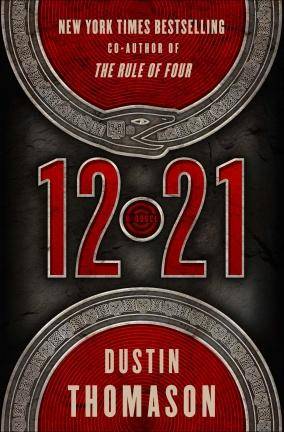
Retirement isn't on the mind of some characters in Dustin Thomason's 12.21. They believe that December 21, 2012 will bring an apocalypse. Serious scholars dispute that interpretation of the end of the 5,000-year-old Mayan calendar's Long Count. One of the foremost Mayan scholars is Chel Manu, a Guatemalan-American epigraphy expert at the Getty Museum and UCLA. It is now December 11, 2012, and Chel is risking her career by safekeeping an extremely rare Mayan codex from A.D. 900. The recently-discovered codex was smuggled illegally into the United States. Chel is over the moon. There are only four other Mayan codices known to exist, and this one might explain the collapse of the Mayan civilization. Chel is surreptitiously deciphering it when she receives a request from East L.A. Presbyterian Hospital. A very sick patient might be speaking Qu'iche, a Guatemalan dialect, and they urgently need her to translate.

Prions are just proteins but are extremely dangerous
Dr. Gabriel Stanton has already been summoned to Presbyterian by a young doctor who suspects this patient's symptoms might indicate a prions-caused disease. Stanton is a workaholic who studies prions, tiny proteins that cause incurable genetic diseases and other incurable diseases, like mad cow from eating contaminated meat. What Stanton discovers at Presbyterian is terrible news, and he and Chel will need to work quickly to stop a global catastrophe.

Author Dustin Thomason wrote the best-selling The Rule of Four, a 2004 literary thriller about the Hypnerotomachia Poliphili, a real Renaissance text, with his good friend Ian Caldwell. After that, Thomason earned an M.D. 12.21, published in August 2012 by The Dial Press, is fast and suspenseful reading, similar to books by fellow physician and science junkie Michael Crichton. Mayan history is fascinating stuff. So is medical research on prions. This is the perfect thriller for counting down the days to the end of 2012. Thanks go to hard-working researchers and the authors who write about them.

I'm joining other enterprising Americans for a last road trip this summer. Our good old-fashioned ingenuity and back-breaking work will have a big payoff when we fire up the grill and pop open those bottles of, uh, German beer. Happy Labor Day, everyone!

Friday, May 11, 2012

Location, location, location

That's what real estate is said to be all about. Some mystery series aren't all about location, but they tend to be inseparable from certain addresses.

221B Baker Street, London

Is there anyone who doesn't know Sherlock Holmes's famous address? When Arthur Conan Doyle wrote the Sherlock Holmes series, street numbers on Baker Street didn't go above 100, but in the 1930s, the street was renumbered and––presto!––a large building occupied by the Abbey Road Building Society received the numbers 219-229. For many years, the company employed a secretary just to answer the large volume of mail they received addressed to Sherlock Holmes at 221B Baker Street. They enthusiastically embraced the Holmes connection and placed a plaque on the front of the building.

But then, a problem arose. In 1990, the Sherlock Holmes Museum, located at 239 Baker Street, got the head of the local Westminster council to put a 221B Baker Street plaque on their building and claimed the right to receive all mail with that address. This sparked a long-running battle among the museum, the building society, the council and the postal service. The struggle finally ended 15 years later, when the building society moved to a new location.

Sherlock Holmes Museum at 221B Baker Street (formerly 239 Baker Street)

Holmes's office is said to be on the first floor at 221B Baker Street. As you probably know, what Americans call the first floor is the ground floor in Britain, while their first floor is what we call the second floor. When Watson and Holmes go looking for a flat to rent (in A Study in Scarlet), they find 221B Baker Street to be "a couple of comfortable bedrooms and a single large airy sitting-room, cheerfully furnished and illuminated by two broad windows."

Blogger Russell Stutler has spent some years figuring out the layout of 221B Baker Street, carefully reading all the stories multiple times. Here is his concept. Note that Mrs. Hudson has a small room off the study and another downstairs, while Watson's room is upstairs.


In Conan Doyle's day, Baker Street was a quiet area of residences for well-to-do Londoners, across from Regent's Park. Today, it's a bustling area, with 221B located just around the corner from the tourist mecca of Madame Tussaud's wax museum.

110A Piccadilly, London

Rumor has it that Dorothy L. Sayers picked 110A for Lord Peter Wimsey's street address in a nod to Sherlock Holmes's 220B. Piccadilly is a good choice for a wealthy second son like Lord Peter. It's home to the Ritz Hotel, Fortnum & Mason and one of my favorite bookstores, Hatchard's. It's described as well-appointed, with a welcoming fire and many, many bookshelves filled with rare editions. Not surprising for a man who is an expert on incunabula (books printed before 1501) and who often has a book auction catalog at hand.

There is no 110A Piccadilly, but there is a 110 and, disappointingly, it's not a house or a block of flats. It's the Park Lane Hotel. More specifically, 110 would be about where the ballroom entrance is. Take a look. It's to the far right in this photo of the hotel.  At least it's across from Green Park, so it would be a nice location if Wimsey did actually live there.

After Lord Peter Wimsey marries Harriet Vane, he and his man, Bunter, say goodbye to Piccadilly and hello to, not Leicester Square, but Audley Square, not far away in Mayfair. The couple move into a place referred to as Belchesters' House, which has a library upstairs with a bookcase that conceals the entrance to a secret room that Harriet adopts as her writing room.

Some contend that the model for the couple's Audley Square house is Number 2, which was a private home built in 1876 and now houses the University Women's Club. That seems an apt location for Sayers and Harriet Vane.  I like to think of Harriet and Peter strolling the one block to one of my favorite places in London, the lush, green and quiet Mount Street Garden.

In Busman's Honeymoon, we learn that Lord Peter buys Harriet a wedding gift of Talboys, a rustic old farmhouse in the village of Paggleham in Hertfordshire where Harriet grew up. They plan to use it as their country home and honeymoon location. When they arrive, they find Talboys not ready for them as arranged. It's locked up tight and it takes some time to gain access. Next morning, they find the chimneys completely blocked––and an even worse find is made in the cellar.

There is no village of Paggleham in Hertfordshire, but there is a Puckeridge that kind of works for me as a place to imagine the Wimseys' country living place.


891 Post Street, [Apartment 401], San Francisco

Dashiell Hammett lived in this building from 1926-1929, and wrote Red Harvest, The Dain Curse and The Maltese Falcon while living there.  Famously, Hammett placed Sam Spade's apartment there in The Maltese Falcon.

891 Post Street.  Apartment 401 is the top apartment on the corner directly facing the camera.

Today, the apartment building has a coin laundry on the ground floor and a parking garage across Post Street. It's on the corner of Post and Hyde, in the Tenderloin. Not the best neighborhood, but the nicer part of the neighborhood, at least, and realtors like to call it Lower Nob Hill. Recently, an apartment was for rent in the building for $1,450 a month. What do you suppose Hammett's rent was for his modest studio apartment?

There is some disagreement, but most seem to think that Hammett––and Spade––lived in Apartment 401, on the northwest corner. The Friends of Libraries USA plague on the outside of the building states it as fact, so let's just go with it. Mystery writer Mark Coggins has a nice story about the apartment here. Here's the illustration on his site of the floor plan.


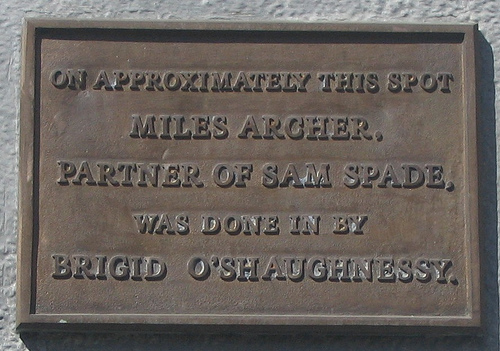
It's not a very inviting spot, but as long as you're in the neighborhood, you might feel compelled to take a stroll over to the alley where Sam Spade's partner, Miles Archer, got plugged. There is even a plaque at the entrance to the alley, just off Bush Street above the Stockton Tunnel. Note that the plaque should have a big **spoiler** mark on it!

A guy named Don Herron has been leading a Hammett tour for 35 years. I'm sorry to say I never heard of it when I lived in San Francisco. But if you're interested, he starts out at noon every Sunday in May and September, and it costs $10. If you can't make it in person, Herron has published a book about it called, unsurprisingly, The Dashiell Hammett Tour.

Another stop on the tour is at 1201 California Street, at the peak of Nob Hill. The Cathedral Tower there is thought to be the model for the Coronet apartment building, where Bridget O'Shaughnessy lived. I'm sure she missed her great view of the Golden Gate when Sam Spade sent her to the joint.

Don Herron winds up his tour at John's Grill. Sam Spade ate there, so maybe you should give it a try sometime. You can even order the dinner Spade had there: lamb chops with sliced tomatoes and baked potato. Before you pay the bill, check out the replica of the Maltese Falcon upstairs.


West 35th Street, New York City

Rex Stout's Nero Wolfe loved his home, a luxurious Manhattan brownstone. And what's not to like? Three stories with a rooftop greenhouse for Wolfe's beloved orchids; quarters for two live-in staff members, including Fritz the cook, and Wolfe's wisecracking assistant, Archie Goodwin; an elevator to take the rotund Wolfe up and down; a richly comfortable office with Wolfe's custom-made chair.

In the books, several different addresses on West 35th Street are given, nearly all of them in the 900s, which are nonexistent because they'd be in the Hudson River. The Wolfe Pack, Nero Wolfe's fan society, has designated 454 West 35th Street as the probable site of Nero Wolfe's brownstone and had a plaque put on the building in 1996. The thing is, there isn't actually a brownstone there, at least not today. Today it's a not-very-inspiring apartment building:

454 West 35th Street

Ken Darby, author of The Brownstone House of Nero Wolfe, claims there were never any brownstones on West 35th Street. Darby speculates that the actual location Rex Stout had in mind was Gramercy Park, probably East 22nd Street.

The Nero Wolfe series televised by A&E used a lovely brownstone at 44 West 76th Street to stand in as Wolfe's place.

44 West 76th Street

Because this brownstone has more than the seven stairs in the front that Rex Stout described for Wolfe's home, the filmmakers were always careful to shoot the front so that it didn't show the stairs or only showed seven of them. Now that's attention to detail! Speaking of which, for a whole lot of detail about the layout of the brownstone, check out John Clayton's blog here. To find out everything there is to know about Nero Wolfe, Archie Goodwin, the brownstone and all of Rex Stout's Nero Wolfe books, our own Georgette is the source. One of these days, I hope she'll write about Wolfe.

Slip F-18, Bahia Mar, Fort Lauderdale, Florida

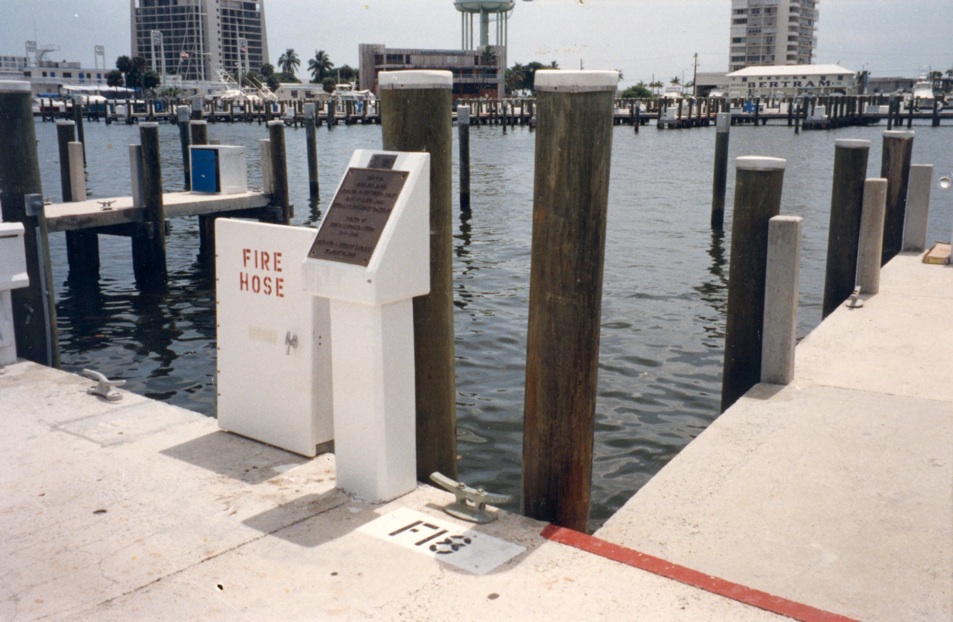
After all these big city apartments, it's time to visit a less conventional home for a beloved sleuth. John D. MacDonald's Travis McGee lived on a houseboat called Busted Flush, berthed at Slip F-18, Bahia Mar Marina, in Fort Lauderdale. He gets a plaque from Friends of the Libraries USA too, which you can see in the photo below, just to the right of the fire hose sign.


This isn't really where a berth F-18 would be in this marina's layout, but it's the thought that counts. Nice of the marina to care enough about McGee's fans to recognize him. And MacDonald must have appreciated it too. Not just the recognition, but that it kept fans focused on Fort Lauderdale, rather than on Sarasota, where he lived.

The Busted Flush is named after a poker hand, naturally. In this case, McGee was losing hand after hand, then bluffed a flush and got this 52-foot barge-style houseboat as his payoff. McGee doesn't get to spend much time there, because his cases take him all over, but when he can, that's where he kicks back with a Boodles Gin, enjoying life.


Wherever you call home, I hope you have living companions as tolerant as Holmes's, as loving a life companion as Lord Peter's, as beautiful a home town as Sam Spade's, as much room for your favorite hobby as Nero Wolfe, and as low a purchase price as Travis McGee's.