Showing posts with label Gage Leighton. Show all posts

Tuesday, February 12, 2013

Review of Leighton Gage's Perfect Hatred

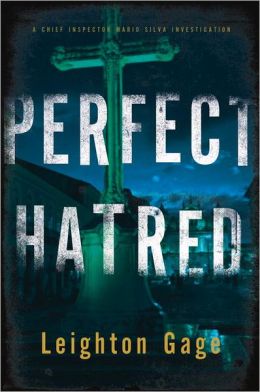
Perfect Hatred by Leighton Gage

Want to get to know Brazil, without leaving your living room sofa? Meet Leighton Gage's Chief Inspector Mario Silva. He's the guy the Brazilian Federal Police send when a criminal matter requires their biggest gun. Silva is incorruptible, yet pragmatic. You can catch him and his crack investigative team on February 19, 2012, when the sixth Mario Silva series book, Perfect Hatred, is published by Soho Press.

The book opens with a literal bang––Salem Nabulsi's particularly nasty suicide bombing outside the American consulate in São Paulo. At least 67 people are dead. The Civil Police open their investigation. Delgado Hector Costa, who heads the São Paulo field office of the Federal Police and just so happens to be Silva's nephew, phones Brasilia. Silva, his sidekick Arnaldo Nunes, Danusa Marcus, Lefkowitz, Mara Carta, and Babyface Goncalves don't even have time to analyze the explosive's taggants or the consulate's security camera tapes before Silva is rushed off to another case.

A candidate for the state governorship of Paraná, Plínio Saldana, has just been assassinated at a campaign rally in the capital city of Curitiba. Saldana's campaign slogan was "Sweep Paraná Clean," and he had plenty of enemies. The shooter, Julio Cataldo, is dead, after exchanging gunfire with Nestor Cambria, a former federal cop who's now Saldana's bodyguard. Cambria was wounded and is hospitalized. Despite the São Paulo terrorist attack, which is followed by an explosion at a Buenos Aires synagogue three days later, Brazil's Minister of Justice insists the Federal Police's best team investigate the Saldana assassination. Silva steams, but he has no choice. The Minister owes the current Paraná governor, widely considered a crook, a favor. And, as Arnaldo observes, "'In case you guys never noticed, politics and favoritism is what Brasilia is all about.'"

Three chain saws might be easier for
Silva than the cases he's juggling.
As if two high-profile cases aren't enough, writer Gage tosses Silva a stark-raving Orlando Muniz, out on appeal after his conviction for murdering a penniless, unarmed priest. In the Brazil Muniz knows, wealthy men don't go to prison, and he will kill the incorruptible prosecutor and the witness/arresting police officer, Silva, if he has to. Heck, Muniz would enjoy killing them even if he doesn't have to.

While Gage is an American, he's lived in São Paulo for decades and has a Brazilian wife. His Perfect Hatred isn't a cozy; rather, it's a hardboiled police procedural involving social issues. The meaning of Psalm 139:22 ("I hate them with perfect hatred: I count them mine enemies.") is examined against the backdrop of contemporary Brazil and her international relations, especially with Paraguay. Widespread corruption, incompetence, and nepotism in government and law enforcement agencies set the stage for three seemingly unrelated crimes: a fanatic Islamist's suicide bombing, an assassination with political or personal motivations, and a criminal's revenge. Gage spins a dazzling web of people, motives, and events to connect them.

Silva channels Machiavelli as he weighs
the motives behind Saldana's murder
It's not necessary to start at the beginning of the Chief Inspector Mario Silva series with Blood of the Wicked. People who appreciate crime fiction with a social conscience, featuring memorable characters and unique settings, will enjoy Perfect Hatred. I did.

Note: I received a free prepublication review galley of Perfect Hatred from Soho Press. Check it out a week from today.

Monday, December 31, 2012

Special Delivery before Midnight, 12/31/2012

I feel like a woman about to give birth, and it's not a comfortable sensation. I finished The Child's Child by Barbara Vine (the pen name Ruth Rendell uses for dark and complex psychological suspense), but this tale about Grace Easton, who becomes pregnant by her brother Andrew's lover and discovers an unpublished manuscript from 1951 that mirrors this triangular situation, is too sad to review on the last day of the year. I haven't quite finished Karen Englemann's delectable The Stockholm Octavo, in which seer Sofia Sparrow reads the cards and promises young Office of Customs and Excise bureaucrat Emil Larsson a golden path to love and connection in 1791 Stockholm. Rather than prolong my labor in writing a review, let me share some books I plan to read soon.

Snow White Must Die by Nele Neuhaus, translated by Steven T. Murray (Macmillan, January 2013). I want to revisit the Grimm's fairy tale refrain "White as snow, red as blood, black as ebony." In this multifaceted German police procedural, Altenhain cops Pia Kirchhoff and Oliver von Bodenstein investigate the death of a woman whose son, Tobias Sartorius, was convicted 10 years earlier of murdering two teenage girls. The bodies were never found. Tobias has recently been released and moved back home. After more disappearances, townspeople are ready to take the law into their own hands. This is the fourth in a six-book series, and the only one published in English so far. What I've read about this police duo and the twisting plot of betrayal and revenge promises a great read.

Death and the Penguin by Andrey Kurkov (Melville International Crime, 2001). Okay, you tell me how I can read the first sentence of a Kirkus review ("A writer is sucked gently into the evil new Ukrainian economy as his penguin flatmate watches.") and not scramble to read this book. Viktor Alekseyevich's life, in the dumps since his girlfriend left him, appears to be looking up. He's taken over the care of Misha, a "quiet and thoughtful" penguin de-accessioned from the Kiev zoo, and he's been hired by Capital News to write "pre-need" obituaries for underworld luminaries. Then Viktor realizes he's handing death sentences to these luminaries.

The Woman Who Wouldn't Die by Colin Cotterill (Random House, February 2013). It is now 1978, and Dr. Siri Paiboun is retired from his job as national coroner of Laos; however, a judge has asked Siri to look into a case involving the minister of agriculture's wife, who has hired the supposed-to-be-dead Madame Keui to lay rest the ghost of the minister's brother. Siri, who has a healthy regard for the supernatural, is the perfect man for the job. This is the ninth book in Cotterill's witty Dr. Siri Paiboun series. (Read Della Streetwise's review of the first book, The Coroner's Lunch, here.)

Three Graves Full by Jamie Mason (Gallery Books/Simon & Schuster, February 2013). “There is very little peace for a man with a body buried in his backyard.” Thus begins Mason's debut about an ordinary man named Jason Getty, who kills and buries a man behind his house. That is enough to disconcert Jason right there, but things become even more complicated when police dig up two bodies, and neither is the one that Jason buried. The publisher says this book is for fans of offbeat, black thrillers and the Coen brothers' movies––in other words, for me, and you, too?

Perfect Hatred by Leighton Gage (Soho Crime, February 2013). For a police procedural that combines terrific characterization, action, setting, and social issues, Della Streetwise, Maltese Condor (see her review here), and I read Leighton Gage's Chief Inspector Mario Silva series, set in modern Brazil. In the sixth book, Silva's team investigates a suicide bombing, the assassination of a gubernatorial candidate, and the revenge plot of a newly released felon who hates Silva. It's not necessary to read Gage's books in order, but these characters grow over time, and you'll want to follow them. The first book is 2007's Blood of the Wicked, in which Bishop Dom Felipe is assassinated when he visits the agricultural town of Cascatas do Pontal.

What about you? What's on your schedule for early 2013?

I'll be back later this week to tell you about Vine's The Child's Child and Engelmann's The Stockholm Octavo. I hope your festivities tonight will deliver a wonderful 2013 for you.

Wednesday, February 1, 2012

Book Review of Leighton Gage's A Vine in the Blood

A Vine in the Blood by Leighton Gage

"Thy mother is like a vine in thy blood" (Ezekiel 19:10)

The blood-red tint of bougainvilleas is the main concern of an unusual color-blind gardener named Luca Vas when he arrives at the São Paolo home of Juraci Santos. Santos is a vindictive, distrustful woman who just happens to be the mother of the greatest, as well as most famous, fútbol player in the world. Luca wants to stay on her good side, so he is making some changes in the garden. Luca does not expect to find actual red blood, the color of which he can only imagine, and in such a way that he will never forget. Murder has been done and Juraci Santos is missing.

Tico "The Artist" Santos is the principal striker for the Brazilian team, which has been favored to win the FIFA Fútbol World Cup, the most highly anticipated sporting event on earth, which is being hosted by Brazil and is slated to start in three weeks. Whereas for many fútbol lovers, the game is their main love, for The Artist, elite though he may be, his mother is more important.

São Paulo
Fútbol is better known to us as soccer, but the rest of the world prefers the original name because it is a game matching balls and feet. I was fascinated by the little tidbit Gage dropped in the story that the English brought the game to Brazil. It took off in such a way that the prophetic words of Ezekiel can equally be rephrased to say, "Fútbol is like a vine in the blood" because it takes hold of a fan to the point of mania. Thus, there is a national push to get this crime solved as quickly as possible. Chief Inspector Mario Silva and his crack team from the federal police are summoned to São Paulo and the game is afoot. (I couldn't resist that).

It is immediately obvious that there is a long list of people who might want to keep The Artist off the field when Brazil goes for its sixth World Cup title. The motives could be personal, or business, or even nationalistic. Could this be the work of Argentina, Brazil’s most bitter rival? Perhaps the culprits are trying to ruin the bookmaking odds or it might even be the work of someone who just would like Juraci out of her son's life. Whatever the reasons, The Artist is definitely not focused on his game.

I was caught up in the fútbol fever within a few pages of opening the book. Leighton Gage paces this interesting, exciting story just like the build-up to a big game. There is a rhythm behind the scenes that suggests a drumbeat––like that of the samba inexorably drawing the reader in to become part of the common denominator that unifies all strata of Brazilian society, from the President to the peon. Inspector Mario Silva's mandate is clear: he is to find Juraci Santos alive and before the World Cup begins. All of Brazil is depending on it. He has 13 days.

Murder mysteries are my main reading and it is always exciting to find a novel that takes me to an interesting locale and that is an original, exotic and stimulating story. The finale of this complex tale was not what I expected, but it made sense. This is the fifth of the Mario Silva series. As it has progressed, the characters and their personal lives are being fleshed out, which adds to the story without diluting the action. Though part of a series, this book can be read as a standalone because it is complete within itself. You can read it while others are watching the Super Bowl if American football is not your cup of coffee––Brazilian coffee, of course. In the end it was GOAL!! Leighton Gage.