Wednesday, January 15, 2014

And the Nominees Are . . . .

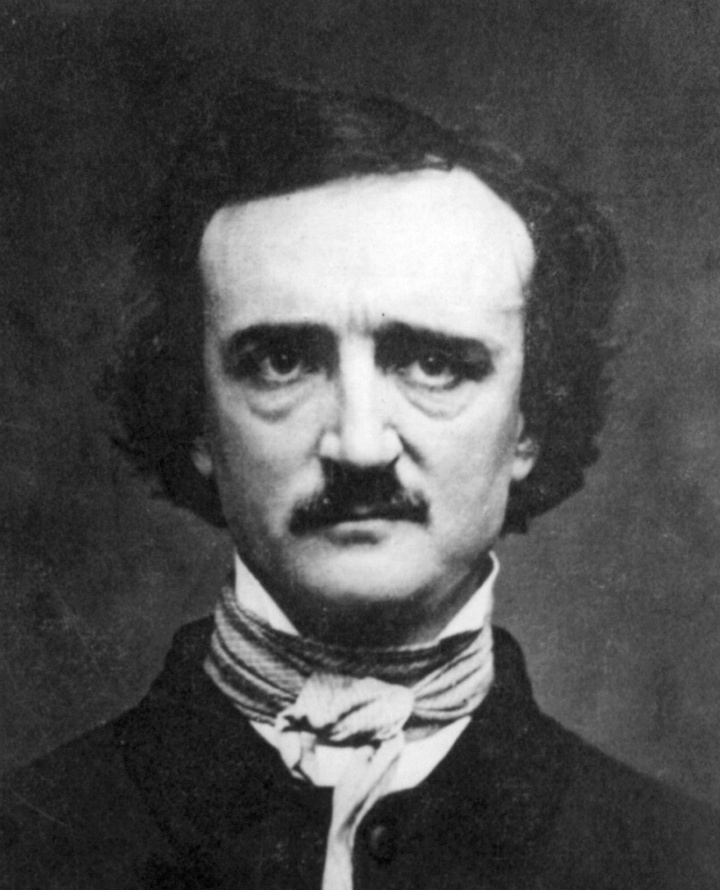
It's awards season, and I've got awards on the brain. The Golden Globes, honoring movies, were awarded last Sunday. The nominees for this year's Edgar Awards will be announced by the Mystery Writers of America sometime around Edgar Allan Poe's birthday, January 19th. If I could, I'd nominate some of these book characters for an award:

Most people are content to leave grave digging to the professionals, but sometimes fate intervenes. For best do-it-yourself burial: Jason Getty, in Jamie Mason's debut, Three Graves Full (Gallery Books, 2013). Although you could say the man was asking for it, Jason didn't mean to kill him. No matter, now Jason has little choice but to bury him on his property. Preparing the burial site and wrestling the corpse into it are comically macabre—entertaining for the reader, but not for poor Jason. His nightmares are only beginning, because one of his landscapers uncovers a body—just not the one Jason planted. This brings the police, who unearth yet another body—again, not Jason's. Then the police promise to bring over a dog in a few days, and a woman searching for her fiancé shows up. Jason is also in the running for best portrayal of a man on the verge of a nervous breakdown.

They're a closeknit duo: Marnie and her "wee bit touched" younger sister, Nelly, who live on the Hazlehurst housing estate in Glasgow, Scotland. Marnie begins The Death of Bees, by Lisa O'Donnell (Harper, 2013), with these words: "Today is Christmas Eve. Today is my birthday. Today I am fifteen. Today I buried my parents in the backyard. Neither of them were beloved." In fact, Izzy and Gene were much more into booze and drugs than they were parenting their kids. Now, as Marnie says, at least she and Nelly know where they are. In one year, Marnie will be of legal age to care for herself and Nelly. In the meantime, to keep out of the authorities' clutches, all they have to do is lie. They face questions by Lennie, the kind old man who lives next door; their friends; Gene's drug dealer; and the authorities. It's a coming-of-age tale that's narrated by eccentric characters Marnie, Nelly, and Lennie, and it's both funny and moving. Marnie and Nelly could join Jason in his nominated category, but let's nominate them instead for best navigation of a sticky situation.

Let's look at a nominee for best at being royally screwed. Lynn Coady's Gordon Rankin ("Rank") is a gentle, sensitive giant, who has used his hulking size to advantage as a goon and brutal hockey enforcer. In college, Rank poured out his soul to geeky Adam, who has now turned around and used what Rank told him to write a satirical novel based on Rank's life, featuring "a dangerously unbalanced thug with an innate criminality." The angry Rank spends three months writing unanswered emails to Adam in The Antagonist (Knopf, 2013), an original epistolary novel that examines a male friendship. Like Caroline Graham's excellent novel featuring a writing circle, Written in Blood, The Antagonist also weighs who owns a life—a writer or the man his character is based on.

If Irwin Dressler says to Junior Bender, "You're working for me," then that's what Junior will do—if he knows what's good for him. Despite his old age, Los Angeles gangster Dressler is still feared. Junior is a professional burglar who occasionally does private investigations for fellow crooks. The case in The Fame Thief, by Timothy Hallinan (Soho Press, 2013), involves former starlet Dolores La Marr. Dolores was once called the most beautiful woman in the world, but her career stalled in 1950 when she was arrested after partying with gangsters in Las Vegas. While others arrested went free, Dolores was forced to testify before the Senate subcommittee on organized crime. At one time, Dressler was the power behind Hollywood studios, and now he wants to know who set up Dolores and ruined her career. So Junior digs. We'll nominate Junior, who's clever and always pushing the envelope, for best at getting out from under. It's the third book in this witty, character-driven series, and it's a pleasure to hang out with Junior and revisit the Hollywood Dolores knew.

Kathleen Kent's The Outcasts (Little, Brown & Co., 2013), is set in 1870s Texas, but it's not a simple western. It's historical fiction, an adventure, a treasure hunt, a chase, and a lot of fun. It features a lawman with a pure heart and a woman without one. We meet conniving Lucinda Carter as she flees a Fort Worth brothel, bound for Middle Bayou, Texas, where Lafitte's gold is supposedly buried. She has arranged the cover of a teaching job in order to await her lover's arrival. While Lucinda makes nice with the folks there, brand-new lawman Nate Cannon tracks down two experienced Texas Rangers, Capt. George Deerling and Dr. Tom Goddard, to notify them that their old nemesis, William McGill, has killed again. The lawmen, noses to the ground, give chase. The two story threads meet in Middle Bayou with a bang, but this tale is neither predictable nor sentimental. Let's nominate Lucinda and Nate for those we'd most like to see in a Sam Peckinpah movie.

We'll keep a lookout for the Edgar nominees this weekend. Now I need to saddle up and git to work.

Monday, January 13, 2014

Review of Jørgen Brekke's Where Monsters Dwell

Where Monsters Dwell by Jørgen Brekke

Present-day seers without the benefit of oracles from Delphi have confidently predicted what the future holds for the "14ers" (babies born in 2014). Apparently, along with car keys, DVDs and light bulbs that work, dead tree books are something those little hands will never hold. I will boldly take the position that the Golden Books and Dr.Seuss are safe for a while, because tiny fingers can access them easily (no password protection) and they taste better too. It’s amazing to contemplate the disappearance of something that has been highly valued for centuries.

Quoth the Raven, "Nevermore." ("The Raven," Edgar Allan Poe)

Of course, that is because the value of a book extends far beyond the words encompassed between its covers. Sometimes, a good story can encapsulate some of the essence of the value of writing, and writers and books that have crossed the paths of many individuals and affected their lives by their very existence.

This is the case in Jørgen Brekke’s Where Monsters Dwell (translated from the Norwegian by Steven T. Murray; to be published by Minotaur on February 11, 2014).

It all starts with a book, a unique volume, the only one of its kind.

Efrahim Bond was working as a librarian in his office at the Edgar Allan Poe Museum in Richmond, Virginia. He had ended up there after a somewhat nomadic career, but was satisfied because he had come across the find of a lifetime. He had fragments of a book known as The Johannes Book, written by a mendicant friar who lived in Norway during the 1500s.

It was a book handwritten on parchment, from an age when paper was becoming more common. From what Bond could read, the book contained confessions of a grisly nature. He heard a knock.

Once upon a midnight dreary, while I pondered, weak and weary, / Over many a quaint and curious volume of forgotten lore— / While I nodded, nearly napping, suddenly there came a tapping, / As of some one gently rapping, rapping at my chamber door." / 'Tis some visiter," I muttered, "tapping at my chamber door— / Only this and nothing more." ("The Raven," Edgar Allan Poe)

It was the cleaning woman at the museum who made the gruesome discovery of Efrahim Bond's remains, in a state worse than anything imagined by the master of the macabre himself, Edgar Allan Poe. Poe spent much of his childhood in Richmond, Virginia, and studied at the University of Virginia in Charlottesville before he enlisted in the military. While in Richmond, he enjoyed the full use of his mental faculties; it was only later that he began to have periods of mental problems that remain undefined to this day.

About the same time Efrahim was meeting his fate, in a Kingdom by the Sea (a/k/a Norway, by the Norwegian, the North and Barents Seas) Jon Vatten rode his disintegrating bicycle to the Gunnerus Library in Trondheim, Norway, where he worked as the chief of security. One of the main treasures of this library is The Johannes Book.

Those who dream by day are cognizant of many things which escape those who dream only by night. ("Eleonora," Edgar Allan Poe)

Vatten liked weekends best, because he had free time to work a bit on his thoughts about what actually killed Edgar Allan Poe. He was fascinated by the idea that such a preeminent writer should die destitute. He’d had the opportunity to visit the museum in Richmond, Virginia, the summer before.

"Every poem should remind the reader that they are going to die." (Edgar Allan Poe)

Before Vatten got settled into his day, he was introduced to a new librarian named Siri Holm. Her avocation was to figure out the identity of the villain in any murder mystery before the end of the first third of the book. To do this, she has some interesting theories. But, perhaps, her main skill was seduction. The Gunnerus Library passed a quiet weekend, but on Monday morning a mutilated body was found in the book vault by the head of the library.

Now this is the point. You fancy me mad. Madmen know nothing. But you should have seen me. You should have seen how wisely I proceeded.... ("The Tell-Tale Heart," Edgar Allan Poe)

The body is that of the librarian Gunna Britte Dahle, whom Siri had just replaced. Gunna had also been to the Poe museum in Richmond in recent months. The motive for the killing was unclear but it, like the murder in Richmond, had the air of fiction about it, as if it had been imagined ahead of time.

Over the Mountains / Of the Moon, / Down the Valley of the Shadow, / Ride, boldly ride ("Eldorado," Edgar Allan Poe)

Felicia Stone of the Richmond police follows her nose and some subtle clues, which lead her to the Norway connection, and she works with Chief Insp. Odd Singsaker of the Trondheim police to make sense of the madness. The murderer is not yet finished and the clues are few.

Grains of the golden sand— / How few! yet how they creep / Through my fingers to the deep, / While I weep—while I weep! ("A Dream within a Dream," Edgar Allan Poe)

Despite the fact that I found the murders extremely grisly, the story itself was intriguing.

Jørgen Brekke interweaves a marvelous history of the creation of The Johannes Book into the story, and tells the reader a fascinating tale of how anatomic dissection first became acceptable as a route to medical knowledge, then finally legal. He also gives some absorbing details of how early books were put together in the era when the basic raw materials were scarce. Imagine the excitement when, over 500 years ago, printer Teobaldo Manucci (a/k/a Aldus Manutius) invented strange little vellum-bound books that a reader could easily carry under his arm. Brekke's scattered pearls of the life history of Edgar Allan Poe were decorations on the cake.

We gave the Future to the winds, and slumbered tranquilly in the Present, weaving the dull world around us into dreams. ("The Mystery of Marie Rogêt," Edgar Allan Poe)

The pundits may be correct in their predictions of a society without dead-tree books. In my own office, magazines are disappearing since the advent of e-readers, the Kindle app and newspaper apps for smart phones. But most of the people I ask have no idea of the name of the book they are reading, nor its author––and it doesn’t seem to matter to them, because the books themselves are simply chosen because they are free or very low cost.

A niece of mine goes to a school where there are no textbooks, only iPads, and the students get along very well. I will have to check whether crayons have gone the way of cursive in this school. Surely Crayola crayons are here to stay.

In fact, the country’s first totally digital public library system opened in San Antonio, Texas this week. The place (can it really be called a library?) is called Bibliotech. Appropriately, this name is inspired in part from the Spanish word for library––biblioteca. The Oxford English Dictionary defines library as "a building or room containing collections of books, periodicals, and sometimes films and recorded music for people to read, borrow, or refer to." So it is an appropriate use of the word.

There were patrons lining up to check out the online catalog on Apple touchscreen computers and check out books on e-readers. Say goodbye to judging a book by its cover.

There have been other libraries without printed books; for one, the Tucson-Pima Public library system opened such a branch, but the people who lived in the community demanded print books be added to the shelves. I am not alone.

Note: I received a free review copy of Brekke's Where Monsters Dwell. Some versions of this review may appear elsewhere under my user name there.

Friday, January 10, 2014

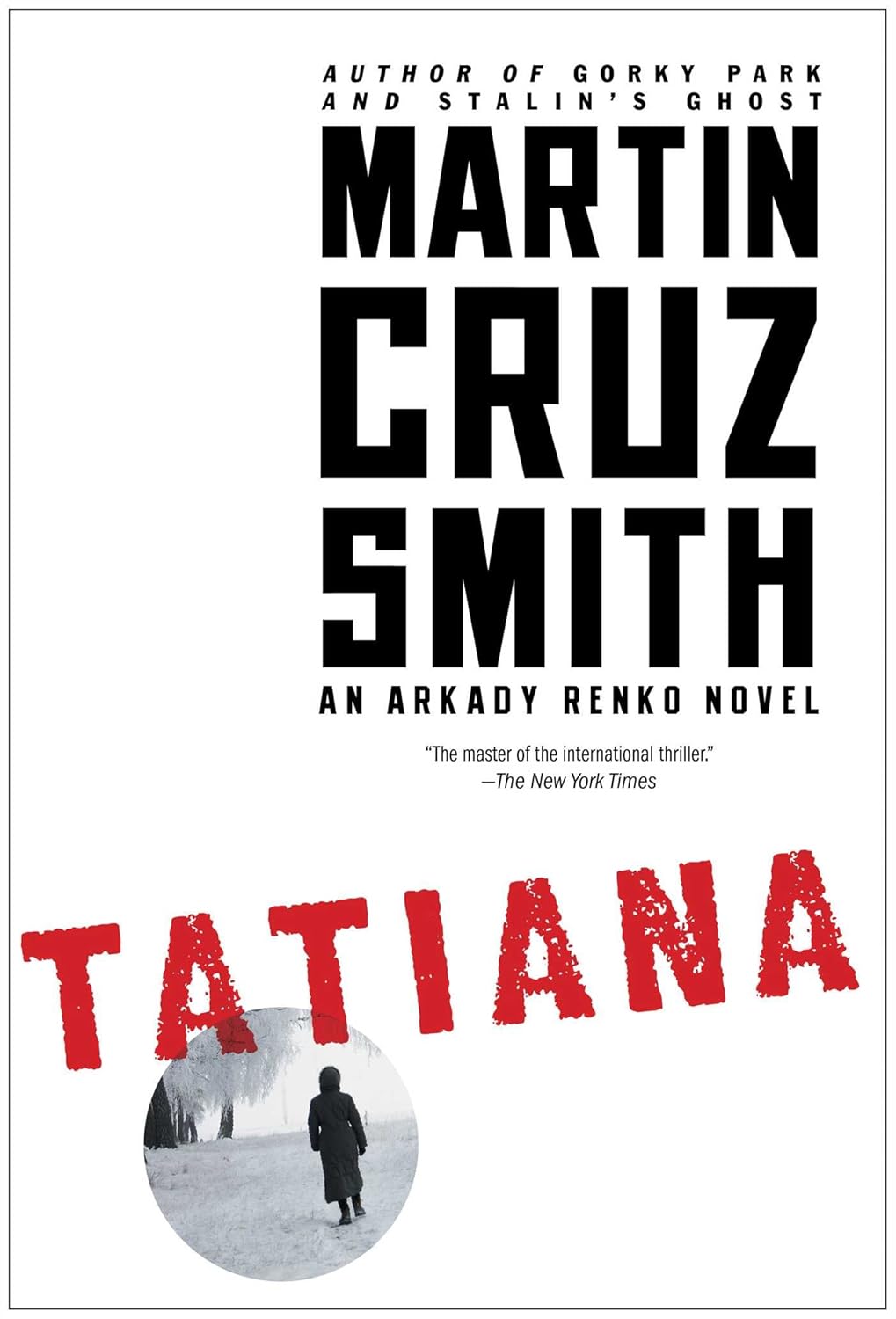
Review of Martin Cruz Smith's Tatiana

Tatiana by Martin Cruz Smith

In September 2009, the Committee to Protect Journalists reported that Russia was one of the most deadly countries in which to be a journalist, and that their murders are rarely solved. Hundreds of journalists have been murdered or disappeared, the majority of whom were critical of the Russian ruling hierarchy.

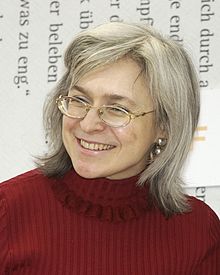
In 2006, after filing stories critical of Vladimir Putin and the handling of the crisis in Chechnya, correspondent Anna Politkovskaya was killed in the elevator of her apartment building, shot four times at point-blank range. Her murder has not been solved.

Anna Politkovskaya
Martin Cruz Smith's Tatiana (Simon & Schuster, 2013) is inspired by Anna Politkovskaya's story. Investigator Arkady Renko is supposed to be trying to figure out where journalist Tatiana Petrovna's corpse has gone after its morgue disappearance, but that's just the back door to his investigating her supposed suicide. The official story is that she jumped off the balcony of her apartment in a near-empty building that corrupt developers want to knock down for a shopping mall.

The developers were hardly the only ones to want Tatiana out of the way. Her reporting from Chechnya fearlessly fingered the Russian government. Arkady also discovers some mysterious connections to the Baltic seaport city of Kaliningrad, a sort of Wild East town where gangsters run rampant. How might Tatiana's death be connected to the murder of a translator who had been working in Kaliningrad?

Kaliningrad railroad station
As he investigates, Arkady listens to Tatiana's dictation tapes and, in a story a little reminiscent of Vera Caspary's Laura, the detective falls in love with the victim whose death he is investigating. At the same time, Arkady has the frustrating tasks of trying to prevent his ward, chess genius Zhenya, from interfering in Arkady's investigation and, worse yet, enlisting in the army.

Vladimir Putin
Russian corruption is a common theme in a lot of novels, and I often get the feeling that some writers are a bit contemptuous and dismissive of the Russians. They seem to have an attitude that the Russians are less civilized and moral than westerners and that's why they have so many problems with organized crime and corrupt and repressive government. I never get that feeling with Martin Cruz Smith's Arkady Renko series, which is now up to eight novels in 32 years. He makes what is happening in Russia real and relevant; not something that we can dismiss and distance ourselves from.

I'm glad Smith doesn't just crank out another entry in the series every year, but takes his time and puts together a story that is both well-imagined and -constructed. As a mystery and as a heartfelt tribute to Anna Politkovskaya––who lived a full and meaningful life, and never gave up the fight, despite being in constant danger––Tatiana makes rewarding reading. This isn't a book I'll soon forget. Readers who are not familiar with the series can read this book without reading the predecessors first, but will be slightly disadvantaged by not knowing the backgrounds of some of the characters in Arkady's life.


Note: I received a free review copy of Tatiana. Versions of this review may appear on Amazon, goodreads and other review sites under my usernames there.

Thursday, January 9, 2014

Review of Michael Connelly's The Gods of Guilt

The Gods of Guilt by Michael Connelly

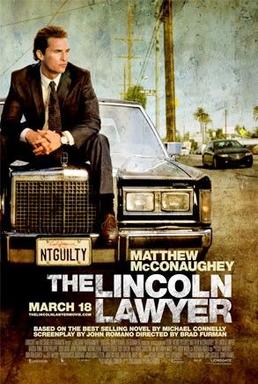
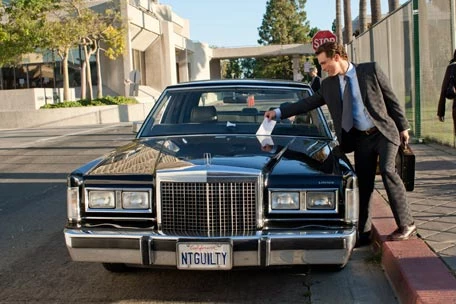
If you saw Matthew McConaughey play hustling criminal defense attorney Mickey Haller in The Lincoln Lawyer, you're not the only one. So many Los Angeles lawyers now have an office in the backseat of a Lincoln Town Car that Mickey comes out of the courthouse and climbs into the wrong Lincoln. That, and the opening courtroom scene, are two of the few comic moments in Michael Connelly's fifth series book, The Gods of Guilt (Little, Brown, December 2013).

Mickey has become increasingly melancholy since 2011's The Fifth Witness, when he ran for district attorney and lost (though his fans thank God for that). His teenage daughter, Hayley, lives with his first ex-wife and has refused to see him since a client he got off later drove drunk and killed two people. Mickey wonders how he can expect her to forgive him when, deep down, he doesn't forgive himself.

In addition to this personal angst, Mickey deals with a law practice in decline. The economy has forced him to let associates go, and only Jennifer Aronson remains, working on bankruptcies and foreclosures, while Mickey scrounges for criminal clients. When a "paying customer" accused of murder calls, Mickey knows it's likely he can make his "whole nut for the year."

The paying customer is Andre La Cosse, a man who designs websites and enables the operation of prostitutes (a "cyberpimp"). The strange thing is that the prostitute Andre is accused of killing, Giselle Dallinger, told him that if he ever needs a lawyer, Mickey Haller is the best. It turns out Giselle is actually a former client Mickey thought he knew well, Gloria Dayton (from The Lincoln Lawyer), though he didn't know everything he should have. In order to defend Andre, Mickey needs to investigate Gloria––as both victim of murder and long-ago accused.

In addition to his associate, Jennifer, Mickey is assisted by the usual gang of employees: case manager (and ex-wife No. 2) Lorna Taylor; investigator Cisco Wojciechowski, Lorna's current husband; his father's old law partner, David "Legal" Siegel; and driver Earl Briggs, who's working off legal fees he owes Mickey. Val Valenzuela, bail bondsman and process server, shows up. Writer Connelly's other series protagonist, Harry Bosch, who happens to be Mickey's half brother, does a cameo appearance. Unlike Scott Turow, Connelly tells us next to nothing about these returning supporting characters. In fact, how well do we really know Mickey? Over the course of the series, he hasn't used his narration to psychoanalyze himself. When he does talk about his feelings here, mostly about his personal gods of guilt and the jury who judges the guilt of his clients, he's unnatural and pompous.

Mickey is better when he focuses on how our legal system works, grinding down everyone ensnared in it or part of it, and the backstory of secrets, corruption and double dealing behind the current case. He shines when he shares his knowledge of LA (his restaurant talk makes me feel like booking a flight as well as a table). Mickey dazzles when he's working the angles for a client, interviewing witnesses, plotting legal strategy and performing in the courtroom. The Gods of Guilt is Mickey's detailed report of how he created his defense for Andre La Cosse and how it played out in court. It's a legal procedural rather than a suspenseful legal thriller. If you're looking for unsavory clients, dueling lawyers and a pragmatic, crafty Mickey who dances his socks off before a jury, grab this one.

Wednesday, January 8, 2014

Mesmerism and Murder: Review of Steven Levingston's Little Demon in the City of Light

Little Demon in the City of Light: A True Story of Murder and Mesmerism in Belle Epoque Paris by Steven Levingston

In the late 18th century, a German physician named Franz Mesmer used what he initially called "animal magnetism" to hypnotize subjects in order, presumably, to cure their physical and emotional ills.Throughout the following century, hypnotism spread like wildfire through the clinics and drawing rooms of fashionable Europe and North America; part parlor game, part pure charlatanism, and part science. According to the literature of the period, quite ordinary people could easily learn the technique and practice it on their friends, to the amazement and occasional embarrassment of their subjects.

By the 1880s, there were two major reputable schools of thought on the topic. In Paris, the famous neurologist Jenan-Martin Charcot, whose students included the young Sigmund Freud, associated the ability to be hypnotized with hysteria, a mental instability he observed and treated particularly in women. He did not believe, however, that anyone could be coerced to extreme or immoral behavior under hypnotism. Jules Liégeois of the Nancy school had experimented extensively with hypnotism and firmly believed that the personal will of the subject could be completely submerged and directed by the hypnotist. While this view offered startling unpleasant perspectives to religions and the legal system, it had been tested in court only once. In 1879, a dentist had been convicted of rape upon a hypnotized patient, whose helplessness and lack of free will was accepted by the court.

The Belle Epoque period in France paralleled the Gilded Age in the United States, and was every bit as garish. Painters, playwrights, and scientists were producing new sensations every day, even as the seedy, sexy Victorian period grudgingly yielded to the more refined Edwardian Age. In 1889, Paris hosted the largest exhibition ever produced. Mr. Eiffel's marvelous tower (the tallest structure in the world) loomed over the Exhibition and the vast glass Hall of Machines was over four football fields in length.

Into this Parisian stew of lavish sensationalism arrived young Gabrielle Bompard, fleeing from an unhappy home. Her mother had died when she was only five, and her governess was installed in her father's bed even before her mother was buried. Gabrielle had been sent away; first to live with an uncle, then to a succession of convent schools, from all of which she was sent home in disgrace. Neglected, undisciplined, attractive and sexually mature, she was ripe for trouble.

In Paris, she soon ran out of money and became the mistress of businessman and con man Michael Eyraud. Despite his wife and children at home, Eyraud proudly escorted his new young mistress about town. Being very easily hypnotized, Gabrielle provided a reliable bit of amusement in the salons of the jaded city. When Eyraud lost his job for embezzling funds, the pair needed cash, and quickly. Whose idea it was to entrap and rob their wealthy acquaintance Toussaint-Augustin Gouffé is not clear, but on the evening of July 26, 1889, Gabrielle invited Gouffé to visit her rooms. She and Eyraud had laid their plans carefully; installing a pulley to hang their victim and purchasing a large trunk in London to hold the body. But the pulley came loose, and Eyraud was forced to strangle their victim, who the couple had assumed to be carrying a large sum of money. Afterwards, the couple loaded Gouffé's body into a large trunk that they had shipped with them when they fled the city. They dumped the body in a river, and broke up and discarded the trunk farther downstream before hiding out temporarily with Eyraud's brother in Marseille.

It took months and a second autopsy before the stinking corpse pulled from the river was positively identified as Gouffé's. Newly appointed Sûreté chief Marie-François Goron and his staff pursued the criminals for many months over three continents, always barely missing them, before Gabrielle turned up at the Sûreté with her new wealthy lover––another of Eyraud's intended victims. Gabrielle claimed that she had been hypnotized by Eyraud and forced to aid him in the crime. Eyraud was finally captured in Cuba, and brought home to face trial.

The trial was an international sensation, and the French system of justice quite an eye-opener to me. The judge was unabashedly biased in his opening to the jury (this is permitted.) The co-conspirators were tried together, and were permitted to shout out to the court or each other directly during testimony. Gabrielle had been examined by a number of hypnotism experts appointed by the court, but a specialist proposed by the defense was not even permitted to talk to her. There appeared to be no public doubt about Eyraud's guilt, but much about Gabrielle's, who had courted public favor for months before his capture. By US legal standards, it was a circus, not a trial, and newspapers around the world loved it.

If you enjoyed Erik Larson's The Devil in the White City, you will very likely enjoy this book, which is also the story of a true crime set in a major city during glamorous and hectic times. It is told in a factual rather than a sensational style, but is by no means dry. Little Demon in the City of Light has no need of added drama; the incredible facts of the case, the extended manhunt, and the dramatic courtroom scenes need no embellishment. Was Gabrielle in fact hypnotized by her lover, as she claimed, during the commission of the murder? If so, to what extent did that erode her free will and affect her complicity? What effect did––or should––her dismal upbringing and circumstances have on determining her responsibility? The author carefully refrains from sharing his opinions, leaving it to the reader to decide. There are easily half a dozen points in this book stimulating enough to engage a book discussion group. Highly recommended!

Note: I received a free advanced readers' copy of Little Demon in the City of Light, which will be released in the US on February 25, 2014 by Doubleday. Similar reviews may appear on various sites under my user names there.

Friday, January 3, 2014

Review of Donna Tartt's The Goldfinch

The Goldfinch by Donna Tartt

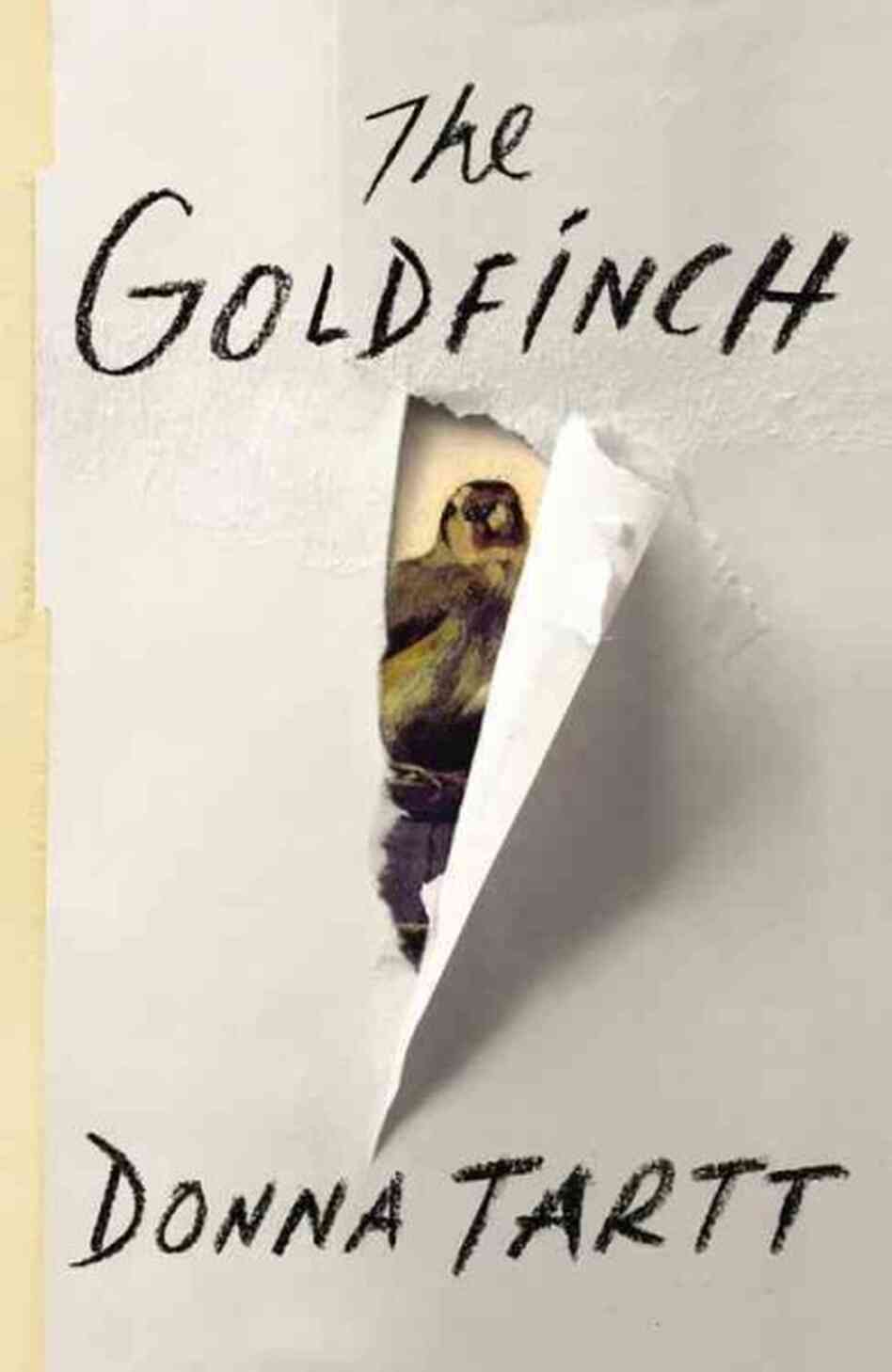
Donna Tartt publishes a book a decade (The Secret History, 1992; The Little Friend, 2002), and it's well worth the wait. The Goldfinch (Little, Brown, 2013) is a story that people will read for many years to come.

Thirteen-year-old Theo Decker lives in a small, rent-controlled Manhattan apartment with his lively, loving mother. His alcoholic gambler father has abandoned them, and they scrape by on Theo's mother's pay from her art publishing job and Theo's scholarship to a tony private school.

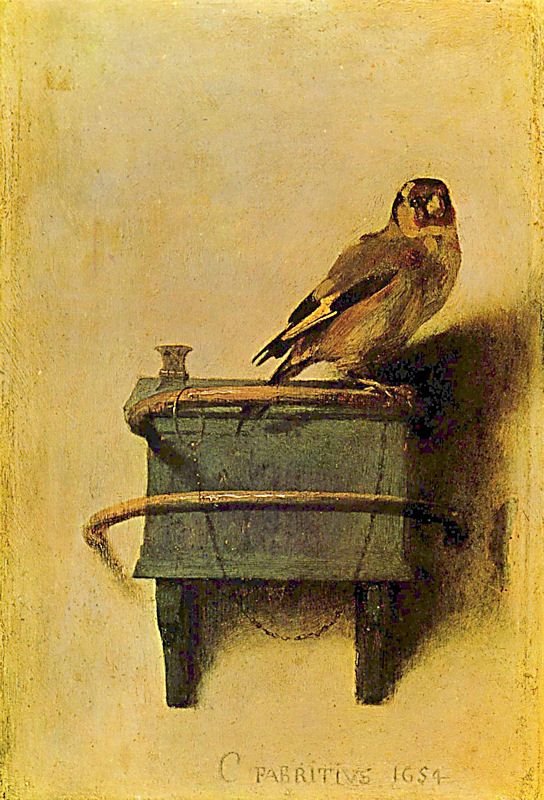
When a right-wing terrorist group sets off bombs at the art museum Theo and his mother are visiting, everything is changed. His mother is killed and, as a result of a dreamlike encounter with a mortally wounded old man, Theo stumbles out of the ruins with a small masterpiece painting, Carel Fabritius's The Goldfinch, secreted in a bag.

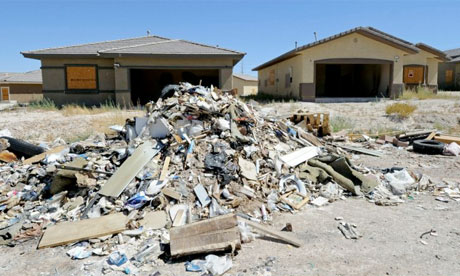
You'll hear a lot of people compare The Goldfinch to a Dickens story, especially Oliver Twist, and it's hard to argue with the comparison. Theo is a Dickensian boy for the 21st century, whom catastrophe forces to live on his wits. Just when it appears Theo will land on his feet and be allowed to live with a school friend's wealthy WASP-y family, up pops his wastrel father and brassy girlfriend Xandra. You just know Pa Decker has some kind of angle here, and when he hustles Theo back to his house in a largely vacant mini-mansion development in Las Vegas, it's only a question of how closely the man's character will be to Dickens's Fagin or Bill Sikes.

More Dickensian characters abound in Theo's life over the next 14 years. Chief among them are Hobie, the kindly furniture restorer who gives Theo a direction in life; Pippa, the fragile object of Theo's yearning; and, best of all, Boris, a modern-day Artful Dodger. I'd give a lot to read a book about Boris, the motherless Ukrainian boy who moves from country to country with his largely absent mining company manager father. Boris is smart, outgoing, bighearted––but also a cheerful thief with a huge appetite for whatever drink, drugs and food he can get his hands on. Theo and Boris in Las Vegas are a couple of wild boys, and when Boris enters Theo's life again, years later, the wilding resumes.

One important difference between Theo and a Dickensian protagonist is that Theo is no pure-hearted young hero, overcoming adversity. Theo has concluded that life is a catastrophe, and he practically wallows in adversity. He courts and embraces misfortune and disaster until you almost want to give him a good slap and tell him to snap out of it.

Such a massive, sprawling, coming-of-age story runs the risk of plodding or feeling aimless, but aside from a brief lull in the middle of the book, The Goldfinch is spellbinding. Tartt takes us deeply into Theo's head and heart, his self-destructiveness and inability to overcome the loss of his mother, which is symbolized by his obsessive, guilty hiding of The Goldfinch, with its depiction of a tethered songbird.

I don't mean to imply that The Goldfinch is one of those books where the reader is required to mine through layers of symbolic meaning to discover the novel's essence. Not in the least. Donna Tartt isn't afraid to tell you straight out what the book is about. After taking the reader along on Theo's not-at-all-excellent adventure, and allowing us to live inside his tortured soul, she spends her final pages tackling all that meaning-of-life stuff that most modern books are too cool to talk about so openly. Given Theo's life experiences, a lot of it is pretty dark stuff, but Tartt is such a beautiful writer that she leaves the reader surging on a rising tide of wonder and something that comes close to joy.


A note about the audiobook: David Pittu, the reader, deserves praise for his virtuoso narration of The Goldfinch. Just reading such a long book aloud is an accomplishment, but Pittu also conveys every nuance of Tartt's writing, and his voices for the many different characters always feel true. He even expertly negotiates an Eastern European accent (for Boris), which is a common stumbling block for most narrators, who end up sounding like Rocky & Bullwinkle's Boris Badenov.

Wednesday, January 1, 2014

New Year's Unresolutions

I have been seeing flashes across the Internet suggesting that making New Year's resolutions is passé. Apparently, it's akin to hanging a sign around your neck saying "geezer." For one thing, resolutions are considered clichés and it’s better just to take life as it comes.

One life guru recommended substituting personal mantras that are less vague and have more room for flexibility. Such as: "I choose happiness" and "Today is going to be a great day." My favorite is "I will be healthy" which just gives me the mental image of some smiling innocent being dead after he gets hit by a bus.

My personal choice this year is to make some unresolutions suggested by recent reads.

Gain weight. I learned in Rick Gualtieri’s Bill the Vampire series that it's mostly good-looking thin types who are chosen to be turned into the undead. Bill is a pudgy computer nerd who wears glasses and has no luck with women at all, but he is ever hopeful when the best-looking girl he has ever seen comes on to him. Little does he know what is in store for him. But funnily enough, it is the girl (a vampire by the way) and her crew who have a shock coming. This book is hilarious and leads the way to several other vampire Bill adventures.

Don't volunteer to help others. Sookie Stackhouse, in Charlaine Harris's Dead Ever After, has made it a habit to help other people––and just consider what's been going on in her life. After everything she has done to help Eric Northman and crew, they turn a cold shoulder on her. When she is accused of a shocking murder, she finds that a girl's best friend is a dog.

Start smoking and drinking. The only way to ratchet down the building tension in Michael Gruber's Tropic of Night is to have something to do with your hands. Jimmy Paz is a Cuban-American with a gruesome murder case on his hands. A young pregnant woman has been murdered, and unspeakable things have been done to the baby. Jane Doe is an anthropologist living in the shadows under an assumed name, but she knows the real motive behind the killing. It is related to African magic and many more drastic deaths are to come. I found the book exciting and complex, with dollops of mumbo-jumbo.

Stay home instead of taking an interesting trip. In Mapuche, by Caryl Férey, there is a view of the Argentina of the present, which has flashes of all the atrocities that have gone on since the 1950s. One critic found the book riveting, horrifying and more. My view was that it showed the worst of human nature, and some of the good things, but not enough to ever compel me to visit the area. The Mapuche were indigenous to the southern South American continent. Many Argentines and Chileans have Mapuche ancestry and this was what initially drew me to the story.

Get to work late. In The Writing Class, by Jincy Willett, it seems that if Amy Gallup had just elected not to show up to teach a writing class at her local community college, her life would have been much better. Gallup was published once at 22, with critical praise, but never again.

Now her former life is gone and she is a reclusive widow, with a daily mantra of Kill Me Now. This semester's class is full of the usual writer wannabes, but it also includes one sick puppy who could be any of the students. The problems start with prank phone calls, but end in murder. Amy is shaken out her doldrums, as she uses all her skills to unmask the villain.  

Don’t take vacation days. In A Grave Waiting, Jill Downie's Detective Inspector Ed Moretti is coming back from vacation with still a few days owed him, when he gets called back to work. This is the second outing for Moretti and his partner, Detective Sgt. Liz Falla. The location is the Channel Island of Guernsey, a place at one time believed to be back of beyond. Now a center of high finance and banking because of its favorable tax laws, Guernsey has left the days of greenhouses, flowers and produce behind.

Moretti and Falla are called to a luxury yacht to look into the murder of a wealthy man. Mr. Masterson was a financier, and there's more to his murder than meets the eye. One thing that is not clear is why Masterson decided to come to the island in the first place and, secondly, who of the many people who had motives to kill him did the deed. The detective duo makes an excellent partnership, and the plot of the story is engrossing.

Don’t make appointments with doctors who are going to tell you what you don't want to hear, most important considering Unresolutions #1 and #3. Max Tyger, a PI and part-time adjunct college professor in Darlington, Connecticut, went to the doctor because he had trouble choking on food and the diagnosis he got was hard to swallow––esophageal cancer, which required both chemotherapy and radiation.

In This One Day, by K. A. Delaney, Max is at this low point in his life that includes a lack of health insurance and the loss of his girlfriend Helen, which he attributes to a birth defect—his lousy personality. But Helen comes to him with the case of a high school boy who has disappeared. The art teacher at a prestigious private school wants to hire him to find the boy, even though his parents have not reported him missing.

Fighting fatigue, desperation and loss of dignity, Max takes the case primarily because he owes reparation to a boy from one of his college courses whom he could have helped if he had recognized there was a problem sooner. The loss of this boy haunts him. He wants to take the advice from another chemo partner to live just one day and try to do something good during the course of it.

Avoid having fun. Vish Puri, a most private investigator, solves The Case of the Man Who Died Laughing, by Tarquin Hall. An Indian scientist, well known as a debunker who exposes fraudulent gurus, is somehow murdered by a manifestation of the goddess Kali when she plunges a sword into his chest. Puri is more clear-sighted than the other investigators, and he and his team of undercover operatives—Facecream, Tubelight, and Flush—will not stop until they know how the magic was performed.

Read books with cute punning titles. Since I usually avoid these books, I thought it would make a change for me and I do enjoy series, so Rosemary and Crime (Piper Prescott series, Book 1) by Gail Oust fit the bill. Piper Prescott, a recent divorcée estranged from her youngest daughter, is adding some spice to her life by opening her own business in a small town in Georgia. Spice it Up! as it is called, is prepared for its opening day until a star attraction, a chef with a maniacal temper, is murdered.

Since Piper is finding herself in the frame, she takes the investigation into her own hands. Naturally, the killer decides that Piper is in the way and opts to eliminate her as well. Even after a few near-death experiences that might have been avoided with the use of a cell phone near at hand, Piper continues to leave hers here and there, mostly uncharged as well. This unresolution may be stricken from my list.