Friday, August 10, 2012

Book Review of Adam Johnson's The Orphan Master's Son

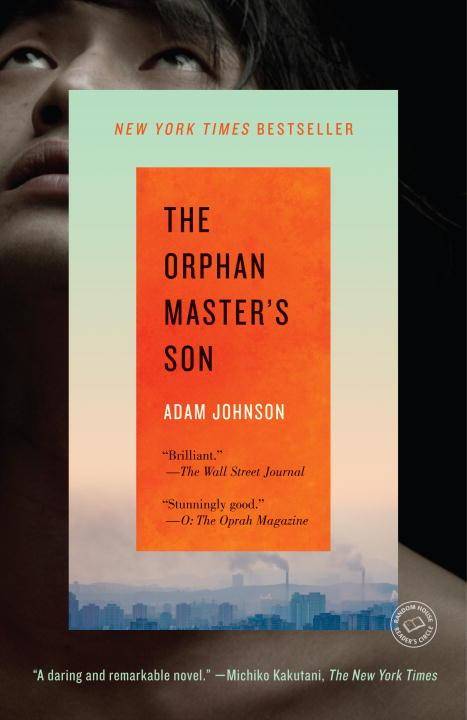
The Orphan Master's Son by Adam Johnson

If you were taking one of those free-association tests, and the tester asked your response to "North Korea," what words and pictures would come to your mind? For most, I suspect it's nameless, faceless workers wearing identical clothing, haircuts and Party badges, living in primitive conditions under the most paranoid, repressive regime imaginable, where the only citizen allowed to be an individual was that short man with the odd jumpsuits and pompadour; i.e., the late "Dear Leader," Kim Jong II. I also think of the photograph of the world at night that so graphically shows North Korea's exclusion from the simple comfort of light.


Adam Johnson shows that there is a lot of life and humanity, and even humor, behind our conceptions of rigid uniformity, especially in his protagonist, Pak Jun Do. When Jun Do meets some Americans––through an amazing series of events––they mis-hear his name as John Doe. That's a revealing mistake. In English, we use "John Doe" to represent a male character whose identity we don't know. Sometimes we use the name to mean an Everyman. Both are appropriate for Jun Do, who was raised in an orphanage as the son of its master. He doesn't know what happened to his mother, and his father is unknowable. His name isn't even his; like all residents of the orphanage, he's been assigned the name of one of North Korea's political martyrs.

Jun Do's life, threading through this book, is one of astonishing hardship, pain and endurance. He is a soldier, an intelligence on board a fishing boat, a prisoner in a work camp and a torture facility, member of a diplomatic mission, and a man who manages to find love and freedom in a most unlikely way. Through this story of his life, the story of contemporary life in North Korea is revealed in all its black-is-white totalitarian craziness. But author Johnson paints such a detailed picture of how the regime operates that we are able to understand how its subjects succumb to the relentless propaganda and repression. Several times, characters profess horror about the fact that Americans must pay for everything and that they lack the protection and safety of having the government tell them what to do in every aspect of their lives. Jun Do says he doesn't think he could ever feel free in the US; that everything in North Korea makes simple, clear sense and it's the most straightforward place on earth.


The book can be confusing, as it jumps from one narrator to another, one time period to another, one style to another, with no explanation. But it's so vividly written, I didn't worry about the shifts and came to enjoy the crazy-quilt style. In an interview of Adam Johnson by author Richard Price, Price describes the book as a collision of many genres: bildungsroman, prison narrative, sea story, romantic drama, escape thriller, comic picaresque, Korean heroic opera. I'd have to add in agitprop to make a complete listing of the genres represented. I didn't feel it was necessary to have an explanation of why it's written this way, but it was still interesting to hear Johnson's answer that he sees the book as a "trauma narrative," in which a survivor of traumatic experiences tells stories that are similarly disjointed and that "bend and mix genres as characters attempt to patch their stories back together using the stories they find around them."

This is one of the most unusual, riveting, touching and unforgettable books I've read.

The Orphan Master's Son became available in trade paperback on August 7, 2012, issued by Random House Trade Paperbacks. It is also available in hardcover, ebook and audio formats.

Note: I received a free review copy of The Orphan Master's Son. A version of this review appears on the Amazon product page, under my Amazon user name.

Wednesday, August 8, 2012

Book Review of Johnson's Life of London

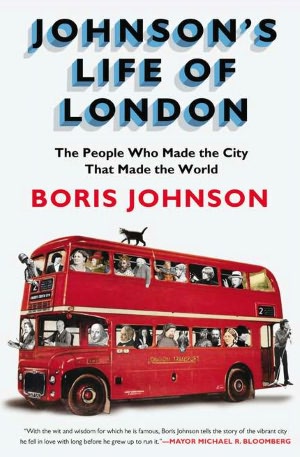
Johnson's Life of London: The People Who Made the City That Made the World by Boris Johnson

No, the author isn't the occasionally outrageous 18th-century lexicographer and essayist Samuel Johnson, author of the first widely-accepted English dictionary, but is the equally literate and bombastic 21st-century Boris Johnson, journalist, historian and Mayor of London, the bicyclist with The Donald haircut and the unexpected gift for publicizing himself and his ancient beloved city.

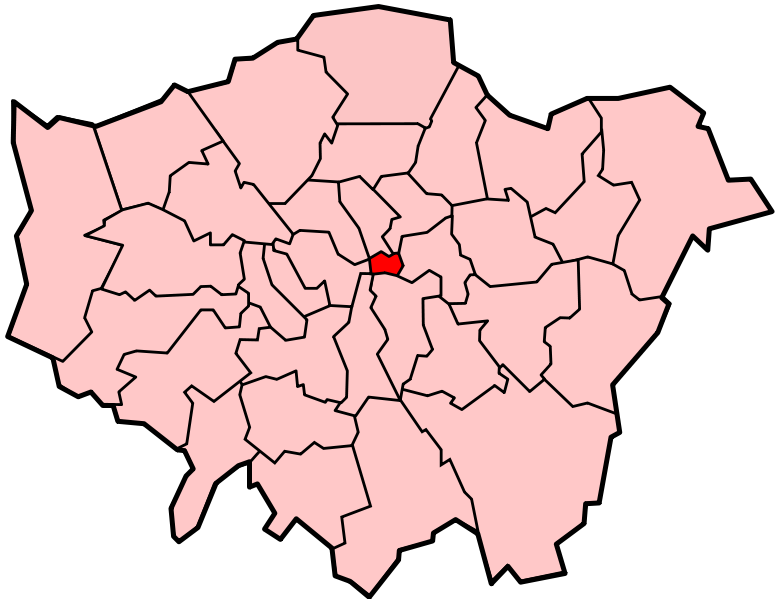
Red dot represents the Ancient City
in the heart of modern London
A point about Johnson and his title: I was confused––doesn't London's mayor, in common with those of a few other ancient cities, usually have the title Lord Mayor? Oh dear, who has Boris offended now? But a bit of research informed me that London actually has two concurrent mayors. The position of Lord Mayor was established in 1189, with holders elected by the members of the ancient Worshipful Guilds of London. Lord Mayors govern only the city-within-a-city called the London Square Mile, historic heart of the financial district, and their duties nowadays are mainly ceremonial. Johnson, on the other hand, is only the second Mayor elected by all the citizens of the sprawling modern city of over eight million to represent them. After a thousand years, a bit of modernization was probably in order and, as the Olympic Opening Ceremonies last week reminded us, we can count on the British to keep one foot firmly planted in history even as they move into the future.

I had received a free review copy of hizzonor's Johnson's Life of London: The People Who Made the City That Made the World a while ago, but put it aside to read during the commercials and boring bits of the Olympics, thinking that it would be easy to pick up and put down. After all, history isn't that suspenseful; we already know how it came out and who won, right? Well, that almost worked. In fact, the book is so filled with pithy observations and fascinating sidebar stories that it made me quite unpopular as I constantly interrupted everyone in the room with "Listen to this!" during the competitions.

In addition to the historical greats you would expect in any history of London, Johnson offers us vignettes of some of the less widely-known characters who contributed to the life of the city. I had never heard, for instance, of Robert Hook. Most people know that Christopher Wren was the great architect who designed many famous London buildings. But after the Great Fire of 1666 destroyed much of the city, it was Hook's designs, not Wren's, that determined the future layout of the city. Despite his contributions to science and architecture, Hook's fame didn't even last his lifetime. Johnson relates his death in 1703 "Alone and wretched and covered with lice, with a reputation as a sexually peculiar old miser."

London statue honoring the Iceni Queen Boudica,
who razed the city to the ground
While the British have a long reputation for fair play and gracious sportsmanship, some gestures seem a little extreme, even for them. Around 60 A.D. the Iceni Queen Boudica, furious at the death of her husband and rape of her daughters at the hands of the London Roman garrison, invaded the city. Her troops burned the city to the ground and tortured and butchered its hapless inhabitants. The site remained a charred swamp for many years, until the Roman Emperor Hadrian rebuilt and fortified it. An enormous discarded head of Hadrian was hauled up by workers dredging the Thames in 1834, while this beautiful statue of Boudica stands proudly to this day on the Thames embankment. Go figure.

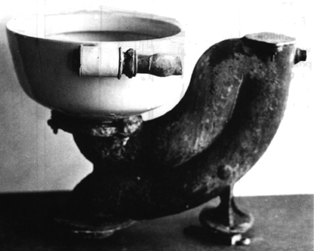
The book is chock-full of similar little known but fascinating bits of history. For instance, the invention of flush toilets is generally attributed to Thomas Crapper in Victorian London. However, Johnson informs us that they were actually invented by Sir John Harrington, a courtier and godson of Queen Elizabeth I. Sir John had been banished from London for translating and distributing lewd Italian verses among the ladies of the court of the Virgin Queen. Anxious to get back in her good graces, he designed a flushing porcelain throne for his fastidious monarch. While this grim looking fixture was actually built in a couple of her palaces, and presumably put its inventor back into Her Majesty's good graces, it did not catch on with the populace at large until Mr. Crapper's reintroduction many years later.

While a few of the author's claims and tales seem a little over the top, he is apparently prepared to go to any heights in his admiration for his "Mother of Cities." Last week, the pudgy but intrepid Johnson got stuck 20 feet in the air while ziplining across Victoria Park to celebrate Britain's first 2012 Olympic gold medal. He dangled in midair for several minutes, waving a pair of Union Jacks before plaintively demanding a ladder. Gymnastically, his performance would have to be counted an epic fail, but as a novel way of keeping the attention of the world on his city and its games, it was priceless. Dangling Boris instantly went viral and was featured on news broadcasts worldwide.

If you have some digital photographic editing skills and would like to dangle Boris yourself, BBH London Barn Crew@3crumpetsfull offers a couple of still images for your use. Hundreds of amusing variations have already been uploaded by enterprising photoshoppers. This is one of my favorites.

And if you want a lively, witty tour guide to provide an immersive accompaniment to your Olympic viewing, in either London or your living room, you might want to take Johnson's Life of London along. He's very good company indeed. However you go, enjoy the rest of the Olympics.

Note: I received a free copy of this book, which was published in May 2012 by Riverhead, in exchange for this review. Parts of it will appear on Amazon and Goodreads, under my user names there.

Monday, August 6, 2012

Please Don't Let Me Be Misunderstood

It's official. I'm a Baby Doc (my husband). A mean TSA agent (my kids). All this because I'm supervising the packing for our lake vacation trip. I'm feeling very misunderstood, much like some characters in books I've been reading.

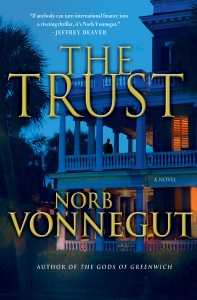
You can bet no Wall Street guy has won a recent popularity contest. Grove O'Rourke, a top broker at Sachs, Kidder, and Carnegie, says some people think of Jack London's book when they hear "the call of the wild." He associates that phrase with his job, because stockbrokers yap and fight all day. As Norb Vonnegut's The Trust opens, O'Rourke is on the phone with his head under the desktop, trying to hear Palmer Kincaid, his old mentor and biggest client. Kincaid needs O'Rourke's help. By the time O'Rourke arrives in Charleston, South Carolina, Kincaid has died in a solo night-boating accident.

A Thousandth Man
Kipling wrote a poem about Solomon's one man in a thousand, who will stick closer than a brother when "the whole round world is agin you." Kincaid's 33-year-old daughter, Claire, tells O'Rourke her dad thought of him as his thousandth man. That's why his will asks O'Rourke to join Claire and JoJo, Kincaid's much younger second wife, on the board of the Palmetto Foundation, a conduit for philanthropists. The threesome has no sooner authorized a $25 million transfer to the Philippines, at the request of a priest from the Catholic Fund, when O'Rourke gets a phone call from lawyer Biscuit Hughes. Hughes is representing some people in Fayettesville, North Carolina, who are outraged that a huge adult superstore has moved into their neighborhood. The XXX-superstore's unlikely owner? The Catholic Fund.

It's obvious O'Rourke needs to stop answering the phone. But let's not pursue this unhelpful line of thinking. Better for us to listen to Santa Esmeralda play "Please Don't Let Me Be Misunderstood" on O'Rourke's behalf, because the shit now hits the fan. Everyone is angry at the good-intentioned O'Rourke. FBI hard-ass Agent Izzy Torres. His manipulative SKC boss Katy Anders. Claire, who resents his distrust of Father Ricardo. And Manhattan girlfriend Annie, since Claire was a high school-age O'Rourke's Daisy Buchanan and O'Rourke is staying in Claire's Charleston guesthouse. Because Santa Esmeralda's version of this song is heard in Kill Bill: Volume 1, it's especially appropriate. O'Rourke's investigation of the Catholic Fund spawns a kidnapping and scenes that would fit right into Quentin Tarantino's movie.


Author Vonnegut, a distant cousin to Kurt Vonnegut, worked in wealth management and has written fiction and nonfiction about Wall Street. The Trust, published last month by Minotaur Books, is the second Grove O'Rourke book after Top Producer. Vonnegut's characters, even those who wear designer clothes and behave with southern wile and charm, carry out a rip-snortin' plot. O'Rourke begins a little buttoned down, but circumstances and the company of the rumpled Biscuit jerk him out of his cordovan loafers. The financial shenanigans are explained in terms even people who can't balance a checkbook can enjoy. While I recommend you read this snazzy thriller, I must issue a stern reminder. Humans aren't the only ones misperceived. Great Stuff Big Gap Filler is grossly misunderstood by one of The Trust's memorable villains. Read labels, people!

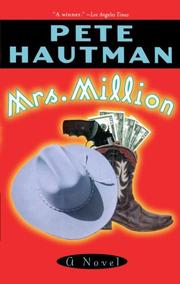
The characters in Pete Hautman's Mrs. Million don't only not understand each other. They don't even understand themselves. After middle Grabo sister Barbaraannette Quinn wins $8.9 million in Minnesota's Powerball lottery, she's as surprised as everyone else when she stands in front of the microphone and announces a $1 million reward for the safe return of her missing husband Bobby. Six years earlier, Bobby had set out fishing from their Cold Rock home and never returned.

Barbaraannette admits that the dumbest thing she's ever done is marrying Bobby and the second dumbest is offering big money for his return. Other than knowing how to have a good time and looking good in and out of his clothes (the guy is "hung like a racehorse"), there hasn't been much to admire about Bobby.

A co-misunderstanding of the color red
Now that he's worth all that money, everyone wants the award, including Bobby himself, who saw Barbaraannette make her announcement on TV. He and his Arizona girlfriend, Phlox, decide she'll claim the reward, so they head to Cold Rock. Unfortunately, they barely make it past the Taxidermy & Cheese Shoppe before Bobby is spotted by a couple of former business partners whom he cheated out of some money. Also figuring in the plot are a good-lookin' but not real smart young sociopath, Jayjay Morrow, fresh out of prison but not out of ideas for turning a fast buck; André Gideon, a finicky professor who lusts after Jayjay; Barbaraannette's sisters, who are nothing like her, and their mother, Hilde, who likes to escape from her assisted-living home by stealing a doctor's car; and Art Dobbleman, a very shy banker who's had a crush on Barbaraannette since high school.

Mrs. Million is the fifth book in a series about a group of small-town Minnesota gamblers, but it's only linked to the series by a mention. Hilde likens gambler Sam O'Gara, Barbarannette's father, to her missing husband Bobby. This book is similar in flavor to Carl Hiassen's Lucky You, which also involves a lottery winner's travails. Like Hiassen's heroines, Hautman's Barbaraannette has more determination and smarts than her sweetness might suggest. And like Hiassen's book, it's very entertaining. A good book for vacation reading.

I'm enjoying sharing my misunderstood state with some fictional characters. I'm now reading a good book of British espionage, Dead Spy Running, by Jon Stock. It's the first of a trilogy involving Daniel Marchant. (The second, Games Traitors Play, was published in March 2012 by Thomas Dunne/St. Martin's.) The book begins when Marchant, who's been suspended from MI6, is running a London marathon. The US ambassador to England is also running. Marchant notices a fellow runner with a belt of explosives strapped around his waist running behind the ambassador's group. It's set to go off when he drops below a certain pace. Like his late father, Stephen Marchant, head of MI6 until he was forced to resign in disgrace, Daniel's intentions are suspected by his intelligence colleagues. Yet Daniel is determined to clear his father as well as himself.

Great British espionage deserves a great British band. I'll leave you with the Animals singing "Please Don't Let Me Be Misunderstood."

Friday, August 3, 2012

Book Review of Louise Penny's The Beautiful Mystery


The Beautiful Mystery by Louise Penny

One beautiful Saturday morning in September, Inspector Armand Gamache of the Quebec Sûreté and his closest colleague, Jean-Guy Beauvoir, are called from Montréal to a hidden island to investigate a murder. The island is home to a massive, stone monastery, built long ago by a small order, the Gilbertines, who fled to Canada to escape the Inquisition. (Much to my surprise, Beauvoir never makes a Monty Python joke about this. Do you suppose French Canadians don't watch Monty Python?)

Just two dozen monks live at the monastery, where they grow vegetables, tend chickens, cook, maintain the buildings and grounds and––most important––worship God. Their days are spent in near-silence, except for the hours they spend in prayer and singing Gregorian chants. All of the Gilbertines have a gift for singing and most were recruited from other religious communities for their singing talent.

Singing brought the monks together, but it also tore them apart. The murdered monk was Frère Mathieu, the prior and choirmaster. His recording of the Gilbertines' chants became a surprise sensation, bringing in much-needed money to the monastery but, with it, attention and demands from the secular world. Mathieu thought the attention was, literally, a Godsend; they could use the public spotlight to benefit the monastery and spread the word of God. But this would require the abolition of their tradition of silence and the loss of their solitary contemplative life on the hidden island. Dom Philippe, the abbot, and Mathieu's closest friend in the monastery, decided that these losses would destroy the Gilbertine order, and he ruled that there would be no further recordings of the chants and no public appearances by the monks. But what started as a difference of opinion between two friends grew to an enmity that split the community.

The crime reminds Gamache of the story of King Henry II and Thomas á Becket. Becket was Henry's Chancellor and, in that role, supported Henry's imposition of taxes on landowners, including the Church. Henry welcomed Becket's nomination to become Archbishop of Canterbury, assuming that his old friend would continue to back Henry's primacy. Instead, a years-long, escalating battle for church/state supremacy began that led to Becket's murder by four of Henry's knights.

Gamache remembers that, shortly before the murder, a frustrated Henry burst out to his men, "Will no one rid me of this troublesome priest?" and that it appeared Henry's men took that as a command––or at least a suggestion––to kill Becket. Gamache wonders if something similar happened with the Gilbertines. Did one of the monks on the abbot's side of the schism decide that Frère Mathieu had to be eliminated to save the order?

What Gamache doesn't at first recognize is that there is a parallel to the monastery's schism much closer to home. For several years, there has been a venomous animosity between Gamache and Sylvain Françoeur, the man who is now the Superintendent of the Sûreté. The poison of their relationship has spread within the police force, causing rancor and distrust among colleagues.

Gamache and Beauvoir must stay at the monastery to investigate Frère Mathieu's murder. They fall into the rhythm of life at the monastery. More important than the monks' work is each day's prayer sessions. This is when the mesmerizing sound of the chants fills the chapel and seems to work a physical and emotional change in the listener. The book's descriptions of the chants and their history compelled me to listen to some as I read. (You can do it, too, by going to Pandora.com and searching for the Gregorian Chant music channel.)

In their quiet, deliberate way, Gamache and Beauvoir investigate on their own, without the rest of their team, with no internet access or forensics lab, without their families or any intrusion from the outside world. It's as if they are themselves cloistered monks, which makes it almost a peaceful time––until the investigation takes a turn and the plot's pace accelerates, building to a stormy climax. This intense closing promises much more drama to come in the next book for Gamache, Beauvoir, their colleagues and loved ones.


The Beautiful Mystery will be issued by Minotaur Books on August 28, 2012. Macmillan Audio will publish an audiobook on the same date, read by the incomparable Ralph Cosham. My advice is to clear your calendar, go find the Gregorian Chant channel on Pandora, and settle down to yet another compelling entry in the Armand Gamache series.


About the Armand Gamache series

In the Armand Gamache series, there are Three Pines novels, set in the small Brigadoon-ish village in southern Québec, and those set elsewhere in the province. Author Louise Penny must realize that if she set all of the series' murders in Three Pines, the villagers would flee like something out of a Godzilla movie. But, whether set in Three Pines or elsewhere, all of the books in the series have something in common. Each is set in a small community: from a village (Still Life, A Fatal Grace, The Cruelest Month, The Brutal Telling), to the Anglophone community of Québec City and its Literary and Historical Society (Bury Your Dead), to a remote country resort (A Rule Against Murder), to the circle of Québec's artists, dealers and critics (A Trick of the Light) and, now, a monastery.

There are benefits to a small community, like fellowship and support. But when something changes, that can disturb its equilibrium and cause problems that seem inescapable precisely because of the closed nature of the community. As Gamache notes, "murder happens because something changes." Gamache's job is to figure out what has changed, and which member of the community was so unable to cope with the change that he or she saw murder as a solution. Sure, Gamache and his team use traditional methods of examining physical evidence and alibis, but he believes that the murders he investigates were committed for very human reasons that must be unearthed to solve the crime and begin healing the damage caused to the community by the crime.

Does that sound awfully touchy-feely for a murder mystery series? Well, maybe it is, but one of the things I most appreciate about Louise Penny is her respect for murder; for the horror it visits on the community it touches, the damage it inflicts on the soul of the killer, and the ways the community finds to heal and move on after the wound of the murder. The people and situations she describes seem very real. So real that when I finish one of her books, it's as bittersweet as the end of an annual trip to visit friends, when I savor the pleasure of our time together and feel the pang of knowing that all the seasons will pass before we meet again.


Louise Penny

Notes: I received a free review copy of the book and audiobook. Many of the images in this post are taken from Louise Penny's website.

Wednesday, August 1, 2012

Oh, To Be In England

This past Friday night, I was mesmerized by the spectacle of the Opening Ceremony for the 30th Olympic games. The entire event was awesome and incomparable, as it was a showcase for the history of the British people and their culture. The history of the modern Olympic games themselves is speckled with British involvement. The original Olympics had been banned in 393 by the Roman Emperor Theodosius, but Europeans of those dark and middle ages still loved their games. In Scotland, there were various tournaments, which later evolved into the Highland Games, while in England there was a brief period in which the Cotswold Olympick Games took place and the romantic appeal of replicating the ancient games gave rise to many small towns celebrating sporting festivals that included such fare as pig chasing and an "old woman’s race for a pound of tea."

In the last decade of the 19th century, while strides were being made to get the 1896 games going in Greece and as Baron de Coubertin began lobbying for a true Olympics revival, the ideal was for the participants to be rewarded only with medals and laurel wreaths. The idea of amateurism came into play. The original British definition of an amateur was someone who did not labor with his hands. In fact, it was only the upper classes who had the time for fun and games. Besides, could the "lower orders" be trusted to behave in a sportsmanlike manner? Thus, in 1896, it was primarily Harvardians, Elis and MITers who made up the American team. Britain chose to shun the games, but several members of the British Embassy in Greece chose to compete under the Union Jack.

Closer to home, the British working man was very interested in sporting events, especially boxing and six-day marathons known in some circles as a wobble. Many considered these races infernally barbarous, while others––like the promoter of the event––held the opinion that events such as these showcased endurance, persistence and the will to conquer that were the premier qualities of the time.

One of these marathons is the center of activity in Wobble to Death by Peter Lovesey. This event was taking place in the great Agricultural Hall in the late 1800s London.
"For the benefit of those of you unable to read I shall repeat the rules. You may go as you please for six days and nights finishing next Saturday evening at half past ten o'clock..... Five hundred pounds and the belt to the winner, the Champion Pedestrian of the World. Good Luck to you all. Then go!... You poor bastards."
Agricultural Hall
In this situation, as in others in the world, there were two classes of competitors. On the inner one-eighth mile of the track moved the stars, while the lesser participants moved in an outer circle one seventh of a mile longer. In other words, the celebs were given a leg up.

But just a day into the running, one of the favored stars of the race, Charles Darrell, is dead. The cause of death is at first thought to be tetanus. The victim had suffered severe cramping and he had run barefoot for several laps because he had developed blisters on his feet. The Agricultural Hall had, of course, the detritus of many livestock shows still lingering and so the theory was plausible. Eventually it was determined that the actually cause of death was strychnine, which was in those days used as a stimulant at a low doses. Doping is nothing new. Somehow, Darrell had been fed a massive dose. Naturally, his trainer, Sam Monk, was eyed with suspicion––especially after he is soon found dead as well, a possible suicide.

Sergeant Cribb and his sidekick, Constable Thackeray, investigate the murder, going through the suspects from the athletes to the promoters, as the week wears on and the press accounts follow a well-accepted pattern. Initially the race is labeled as the "Islington Mix," then the "Herriott's Wobble" and, by the end of the week, the "Cruelty Show at the Agricultural Hall." You can almost smell the desperation and the leftover aroma of animals and fog. In the end, the simple motives for murder are usually the best: love, hate or money. You can pick and choose in this mystery. Lovesey's The Detective Wore Silk Drawers also takes place in the Victorian sporting arena, this time revolving around boxing.

It was Great Britain that came to the rescue of the Olympic Games, when in 1908 Mt. Vesuvius's temper forced the 1908 competition out of Rome. Again, in 1946, London was prevailed upon to host the Olympics despite the fact that the city had less than two years to prepare and the place was a shambles after the depredations of World War II. The British athletes still had barely enough to eat and all they received for a uniform was instructions, fabric and two pairs of "Y-front" underpants, which were considered a luxury. Maybe this was where the infamous "I see London, I see France" verse originated.


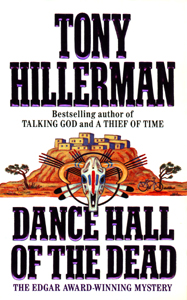
Other cultures have venerated footraces, and I am reminded of Dance Hall of the Dead written by Tony Hillerman. In this book, Lt. Joe Leaphorn of the Navajo police becomes involved in the case of the disappearance and death of a young boy. Ernesto, a young Zuñi, has been chosen to impersonate the Fire God in the incoming Zuñi sacred celebrations. He has been training so that he can run, dance and participate with great strength. Proud of the fact that he has been so honored, he couldn’t help tell his friend George about it, which was an improper thing to do, but he needed George's help in his workouts.

When Ernesto's body is found cruelly murdered, George takes off, trying to right the karma. But, as is often the case, one death follows another and Leaphorn knows he has to find George before anyone else does. Leaphorn believes that there is a reason for everything, that there is a synchronicity to nature. Every cause has its effect and every action its reaction. In all things there is a pattern, but in this situation Joe Leaphorn struggles to find it.


Native Americans have made their mark in the Olympic running events. A Hopi, Lewis Tewanima, won silver in the 10,000 meter, and the only American to ever take gold in this race is Billy Mills of the Oglala Lakota nation. A Penobscot, Andrew Sookalexis, was 12th in the 1912 marathon.

If you ever want to see a stirring movie, check out Running Brave: The Billy Mills Story.

Jim Thorpe
It has been 100 years since Jim Thorpe, a Sac and Fox Indian from Oklahoma, wowed the world with his epic performance in 1912 of 15 feats that won him Gold in the pentathlon and the decathlon and the title of the greatest athlete in the world. Even though he was stripped of his medals because he had earned some money playing in a summer baseball league, this same offense was overlooked when white athletes did the same thing. Later, in 1982, his medals were restored but not his records, which were not exceeded for decades.

Well, if you can see a few sports amidst all the interviews, commercials and general talkitis of the Olympic coverage, enjoy the next two weeks. If you miss anything you can make it up by reading books about similar events. Janet Rudolph's blog Mystery Fanfare has an excellent list of murder at the Olympics books.