Friday, February 13, 2015

Say It with a Book

Nobody says you have to actually eat
these chalky little hearts.


People, I hope you haven't forgotten tomorrow is Valentine's Day. I urge everybody to observe the day, even if you don't have a lover who's hoping for a gift or a nice night out––and the amenities of the relationship later. Don't think of it as a money-making scheme cooked up by chocolate manufacturers or Hallmark Cards. Life is short and often brutal, so let's express some affection on a day specially set aside for it. You must have a pet, a neighbor, a friend, a boss, or a relative you're fond of. Even if you're a total misanthrope, you can kinda get into the spirit of tomorrow and give yourself a little something. I'm here to help you with what that little something could be.

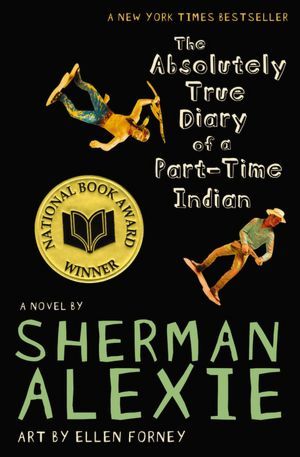
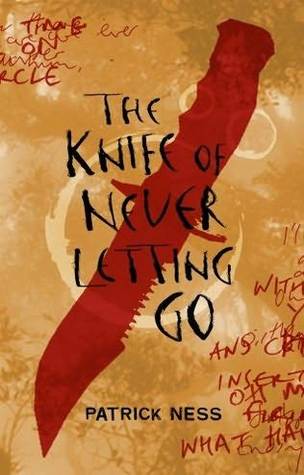
Now, gift-giving is a balancing act between what you think your recipient would like and what you want to give him, her or it. Of course, just because your 13-year-old son or daughter would like the keys to your 2015 Maserati GranTurismo, and Fido wants that platter of chocolate cookies on the counter doesn't mean you're going to give them those things, even on Valentine's Day. No. Your best gift to Fido is a long, patient walk on the leash, after you've asked him who's a good boy and let him lick your face. For your kid, you'll leave some milk in the fridge and a couple of chewy fudge brownies (see recipe here) in a plastic baggie on top of a wrapped copy of Sherman Alexie's hip and funny The Absolutely True Diary of a Part-Time Indian; Patrick Ness's The Knife of Never Letting Go (the first in the dystopian Chaos Walking Trilogy), in which everyone can hear every one else's thoughts; or Bryce Courtenay's The Power of One, featuring a South African boy who grows up in the 1930s-1950s and aspires to be the welterweight champion of the world. Or, if it's too late to pick up the book, scribble in the Valentine's Day card that you've ordered it and it's on its way. Or include an emailed Powell's Books eGift certificate in the card. Don't forget to say I love you.

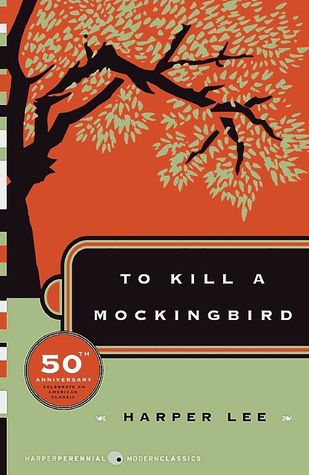
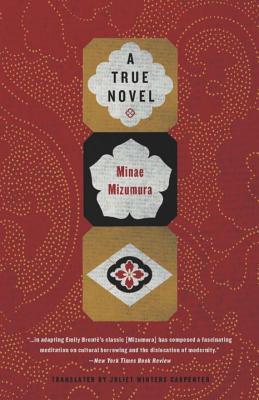
A good choice for the conscientious mother who reminded you about the Golden Rule until it leaked out of your ears when you were a kid is a copy of Harper Lee's To Kill a Mockingbird. Stick inside a note detailing how much you appreciate her. You must illustrate the note, no matter how poor an artist you are, with a picture of the two of you––draw stick figures if necessary. If you know To Kill a Mockingbird is already on her shelf, you can pre-order her Lee's Go Set a Watchman (Harper/HarperCollins, July 14, 2015) here or at your favorite online independent bookstore. Minae Mizumura's A True Novel, a re-imagining of Emily Brontë's Wuthering Heights in post-WWII Japan, or the layered and twisting tale of Margaret Atwood's The Blind Assassin would be other great Valentine Day's choices. Or, show your mom that she can relax, now that you've turned out okay, with a light-hearted or satirical book: Anita Loos's Gentlemen Prefer Blondes, Max Beerbohm's Zuleika Dobson or Martin Amis's Money.


If you're still working on turning out okay, offer your dad encouragement by showing him at least you know a good book when you see one and you have a sense of humor. Choose one with a theme of innate savagery such as The Call of the Wild by Jack London, anything by Cormac McCarthy, or Joseph Conrad's Heart of Darkness. With a book like this, you can give soft candy such as caramels, jelly beans, or whatever candy you know he likes. If you're completely incorrigible, give yourself Richard Matheson's tale of horror, Hell House.
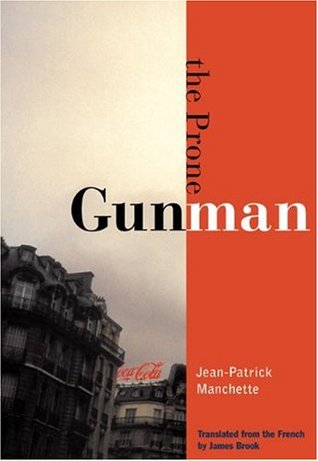
Got a sorta cynical sibling or long-time friend who's been with you through thick and thin? Pay tribute to your relationship, not with something sentimental, but Will Christopher Baer's surrealistic Kiss Me, Judas, in which disgraced cop Phineas Poe goes through a very bad time; Thomas Pynchon's blast from the psychedelic past, Inherent Vice (include an invitation to see the movie in your card); or Leigh Brackett's No Good from a Corpse, featuring hard-boiled private eye Ed Clive. Some other appropriate hard-boiled choices include Roberto Bolaño's The Savage Detectives, Jean-Patrick Manchette's The Prone Gunman, and Sébastien Japrisot's Trap for Cinderella. Accompany the noir with a good bottle of Pinot Noir. The Pynchon goes well with the Beach Boys' Good Vibrations, a harmonica, or a pint of heavenly hash ice cream. (Any other accompaniment is between you and your local police force.)



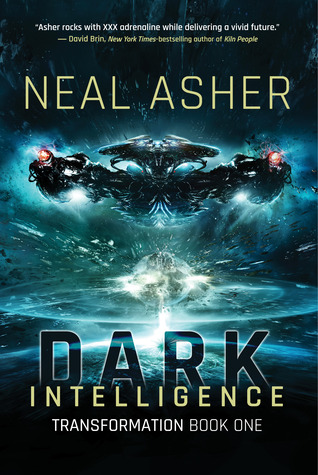
Maybe your spouse or one of your old friends needs a dose of playfulness. Give him or her the opportunity to exercise that ol' inner nut ball with something eccentric, such as a literary figure who refuses to stay dead (Marcel Theroux's Strange Bodies), a man who is brought back to life after dying a century earlier in a human vs. alien war (Neal Asher's Dark Intelligence (Nightshade, February 3, 2015)), or a ritual that changes the lives of three Cambridge students (The Course of the Heart, by M. John Harrison).


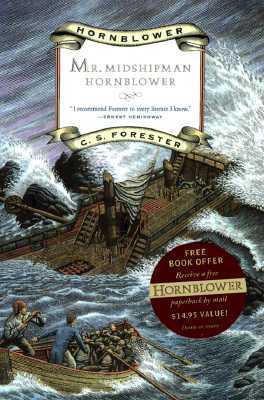
Long-time Read Me Deadly readers know I'm a proponent of reading in the tub. If this also appeals to you and/or your lover, have a special Valentine's Day tub session. Give him or her one of the Horatio Hornblower books by C. S. Forester; an Aubrey-Maturin book by Patrick O'Brian (the series, set during the Napoleonic era, begins with Master & Commander); or Herman Wouk's The Caine Mutiny. Gather plenty of towels, put your glasses of wine or rum out of harm's way (fortify yourself first), arm yourselves with water pistols and a super soaker to replicate the firing of a water cannon, step into the water-filled tub, and act out scenes. At some point, you'll want to sing Anchors Aweigh (or consult this site for a British naval ditty).

An alternative: Perhaps you weren't raised by parents who taught you to always play fair––or maybe they did, but surely they're not in the bathroom with you now, and, besides, we all know all's fair in love and war. Don't mention to your lover that there's a battle brewing, and when he or she slips into the tub, open surprise fire with a blast from a water bazooka. A further alternative: After both of you are sitting in the water, grab his or her leg––using your hands rather than your teeth, because you need your mouth to yell the "duh duh duh duh" of the Jaws theme song––and commence a' wrestlin'. (Note: Be sure you closed the bathroom door before climbing into the tub, or you may find your dogs joining the melee at sea. If they do, I hope your windows are closed or your neighbors will wonder what the heck is with all the barking, yelling, and splashing.) After someone has surrendered (we will not say "thrown in the towel"), curl up in bed with cups of soup in which are floating some little oyster crackers. This is the perfect time to watch Jaws, Das Boot, The Search for Red October, Master and Commander, or Run Silent, Run Deep. Then bring up what they say about oysters, which surely holds true even if they're only crackers, and don't go to sleep.

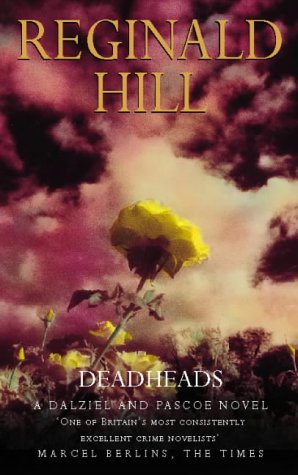
For other folks, you can accompany a book with another gift. For example, for someone who loves gardening and crime fiction: Dig up a lovely old teacup and saucer, put a couple of small stones in the bottom of the cup, add some African violet soil mix and a miniature African violet. Give this little plant along with Reginald Hill's Deadheads. Or perhaps you know somebody who's constantly getting lost. Accompany a mobile GPS system with a book in which location is important: Charles Willeford's Miami Blues or Brighton Rock by Graham Green.

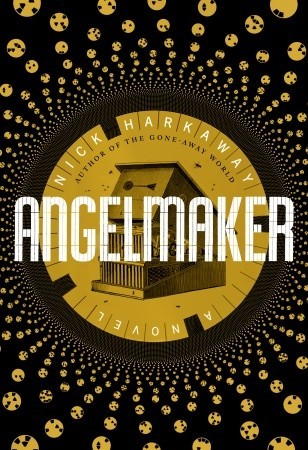
For someone with a lot of books in a TBR pile, a huge zippered tote bag comes in handy. Good bags are offered by LL Bean, and there's no shipping charge; it's too late to order one to arrive tomorrow, but you can say in a card that it's coming. Using this bag makes a TBR pile portable, and in addition, removes it from the eyesight of a guilt-ridden reader. I like this idea so much I bought several large zippered bags for myself and keep one full of books in the car. Before giving, don't forget to first add a book to the bag––in effect, you're "seeding" it. Some choices: Dennis Lehane's The Given Day is the first in the excellent Joe Coughlin trilogy (the third, World Gone By, is due out this spring, and I can hardly wait). To someone who bemoans life as giving no second chances, give Kate Atkinson's Life After Life. For anyone who hasn't already read it, Angelmaker, by Nick Harkaway, is a riot of fun.



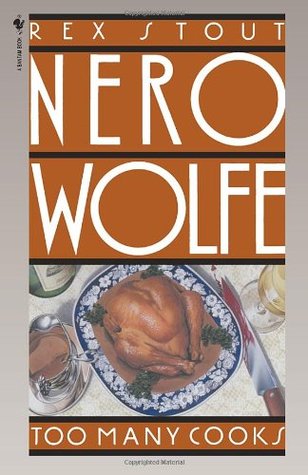
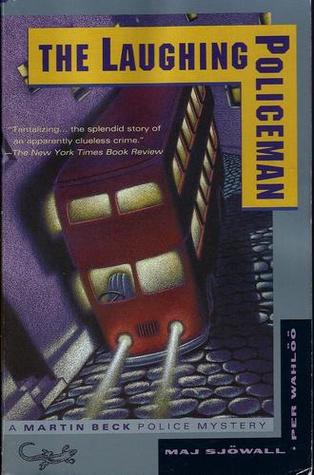
Give a cheap used book of literary fiction such as Stendhal's The Charterhouse of Parma with a subscription to the London Review of Books or The New York Review of Books. Accompany a used book of mystery fiction (some good bets are Raymond Chandler's The Big Sleep; Maj Sjöwall and Per Wahlöö's The Laughing Policeman; and The Friends of Eddie Coyle, a heist novel by George V. Higgins) with a subscription to Ellery Queen's Mystery Magazine. Mention the online fan club, The Wolfe Pack, in the card taped to a Nero Wolfe book by Rex Stout (i.e., Too Many Cooks or Some Buried Caesar). Accompany a Sherlock Holmes DVD or book with a card that includes information about the Sherlockian web portal. Andy Weir's The Martian is a good present for any adult halfway interested in science, unless you know he or she would strongly object to the use of an occasional f-word. Be sure to mention Matt Damon will be starring in the movie later this year.



I hope you have a great Valentine's Day tomorrow. After you've rounded up books to give your loved ones, treat yourself to one, too. Let us know what you're giving and expect to receive. Our TBR piles are suddenly looking kinda puny.

Wednesday, February 11, 2015

Vicki Delany Sampler

"You can't go back home to your family, back home to your childhood, back home to romantic love, back home to a young man's dreams of glory and of fame, . . . back home to the father you have lost and have been looking for, back home to someone who can help you, save you, ease the burden for you, back home to the old forms and systems of things which once seemed everlasting but which are changing all the time––back home to the escapes of Time and Memory." (Thomas Wolfe).

In Vicki Delany's Scare the Light Away, Rebecca McKenzie doesn't empathize with Thomas Wolfe or his beautifully evocative prose at all. In fact once she clambers on the great dirty bus in Hope River, B.C., that is to take her to Toronto, she vows never to return. She has kept that promise for 30 years, but now she feels compelled to be present for her mother's funeral.

As she pulls up to her old home, she feels like many others who see the houses they grew up in. The place looks smaller and a bit dilapidated. She finds her father, Robert, older and gray. She also finds that he is quite happy to see her again and she hopes that what her mother told her in her letters about the improvement in his drinking problem is true.

Her sister, Shirley, is not particularly happy to see her return, but her younger brother, Jimmy, once a wild and careless youth, seems to be more settled and content.

In small towns like Hope River, funerals of longtime residents are an event, but the death of Janet McKenzie is overshadowed by the disappearance of a young girl, Jennifer; a girl who had been spending time with Jimmy McKenzie at work, where he was teaching her the ropes.

Rebecca doesn't want to believe Jimmy is involved, but she knows why she left Hope River in the first place: to escape the clutches of her psychopathic grandfather who tormented her, aided and abetted by the young Jimmy. Her drunken and indifferent father couldn't––or wouldn't––stand up to the old man and her frightened grandmother, who had become withdrawn and apathetic, usually hid in the kitchen. Her mother tried  to never leave her alone with the old man, but she wasn't able to protect her 24/7.

Robert McKenzie asks Rebecca to stay and go through her mother's things. He tells her that her mother kept a journal for all of their married life. As she begins to read the boxes full of memories that Janet left, Rebecca begins to see a different picture of the woman she thought she knew.

Janet was a young girl full of dreams when she met the very handsome Canadian soldier, Robert McKenzie, in war-torn Britain. Despite the worries of her parents, who knew they might never see her again, the couple married in the spring of 1944. Her entries cover the time of waiting before she could join other war brides who were being shipped to Canada after the war. She thought she was headed for a beautiful farm and a productive life.

She sparingly describes the difficulties she faced when she came to realize that Robert still lived with his parents. The farm didn't exist. Father McKenzie had Robert cowed into a state of lethargy from which he escaped through alcohol. This left Janet at the mercy of a viciously cruel father-in-law. As Rebecca learns more about her mother, she finds out why and how her mother made it possible for her to escape.

Rebecca and her dog are taking a walk when they discover the body of the missing girl. When eyes of suspicion fall on all her family, she decides to play a part in discovering the killer.

In this story, Vicki Delany takes skeins from the past and weaves them with threads of the present into a very compelling account of a life in postwar Canada that was the seed of the terrible things to come.

Scare the Light Away is a stand-alone, but Delany has several series to her credit. My favorite is about rookie RCMP constable Molly Smith, who has been assigned to Trafalgar, a small mountain town of British Columbia, Canada, which just happens to be her hometown. She finds it hard enough to find her feet in this new job without having to deal with her parents, who are aging hippies and who still refer to her by the name they bestowed on her, "Moonlight." While Trafalgar is normally a tranquil area, Molly finds plenty of crime to keep her busy under the watchful, sometimes critical, eye of her boss, Sgt. John Winters. These take place in present day.

Another of Delany's series takes place during the Klondike gold rush of 1898. It centers on Fiona MacGillivray, who owns a dance hall in the town of Dawson in the Yukon Territory. She has a son to raise who, like all children, is growing up too fast and who being influenced by a bunch of Wild West type of characters. There is no dearth of crimes in this area and the stories are exciting with a nice sense of time and place.

A departure for Delany is a series written under the pen name Eva Gates. This series is situated on the other side of the continent in the Outer Banks of North Carolina. By Book or by Crook (Signet, February 3, 2015) is the first in the Lighthouse Library series. I do enjoy books about books and since there's a beach and warm weather thrown in, I'll look for it at my library.

Monday, February 9, 2015

Save Me From a Life of TBR

You know your TBR situation is bad when you have to organize the books you haven't gotten around to reading yet. I now have three TBR areas––not counting the pile of five books on the end table next to my living room chair.

In the living room––conveniently next to the liquor cabinet––there is a three-foot-long collection of books that I really, really expect to read in the next few months. To be honest, some books do get demoted from that collection to the den, where there are two bookcases of TBRs. One bookcase is for non-mystery books, and the other for mysteries. Most of the books on the mystery bookcase are ones that I picked up at used-book sales or bookstore closings.

I have to pass by the bookcases on my way to the laundry room, and the other day I took a good look. I resolved that one of those lonely mysteries should graduate to the living room, and maybe even to my end table. But which one?  I was able to narrow it down, but now I need help.

Here are five candidates:

Ian Rankin: The Complaints

I was an avid reader of the Rebus series, starting way back in the late 1980s. Then Rankin supposedly ended the series in 2007, with Exit Music, and I believed him. So much so that when Rankin's first Malcolm Fox novel, The Complaints, came out in 2009, I just felt like I was done and never picked it up. Three years later, along came a surprise new Rankin novel, Standing in Another Man's Grave, which also featured Fox. I had to read that one.

I picked up a copy of The Complaints at a book sale a couple of years ago and it has been sitting there on the shelf ever since, despite being a nice, barely-used hardcover. Should I give Malcolm his chance? Frankly, even though Rebus would try anybody's patience, Fox comes across as a real pill in Standing in Another Man's Grave. But I could be persuaded that his introduction is worth reading.

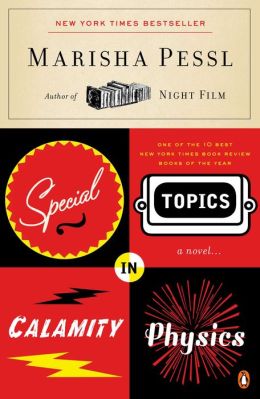
Marisha Pessl: Special Topics in Calamity Physics

Book descriptions have a bad habit of over-promising, but this debut is described as Nabokov meets Donna Tartt. Well, that makes me pay attention. On the other hand––pretension alert!––the protagonist is named Blue van Meer. On the third hand, it's about a high school murder, and what survivor of high school doesn't want to read about that? I'm so confused!

This is another nice hardcover that I picked up at a used book sale. I have another problem with this book that's kept it on the shelf. People keep saying that Pessl's Night Film (2014) is a very good story. I want to read it, but even though both of her books are stand-alones I feel like I should read Special Topics in Calamity Physics (2007) first. It's not that I have some kind of OCD problem (honestly!), it's just that the book is there on the shelf, just waiting, and since it's the older of the two books, it seems only fair that it should be first.

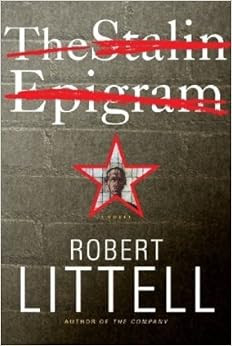
Robert Littell: The Stalin Epigram

Littell is a longtime and prolific espionage writer. His Young Philby fed my Kim Philby/Cambridge Spy Ring obsession, and The Company: A Novel of the CIA doorstop of a book managed to be both an espionage novel and multi-generational family history.

Littell's specialty is classic Cold War espionage, but he takes a little job with The Stalin Epigram (2009). As I'm sure you know, the Stalin era was no picnic. Anybody who didn't fall right into line with Stalin's harsh policies, like forced collectivization, could expect a show trial and banishment to Siberia––or worse. In the arts world, anybody who wanted his or her work published was expected to laud the big boss.

Renowned poet Osip Mandelstam refused to kowtow. He was horrified by Stalin and Stalinism, especially after he saw, from a train window, the results of collectivization. In 1933, he composed a 16-line poem and recited it to a circle of fellow artists. The results were just as you'd expect, and after he got the full treatment, including "internal exile," he died in 1939.

Littell takes this true-life history and holds it up to the light, allowing the story to be told by several different real and fictional characters, including his wife, his lover and the weightlifter/strongman who becomes his cellmate. I bought the book at a bookstore closing at least a couple of years ago, because I like Littell. I'm too much of a philistine for poetry, though, which I think is why the book has languished on that TBR bookcase ever since.

Can a philistine enjoy this one? What do you say?

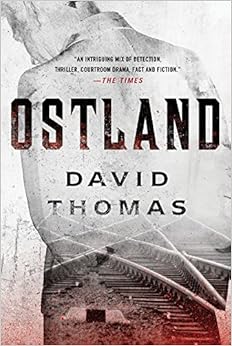
David Thomas: Ostland

This one hasn't aged on the shelf too long; I've had the UK edition for only a little over a year. This one is so up my alley I can't figure out why I haven't read it yet. Georg Heuser makes a name for himself in the Berlin police as the man responsible for capturing the S-Bahn serial killer. But the war comes along and he's part of an SS contingent sent to the east, called Ostland by the Germans. In Minsk, instead of catching serial killers, he becomes a key actor in the Nazis' mass killing machine.

Years later, a young German lawyer named Paula Siebert is going through recently-opened Soviet archives and discovers the horrors of Heuser's past in Ostland. Now Heuser and his SS comrades will go on trial. The narrative shows us how a "decent German" went from an enforcer of law and order to an institutional killer. This is a novel, but Georg Heuser was a very real person who went on trial in 1962 for his activities in Ostland.

Cyril Hare: Tragedy At Law

This is embarrassing. I have no idea how long Tragedy At Law (1942) has been moldering on the TBR bookcase; just that it's been a long time. I don't even remember where or how I got it.

Cyril Hare (real name Alfred Gordon Clark) was a barrister who became a county court judge, the kind who traveled a circuit in the old days. In this Golden Age classic, Hare took advantage of his experience to create the pompous Judge Barber, who is traveling his circuit with his clerk and his striving wife, Hilda.

Judge Barber's career is put in jeopardy when he accidentally knocks down a pedestrian. Shortly after that, he receives threatening messages, is nearly killed by a box of poisoned chocolates, and worse. Hare liked to have his plots turn on tricky points of law, and this one is described as following that practice.

Cyril Law's An English Murder is one of my all-time favorite Golden Age mysteries, so why haven't I read this one yet? Could it be as simple as the fact that it's a battered old paperback? Can you tell me I shouldn't overlook this book because of its cover?

* * * * *

I'm ready for your advice. Which book should graduate? Let me know in comments or you can vote in the poll at the top right of the page.

Friday, February 6, 2015

Murder in Paradise, Murder at the Top of the World

In the last two weeks, we've had four snowstorms and a total of almost four feet of snow. Excuse me if I find it hard to get too excited about a new murder mystery series set above the Arctic Circle. Still, given the star-studded cast and the big publicity, I had to at least check out Fortitude, a 12-part miniseries that began last week.

The production is a venture between the UK's Sky television and the US's Pivot channel. (What, you never heard of the Pivot channel?) Here's the setup. Fortitude is a settlement of about 700 residents, nearly all of whom work at the Arctic Research Centre or in mining. Michael Gambon plays one of the few exceptions; he's a wildlife photographer who, in one of the drama's first scenes, is walking along an icy shore when, in the distance, he sees a man down and being mauled by a polar bear. He gets a rifle shot off at the bear, but then a lawman shouts at him that it's all under control and he should leave.

That lawman is Sheriff Dan Anderssen, and he quickly finds that the man is a homicide victim, the first ever in Fortitude. Anderssen is none too pleased to find that means the arrival of an outside investigator from London and formerly of the FBI, Eugene Morton, played by Stanley Tucci. Morton's investigation reveals that there is a whole lot more simmering on the woodstove in Fortitude than hot soup.

The local governor, Hildur Odegard (played by Sophie Gråbɵl, who was in the original Danish production of The Killing), has big ambitions for Fortitude. She wants to build one of those ice hotels to draw a lot of tourists. A homicide isn't going to help her plans. Neither will a local boy's sudden illness that might be measles but might be a strain of polio that he brought with him when his family moved to Fortitude from Afghanistan. To add to her headaches, somebody has discovered what look like wooly mammoth bones, which biologist Stoddart (played by a former Doctor Who, Christopher Eccleston) would use to put the kibosh on the hotel.

I've only watched the first episode of Fortitude, but I thought I should let you all know about it so you can check it out for yourself. Nordic noir, which mystery mavens have been familiar with for several years now, has started to gain strength in the TV medium. If you enjoyed The Killing or other moody crime dramas, give this one a try. It's got that gloomy, claustrophobic foreboding that is so familiar in Nordic noir. But fair warning; you have to pay very close attention. It's not clear at the outset what is going on a lot of the time and the mix of the characters' accents often makes it hard to follow the dialog.

Checking out the series at all can be a bit of a challenge. In the UK, it's on Sky Atlantic on Thursday nights at 9pm. If you're in the US, do you have the Pivot channel? If you have DirecTV, it's included in most packages on channel 267, and the show is on Thursdays at 10pm (Eastern). Some satellite and cable systems that don't carry the Pivot channel nevertheless carry Fortitude as an on-demand program, so take a look at that possibility. The Pivot channel website is streaming the series here as well. Finally, if you want to educate yourself about the series, visit its website here.

If I can't be on a nice warm beach this winter (like my brother-in-law and his spouse, who are in Maui right now, not that I resent them at all), then watching Death in Paradise allows me to enjoy the sun, sand, sparkling sea, tropical breezes––and murder––vicariously. This UK production, filmed on Guadeloupe, is set on the fictional island of Sainte Marie.

The series began in 2011 on the BBC, and is now in Season Four. In the US, you can likely find it on your local PBS station, most of which are currently showing Season Two. If you go to the pbs.org website, you can watch streaming video back to the beginning of the series.

The series begin with the arrival of Detective Inspector Richard Poole of Scotland Yard to Sainte Marie. Poole is disgruntled to find himself sent to Sainte Marie to solve the murder of a police officer, and then horrified when he is pressured to assume the dead man's position on the force. Poole is hostile to sun and heat and he can't stand the relaxed pace. (Kind of like my cousin Lisa from Boston, who gets very irritated when the staff at my local Dunkin' Donuts tries to make small talk rather than produce her coffee instantly and with zero chit-chat.) Poole stomps around Sainte Marie wearing a suit and tie, seeming to hope that if he continues to dress as a Londoner he'll return to London very soon. No such luck.

As Poole reluctantly settles in, he gets to know the local force. Commissioner Patterson is intensely grouchy, but officers Fidel and Dwayne are unfamiliar with the concept of intensity. That's not the case with the gorgeous––but sharp tongued––Camille Bordey. Camille is the only female on the police force, but anybody who tries to take advantage of her beauty or gender is likely to get sliced up by that tongue. She's none too patient with this stuffy English interloper, but they develop a prickly, yet effective, partnership.

The cases that Poole, Camille and the force tackle are sometimes very island-oriented, such as voodoo, a scuba diving death, and drug running by yacht. Others, though, could be crimes committed anywhere; the viewers just get the added treat of the tropical scenery.

I won't claim that Death in Paradise is high art or that the production values are elevated. No, this is standard BBC murder mystery fare––but worth watching because of the appeal of the characters and the attractiveness of the setting.

Just a quick final mention. If you prefer your crime stories to be set somewhere between the extremes of the Arctic Circle and Sainte Marie, the third season of The Americans just began on FX. This thrilling and stylish story of deep undercover KGB spies working in Washington DC in the 1980s, which I wrote about here two years ago, is entering a fascinating new phase as the protagonists' two kids become interesting to the Soviets as possible second-generation agents. The success of The Americans has apparently inspired a new show on NBC called Allegiance, which began last night. I'll be sticking with FX.

Wednesday, February 4, 2015

Book News Wednesday

Some book news for Wednesday:

For 55 years, To Kill a Mockingbird has been Harper Lee's only published novel. Now a sequel of sorts, Go Set a Watchman, will be published on July 14, 2015, by Harper/HarperCollins. Lee wrote it in the mid-1950s before TKAM, but it's set 20 years later, when the adult Scout returns to Maycomb, Alabama, to visit her father, Atticus Finch. The announcement of the manuscript's discovery and pending publication (Harper's senior vice president states it will not be altered from the original manuscript) comes months after the death of Lee's sister/lawyer and makes me somewhat uneasy as well as excited (see the New York Times article here).

A reminder about some books out this month:

Sara Blaedel, The Forgotten Girls (translated from the Danish by Signe Rød Golly; Grand Central, February 3): An unidentified corpse is found in a Copenhagen forest, and Louise Rick, the new commander of the Missing Persons Department, and her journalist friend, Camilla Lind, investigate.

Tom Cooper, The Marauders (Crown, February 3): After the BP oil spill, residents of Jeannette, Louisiana, pull out all stops on schemes to make money.

Peter Swanson, The Kind Worth Killing (William Morrow, February 3): This is a re-imagining of Patricia Highsmith's classic, Strangers on a Train.

Michael Kardos, Before He Finds Her (Mysterious Press, February 3): Fifteen years ago, Ramsey Miller murdered his wife and three-year-old daughter, Meg, before he disappeared; however, Meg (now Melanie) actually survived and plans a return to New Jersey.

M. O. Walsh, My Sunshine Away (Amy Einhorn, February 17): An unsolved crime in Baton Rouge, Louisiana, alters the victim, the suspects, and their neighborhood.

James Grady, Last Days of the Condor (Forge, February 17): Set in Washington, D.C., it's the third book in the Condor spy series.

Laura Lippman, Hush Hush: A Tess Monaghan Novel (William Morrow, February 24): Melisandre Harris Dawes returns to Baltimore years after being found not guilty by reason of insanity for the death of her 2-month-old daughter in a hot, locked car.

Ariana Franklin and Samantha Norman, Siege Winter (William Morrow, February 24): In 12th-century England, a couple of travelers give archery exhibitions against the backdrop of a civil war between Queen Matilda and King Stephen.

Jussi Adler-Olsen, The Alphabet House (translated from the Danish by Steve Schein; Dutton, February 24): The author's first stand-alone novel, a psychological thriller, is set during World War II and features two British pilots who are shot down behind enemy lines.

Edvard Munch's portrait of Kessler (1906)
And a recommendation for those who like reading other people's diaries. You'll find these diaries more elegantly written and of more historical interest than your older sister's journal when you were in middle school, I promise:

Harry Kessler, Journey to the Abyss: The Diaries of Count Harry Kessler, 1880-1918 (translated from the German and edited by Laird M. Easton; Knopf, 2011) and Berlin in Lights: The Diaries of Count Harry Kessler (1918-1937) (translated and edited by Charles Kessler; Grove, 2000): Harry Graf Kessler was a writer and diplomat who lived in Berlin; traveled extensively; and met many world leaders, philosophers, writers, and artists. The observations and evolving thinking in the 1500 pages of his diaries make fascinating reading.