Tuesday, July 16, 2013

A Rose By Any Other Name

Quietly, in the early spring, a novel by a new author Robert Galbraith called The Cuckoo's Calling was published. The author's note gave a short bio reporting that Robert Galbraith spent several years with the Royal Military Police before being attached to the SIB (Special Investigative Branch), the plainclothes branch of the RMP. He left the military in 2003, and was working in the civilian security industry. The idea for Cormoran Strike grew directly out of his own experiences and those of his military friends who returned to the civilian world. "Robert Galbraith" is a pseudonym.
As The Cuckoo's Calling begins, 25-year-old Robin Ellacott has just experienced some of the best times of her life. She had moved to London to be with her boyfriend, Michael, and last night she became romantically engaged to Michael at the Eros statue in Piccadilly Circus. While Robin looks for a real job, she is working as a secretary, through a temp agency. On this morning, she is on her way to a new assignment. She is about to knock on an office door when she is literally bowled over by a very large, disheveled man, who bursts out of the door and nearly knocks her down a stairwell. This bulldozer turns out to be Cormoran Strike; an apt appellation, since he shares a forename with the first giant felled by Jack, in the fairy tale, Jack the Giant Killer.

Like Robin, Cormoran has also had an epoch-changing 12 hours. He has just broken up with his long-term girlfriend, Charlotte, who dented his head with a heavy glass ashtray as a goodbye present. He is on his last leg, both literally and financially, since he lost his lower leg not so long ago in war action in Afghanistan. Now he's lost his home, belongings and security, and is not sure what is coming around the corner––other than Robin.

Almost before Cormoran can pull himself together, Robin is introducing him to a new, wealthy client who wants him to investigate the death of his adopted sister, Lula Landry. She was a most beautiful supermodel, who appeared to have jumped out of a top story window in a suicidal depression. The client, John Bristow, is convinced that she was pushed. So, even with his life in disarray, Strike falls back into the familiar soldierly state of doing what must be done, without question or complaint.

A cuckoo is a small, brownish-gray bird that lays its eggs in another bird's nest. In this book, the cuckoo gives clues to the mystery. There are certainly birds growing up in others' nests in the plot, not only in the victim's family, but Strike's as well. He counted at least 17 schools that he had been hustled in and out of during his childhood. He was the illegitimate son of a famous rocker who cared little for him. The cuckoo is also known for its repetitive cry, and there are many repetitive cuckoo-like cries from all sorts of characters in this book, which give the reader pointers in the right direction.

The character Strike is fairly standard for a fictional PI. He comes from a policing background, he has a disastrously complex personal life and he has a great new young partner––I mean secretary––who is one of the only good things going for him. The case is not that unusual either; I have read a few "was he pushed or did he jump" scenarios. But what I really enjoyed was the ambience of London, the view through opera glasses at the lives of the rich and famous, and how the author took these ingredients and made an excellent reading experience from them. You would never guess that this was a debut novel. And of course it wasn't.

As it happens, Robert Galbraith is pure fiction as well. This is a nom de plume for the very well-known J. K. Rowling, of Harry Potter fame. Rowling has been quoted in a British newspaper as saying, "I had hoped to keep this secret a little longer because being Robert Galbraith has been such a liberating experience. It has been wonderful to publish without hype or expectation and pure pleasure to get feedback under a different name."

Since the news broke, New Statesman reports that the book's sales from Amazon alone have gone up more than 150,000%. Rowling once said, "The fame thing is interesting because I never wanted to be famous, and I never dreamt I would be famous." She has also been quoted as saying, "I was convinced that the only thing I wanted to do––ever––was write novels."

In that case, it is not surprising that Rowling has continued to write novels. Her last published Harry Potter story, Harry Potter and the Deathly Hallows, was published six years ago, in July of 2007. She did publish an adult novel, The Casual Vacancy, that came out last year and sold like hotcakes. I must admit is on my wish list for when it comes out in paperback, which is any day now.

Someone seeking anonymity can change appearance, name and alter a biography, but experts will tell you that a voice will always reveal the real identity.

Of course, with the knowledge of hindsight, I can hear the Rowling voice in Galbraith's words. Robin, the character who opened the book, immediately charmed me, and I was firmly a Cormoran supporter before the first chapters were done, just as I was with young Harry P. The wonders of London were described so that I could visualize them, as I did the peripatetic stairway at Hogwarts.

Obviously, Rowling is not the first author to write under an assumed name. In 1870, Charlotte Brontë admitted that she and her sisters had been writing under masculine names. Well-known author Nora Roberts writes under at least three other names. Even Stephen King tried out a nom de plume or two; the best known of which is Richard Bachman.

Donald Westlake was an American writer with over a hundred novels and nonfiction books to his credit. He specialized in crime fiction, much of it comic capers, and he wanted to try to see if he would be as successful in a different guise. He began a series of books that he was writing simultaneously in order to keep his character consistent. He wrote the books under the pen name Sam Holt. His publisher, unknown to him, let the bookstores in on the secret in order to boost the sales of the book. In the introduction to One of Us Is Wrong, Westlake said he became aware of this and he lost heart and did not finish the series for years. On the other hand, he must not have completely lost heart, since he is known to have written under about a total 16 pseudonyms.

The question is: Did Rowling countenance the leak to the British newspapers? Bob Minzesheimer of USA TODAY speculates that she did, because she was not very angry at being outed. Either way, I hope there is another book in this series. I will get it ASAP. I am anxious to know what happens to Strike, and what the future holds for Robin. It will come as no surprise that Strike solves this very high-profile case and, of course, now he has a name. What will he do with it?

Friday, July 12, 2013

Review of Suzanne Rindell's The Other Typist

Today we welcome a guest writer, Rich Stoehr, father to three beautiful daughters, avid reader, occasional reviewer, and newly-minted employee of Amazon.com.  Rich is here to review The Other Typist, by Suzanne Rindell, published on May 7 by Amy Einhorn Books/Putnam. This is one of the books we suggested a couple of weeks ago as a summer read, and it looks like Rich would happily urge you to carry it with you to your hammock. But before the review, a few words of introduction from Rich.

I'm honest, and I'm rarely afraid to speak my mind. I'm generous with my praise and I try to be constructive in my criticism. And I do love to entertain. Today, I'm happy to be alive, happy to be busy, happy to be doing what I love with people who I love to be around. In an ocean of experience, and in the words of John Green, I'm "grateful to be a little boat, full of water, still floating."


It was the best of times, it was the worst of times. The 1920s were a turbulent age for America, which Suzanne Rindell captures very neatly in The Other Typist.

On the surface, it's the story of Rose, a typist for a police station in New York City in 1923. Rose is, by her own description, the essence of plain, never offensive and easy to miss, dedicated to her job and to her moral center. The Other Typist is narrated by Rose herself, in the aftermath of an alluded-to event that only becomes clear near the end of the book. Enter into Rose's plain, ordered world a new typist––bright, brash, and independent Odalie. Though the two women could not be more different, they form a fast friendship.

As Rose and Odalie grow closer, we see the other side of New York in the '20s––the speakeasies and the parties and the new sensibilities. Odalie introduces Rose to the ever-deepening world underneath the rigidly-ordered world Rose has known. And gradually, we see that Rose's tale has an odd element to it––something vague and unsettling that doesn't quite sit right. As she begins to break her own rules, both in her dedication to the truth at the police precinct and in her personal life, the cracks in her narrative subtly reveal themselves.

Rindell's craft is finely-tuned here, and only rarely does she show a little too much of her hand as the story progresses. Rose's narrative voice is both plausible and enticing, hinting at things yet to come and never faltering. "The devil is in the details," Rose remarks at one point, and Rindell takes great care to get the details right here.

The story of Rose and Odalie's friendship is one of dichotomies––not only the difference between a life of rules and a life of independence, but of a nation still struggling to find its identity after a crippling war and in a new century. In Rose's struggle to find herself I saw a much deeper undercurrent of a traditional, conservative identity locking horns with the new and the exciting––tradition in conflict with possibility.

But they're not really so different, are they, Rose and Odalie? They are both products of their age, reflecting different aspects of the same era––opposing sides of the same coin. The best, and the worst of their time.

The question is, which is which? Who, in the end, is "The Other Typist"? Read it, and you just might figure it out for yourself.

Note: A version of this review may appear on Amazon and other reviewing sites under my user names there.

Wednesday, July 10, 2013

Lost Girls

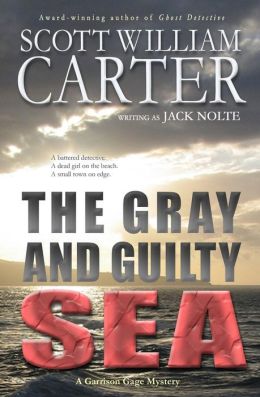
The Gray and Guilty Sea by
Jack Nolte and Scott William Carter

What happens to tough guys when they retire? Garrison Gage was a smart-mouthed FBI-trained P.I. in the Big Apple, one of the best and most successful in the business. After a very high profile mob case that he worked with the FBI left his wife dead and him permanently crippled, Gage, still on the right side of 50, lost his taste for the city and the business and moved as far away from both as he could. In the small town of Barnacle Bluffs on the rocky coast of Oregon, he has lived anonymously––almost as a recluse––for the last five years, bitterly nursing his grief and self-loathing. He has no phone, no television, no computer; preferring to get his news late from the few newspapers that he takes, or from his housekeeper. The only friend from his past that he has stayed in touch with is retired FBI agent Alex Cortez, happily puttering in his nearby used bookstore.

Gage found the girl one winter evening when he was walking on the beach with his cane, cursing his infirmity. She looked to be no older than 20, and was wearing only a t-shirt and black lace panties. Her eyes stared blindly at the sunset and her limbs were tangled in seaweed. She hadn't been dead very long, but she had been banged up a bit and there were abrasions on her wrists and ankles. Around one ankle a ring of dolphins had been tattooed.

Despite widespread police appeals for information, the girl remains unidentified and the misanthropic Gage, whose wife Janet had been drowned by the thugs who crippled him, finds himself haunted, and unwillingly becomes involved in the investigation. Carmen Hornbridge, editor and factotum of the local newspaper, helps in his research. As the town becomes aware of  his investigations, he comes home one night to find the chilling message "THER AR OTHER GRLS" carefully spelled out in pebbles on his porch.

A sub-theme of this story involves Gage's  housekeeper, Mattie, who is dying of inoperable cancer. Her only living relative is her granddaughter Zoe, a 16-year-old who can match Gage in rudeness. Mattie says, "Don't mind Zoe. She's not really that rude. She tells me she acts that way 'cause she's a nihilist. I don't know what that is exactly but I figure it's like having the cramps all the time." Anyone who has raised a daughter through that age can sympathize! Zoe wants Mattie to sign documents emancipating her, but Mattie wants Gage to assume guardianship of the girl. Gage, who has no children and never wanted any, is as appalled as Zoe at the request.

This was a good, tightly-written procedural with amusing and credible dialogue. It reminded me of a John D. MacDonald novel, except that Garrison Gage is a darker and more complex (and much ruder) character than MacDonald's Travis McGee. All of the major characters were well developed and believable, and Gage's reluctant re-engagement with life is as much a part of the story as the mystery. There is some mildly steamy sex, and the ability of the reclusive protagonist to withstand numerous incidents of being beaten up and drugged raised my eyebrows a bit. Nonetheless, I immediately ordered the sequel, A Desperate Place for Dying, and hope that the author will make a series of the fedora-wearing, cane-wielding, misanthropic Gage.

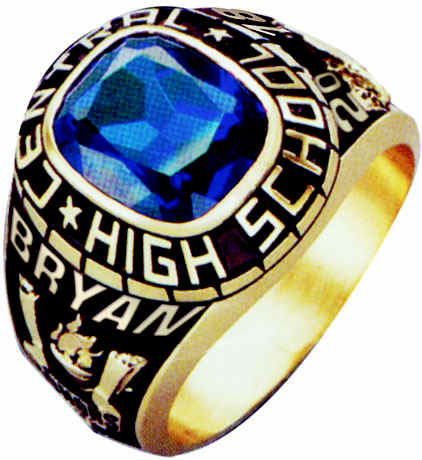
Clare Prentice seems as far from a lost girl as you can get in Martha Powers's Conspiracy of Silence. At 27, she has it made. She has a good job with a Chicago literary magazine and is engaged to the politically ambitious scion of a prominent wealthy family. When her doctor happily reports her nodules as benign––Clare's mother had died of cancer just a year ago––and suggests that she might want to look up the health history of her birth parents, Clare's entire world goes askew. No one had ever told her that she was adopted, and her mother's papers didn't indicate it. (Apparently in some states a new––false!––birth certificate can be issued when a child is adopted.) The only slender clue to her parentage may be the class ring included among her mother Rose's jewelry. None of the information she has, including her mother's birthdate, turn out to be accurate. Neither she nor her mother appear to have ever existed!

Five months later, following her only clue, she drives into the town of Grand Rapids in northern Minnesota. She had broken her engagement to Bruce almost with relief after some cutting remarks from his mother about potential dirty secrets in her background affecting his future; so Clare focused on her research and the interview she had scheduled with a reclusive local Pulitzer Prize winner. The lakeside cottage she rented from an aunt of her best friend, Gail, is charming, and Ruth, the aunt, is fortuitously the head librarian in town.

Pulitzer winner Nate Hanssen, sweetened by his friendship with her editor, grudgingly schedules an interview, but Clare's personal research is not going as well. Someone does not want old events stirred up and is prepared to do whatever is necessary to keep the secret of the old murder that she discovers, and in which she may have been involved. Her memory of long-ago events that led to a great miscarriage of justice emerge slowly, mostly through nightmares. A dog that has befriended her is beaten and injured, and there are several other apparent accidents to people who had information to share with her about her parents.

This was a nice, light, fast-moving cozy, a good summer afternoon read, although Clare's tendency to get lightheaded and faint under extreme stress got a little annoying. While I had easily guessed part of the dénouement, the identity of the killer still came as a surprise. By the way, Waldo the dog is recovering nicely and thanks you for asking.

Monday, July 8, 2013

An Other-Worldly Anniversary

Do you know what day it is? A hint: take a look at the interactive Google doodle.

Sixty-six years ago today, the information officer at the Roswell Army Air Field in New Mexico issued a press release stating that a flying disk had been found on a ranch near Roswell. Hours later, the RAAF said that the debris came from a weather balloon. Thus began the myth that an alien spacecraft had crashed at Roswell, that aliens had been autopsied, and that the US government was covering it all up.

I've never been a Roswell conspiracy believer, but I've been a fan of movies and novels involving visitors from outer space since I was a kid. On a list of my most traumatic childhood experiences is the TV viewing of the 1953 movie, Invaders from Mars. That movie begins when a young boy climbs out of bed to witness a flying saucer landing outside his window. Soon, humans become vessels for the hostile aliens; you can tell whose body has been taken over by a mark on the back of the neck. Eventually, the boy helps to save the world. As the movie ends, all seems well, until the boy once again climbs out of bed to peer out the window. Wouldn't you know it, here comes a flying saucer again.

I'll be celebrating Roswell's 66th anniversary tonight with a re-watching of John Carpenter's 1984 movie, Starman, in which Jeff Bridges, playing a sweet alien who answers a Voyager 2 invitation to visit Earth, takes on the appearance of Karen Allen's recently deceased husband. It's a great sci fi/road movie/romance that fittingly travels through Las Vegas and ends in the American Southwest.

You may prefer to watch an episode of Doctor Who; The War of the Worlds (the 1953 version is best); ET the ExtraterrestrialDistrict 9; The Rocky Horror Picture Show; or the charming Galaxy Quest, involving a group of appealing Thermians, who swoop down to Earth to pick up the crew of a cancelled TV series resembling Star Trek, because the Thermians desperately need their help dealing with the evil outer-space warlord, Sarris.

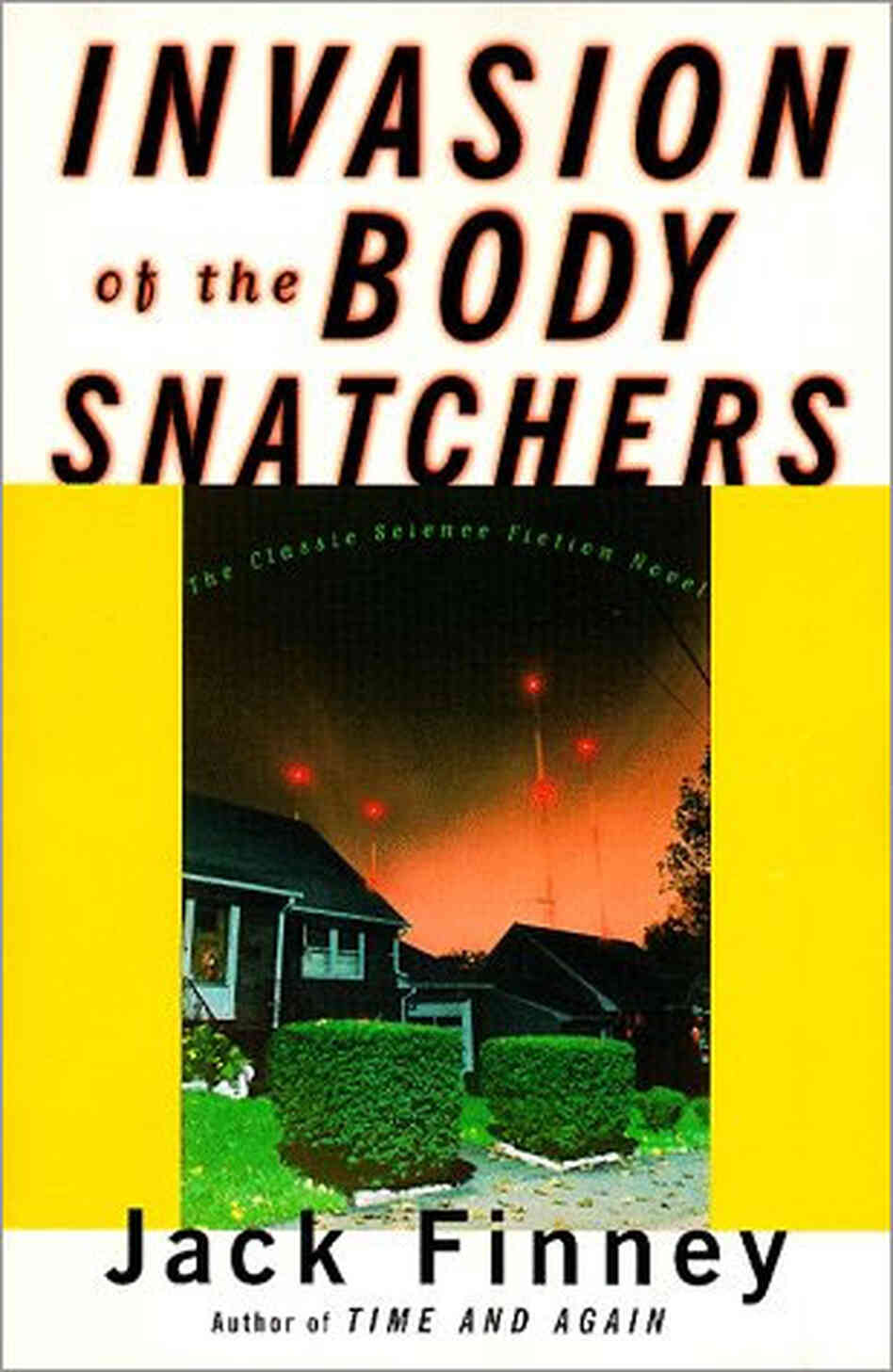
If you'd rather read about alien visitors than watch them, you could try a book we Material Witnesses have enjoyed: Rob Reid's Year Zero (mentioned here by Sister Mary Murderous; her Amazon review is here); or Jack Finney's 1955 novel, Invasion of the Body Snatchers. In that book, the author of Time and Again envisions seeds from outer space becoming pods near the fictional town of Santa Mira, California. In the pods grow perfect replicants of sleeping people who, when replaced, crumble to dust while their replacements live for 5 years. This book formed the basis for several movies. The 1953 movie's screenplay was written by Daniel Mainwaring, who also wrote the screenplay for the noir masterpiece Out of the Past; it stars Kevin McCarthy and Dana Wynter. The 1978 remake of Invasion of the Body Snatchers stars Donald Sutherland, Leonard Nimoy, and Jeff Goldblum. I enjoyed them both.

A third fun book is Robert Jackson Bennett's American Elsewhere, published by Orbit in February 2013.

Bennett's 38-year-old Latina protagonist, tough ex-cop Mona Bright, has left Houston and is drifting around when she learns her dad has died, and she has inherited his cherry-red Dodge Charger and her long-dead mother's house in Wink, New Mexico. The terms of the will give her 11 days in which to claim her inheritance in Wink.

The facts that Wink doesn't appear on any map and no tax assessor has ever heard of it are only Mona's first pointers that the picture-perfect community, created when the now-shuttered Coburn National Laboratory and Observatory was established on a nearby mesa, isn't your typical small American town. Then comes the hotel, whose last guest arrived decades ago. The proprietor, Mr. Parson, seems to play Chinese checkers with himself, and he warns Mona that it's best to stay inside at night. Over the course of this 662-page book, Mona makes a few important discoveries: all unhappy families are not alike, time and place aren't as fixed as she once thought, and Wink inhabitants have varying takes on how to live the American dream. While the last third of the book is a bit repetitious, this is a thought-provoking and entertaining read. The best book ever for a summer thunder storm.

No matter how or with whom you spend this anniversary evening, I'm sure you'll remember that you're only human.

Friday, July 5, 2013

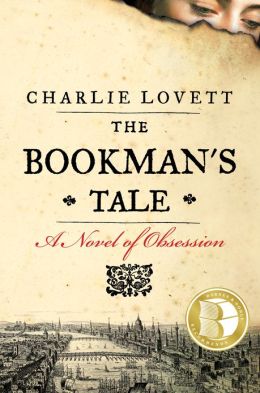
Review of Charlie Lovett's The Bookman's Tale

The Bookman's Tale by
Charlie Lovett

Our protagonist, Peter Byerly, is a young bookseller who caught the bibliophile bug at (the fictional) Ridgefield University in North Carolina. A scholarship boy with crippling shyness, his preferred work/study job was in the library, because he wouldn't have to interact with anyone. And yet that is where he meets the two great loves of his life: rare books and Amanda.

The story actually begins with Peter recently widowed, Amanda having died suddenly after they'd been married only six years. Heartbroken, Peter has fled North Carolina for the cottage in Kingham, Oxfordshire, England that he and Amanda had purchased the year before, and that workers had completed renovating and decorating, to Amanda's delightedly exacting specifications, weeks after her death.

Now, months later, Peter resolves slowly to return to his antiquarian book hunter/seller work. In Hay-on-Wye, the renowned city of bookshops in Wales, he discovers a portrait of Amanda slipped inside an old volume. But it can't be Amanda, because this is a Victorian-era portrait. The discover electrifies Peter. He must find out where this portrait came from.

A request to evaluate a local Kingham resident's manor-house collection of antiquarian books leads Peter on a quest for what he calls the Holy Grail: proof that William Shakespeare really was the author of all those plays and sonnets, rather than Marlowe, de Vere, Bacon or one of the other better-educated writers often claimed to be the more likely source.

Peter's two quests become a thrilling adventure, especially for readers fascinated by old books and their travels through time and the lives of their owners. Each chapter tells one of three stories: Peter's modern-day (1995) pursuits, his life with Amanda, and the chequered past of the grail book. The three yarns wind around each other skillfully, each part adding extra richness to the others, then converging in a deliciously satisfying way.

When I turned the last page of The Bookman's Tale, I was shocked to see it was 1:30 am. And still, though I'm very much an "early to bed, early to rise" person, I sat and thought about the book and wrote a review, not finishing up until after 3:00 am. It simply never occurred to me to think about the time while reading this tremendously enjoyable bibliographic detective story.

I'm not going to claim that The Bookman's Tale is high art, and crime fiction buffs will probably figure out the whodunnit side of the tale fairly early on, but it's terrific, old-fashioned entertainment, and you may be as obsessed about finishing it as I was.

Note: Versions of this review may appear on Amazon, Goodreads and other reviewing sites under my user names there.

Thursday, July 4, 2013

July 4, 2013


The Material Witnesses wish you a happy Independence Day 2013; the 237th anniversary of the declaration of our independence.


Wednesday, July 3, 2013

My Native Land

Independence Day baubles, bangles and beads are catching my eye everywhere I go. Already travelers are grousing about how long it will take them to get to their July 4th celebration. It is a memorable day, and in my family our annual ritual is to rewatch 1776, the musical.

When I was growing up in a far-away place, the Fourth of July was not exactly a day like any other, but of course it was not a holiday and I went to school as usual. But since I was an American citizen, through my parents, and there were many others like me we did celebrate. Our heritage was important to us and when we sang "The Star-Spangled Banner" we sang all four verses and we knew all the words. In fact, we knew all the words to a few other patriotic songs as well. We stayed connected while in our home away from home.
Breathes there the man, with soul so dead,
Who never to himself hath said,
This is my own, my native land?
Whose heart hath ne’er within him burn’d,
As home his footsteps he hath turn’d,
From wandering on a foreign strand?
(Sir Walter Scott)
There are American expats all over the place, and these days we like to remember our members in uniform among them. Martin Limón reminds us about the US Army in Korea in Slicky Boys.

George Sueño and his partner, Ernie Bascom, are both grateful to the army. What for? For George it is because he has a real life, money coming in, and a job to do. He and Ernie are CID investigators for the 8th United States Army in Seoul, Korea. They wear suits and do important work, something George never thought he would do growing up in East LA. Ernie's Chicago youth also left much to be desired.

8th Army PX
After work, these two friends and partners spend their free time in Itaewon, a seedy part of town filled with bars and businesswomen. On this occasion, they do a favor for one of the girls they meet and it results in the death of a British soldier. It turned out that he was a little shady, and as the CID investigators they need to find his murderer before they themselves are in hot water for perhaps leading him to his death.

Part of the investigation reveals connection to a widespread systematic thievery of the American enclaves. After the devastation of the Korean War 20 years before, people were desperate and starving. In the middle of these wastelands were American military settlements surrounded by barbed wire, and these were the only places with food, clothing and shelter. The people would barter with the GIs for the wealth they held, be it so small as a used bar of soap. Others were more aggressive, using thievery. "Slick boys" is what the GIs called them, and the Koreans softened it to "slicky boys." Many were exactly that; boys of 6 to 10 years old. They would slip through the wire and take anything that could fit in their pockets.

Itaewon
In George Sueño's time, they seemed very organized and he wanted to find out just how much. What he found impressed him, because in a way there was a certain honor, since the losses to the American compounds were always kept just below what the US Government allotted for. No greed was permitted. In this way, they also hid from investigations.

As Sueño's investigation proceeds, he feels that he is becoming wrapped in the tentacles of a giant squid. There are more brutal murders and the partners find far-reaching fingers in the pie, such as the North Koreans, the Korean Police, and the Korean and the US Navy. The case is dragging them down to the depths of evil. On the surface, at least part of the problem is the loss of military secrets.

Sueño has to lower himself to abide by the dictates of common thieves, but this did not really bother him. He was from East LA and he had been fighting his way up from the bottom all his life. His strength in his relations with the Koreans is that he is one of the few who bothered to learn the language, to learn about the culture and to understand the desperate circumstances that force people into certain ways of life.

Martin Limón takes us to a Korea that is fascinating, exciting and complex. He uses a bit of the history of the people he writes about to make us appreciate a very different culture that has suffered for the last centuries.

Peter May writes an excellent China series featuring an American pathologist who gets involved in unusual murders. The Fou4th Sacrifice is the second of the series.

In Beijing, one does not have to look far to find a contradiction or a contrast. There is one on every corner. The nearest street vendor might well be a learned ex-university professor who has been transformed by the cultural revolution into a producer of wonderful jian bing, a breakfast pancake, as well as riddles for Li Yan, a senior detective with the Beijing Municipal Police as he rides his bike to work.

"If a man walks in a straight line without turning his head, how can he continue to see everything he has walked past? There are no mirrors involved." asks Mei Yuan.

Today Li Yan has been called to what appears to be a ritual killing. A man had been beheaded, as he knelt with his hands tied behind his back with a silk cord. He has a placard around his neck with an apparent nickname on it, scored through by a single line and the number three. He is the fourth victim found in these circumstances.

The main difference is that this man is an expat American. He has returned to China after many years of living and working in the United States at a prestigious university and has taken a lowly job at the US embassy, going through visas. Another part of the mystery is that he is found at an apartment of his own, not the one given to him by the embassy.

US Embassy, Beijing
The American Embassy has requested that Dr. Margaret Campbell assist in the autopsy of the sacrificial victim. The Chinese are not especially happy about this, but they accept with good grace because Margaret Campbell has helped them before. They know that she sees things with a different and perceptive eye, which gives them a distinct edge in solving the crime. Li Yan, on the other hand is perturbed because he has had feeling for Margaret that developed during a previous case and had been warned that he must avoid any kind of a relationship with her.

Margaret does the postmortem on this last murder victim and does indeed open new avenues of investigation. She also begins to pursue a new relationship with an American archeologist working in China who is intent on soothing the feeling Li Yan has trampled. The American Embassy is interested in assisting in the investigation and wrangles Margaret onto the investigating team as well.

Another stress is placed on Li as his sister abandons her daughter and leaves her with him as she goes off to a secret location to have a forbidden second child, a boy. Li loves the little girl and is grateful that she does not suffer from a new Chinese syndrome known as "the little emperor"––quite commonly seen nowadays as the one child allotted to Chinese families is quite doted upon and very spoiled. These children are acting like––oh no!!––Western children. But at the same time, they are also growing up without cousins, aunts, uncles or extended families. The young men are increasing in preponderance, as girls are not wanted because they are seen as not being there to help in the parents' old age.

The answer to the street vendor's riddle is that the man is walking backwards. Just as to solve this crime, the investigators have to look to the past for clues to solve a murder that is based very much in the present.

Elizabeth Peters has a series involving another expat American. While it doesn’t capture the imagination like the Amelia Peabody series does, it is a lot of fun.

In Street of the Five Moons, corn on the cob and fireworks are theoretically not on the menu. Doctor Vicky Bliss is an art historian from the Midwest, specializing in medieval art and working at the National Museum in Munich. She is tall and eye-catching, so she has had to fight an uphill battle to have herself considered a brain rather than a beauty.

As the book opens, a dead man has been found on the streets of Munich, with a rare jewel sewn into his clothing. It appears to be an artistic masterpiece called the Charlemagne Talisman, one of the treasures of the museum. Except it really isn't. It is a near-perfect copy.

The important questions are, who made the copy and where did it come from? The next questions are, how was someone able to copy the piece so very perfectly and what was the purpose for it? Was someone planning to steal the museum's treasure and replace it with the copy?

These are the questions that appeal to the spy persona in Schmidt, Vicky's boss, and to Vicky herself. Schmidt convinces Vicky to take on the task of tracing the copy and finding out who made it––and what that person is up to. The beginning of the trail takes Vicky to Rome, to the Street of the Five Moons. It is here that she meets John Smythe, a mysterious man, and the fireworks begin.

Wherever you live may there be fireworks in your future!

Note: Versions of these reviews may appear on Amazon, Goodreads and other reviewing sites under my user names there.