Wednesday, April 9, 2014

The Perfect Travel Companion

I laughed when one of my friends wished she had somewhere to go, so she could listen to an audio book in the car. I know exactly what she means, though. Sitting in a moving vehicle for hours can be a treat if you have the perfect travel companion: entertaining enough to merit attention, but not so demanding as to make your head spin. While this also goes for the human in the seat next to you, let's focus now on books along for the ride.

Max Kinnings's Baptism (Quercus, 2014) is a minute-by-minute account of a London Underground train hijacking. Tommy and Belle Denning, religious fanatic twins, kidnap conductor George Wakeham's kids and thereby force him to stop the train in the tunnel between Leicester Square and Tottenham Court Road stations. The book is amazingly suspenseful. Initially, the 300+ passengers, with a few exceptions, don't know the train has been hijacked. Point of view varies among the Dennings; some of the Dennings' former associates; Wakeham and his wife, who is also on the train; MI5; and DCI Ed Mallory, the blind hostage negotiator. Unlike many thriller writers, Kinnings draws compelling psychological portraits of his characters. Graphic violence. Riveting; the hours will fly by.

There's a pleasing symmetry about reading a book involving a train while traveling by train. One of these days I'll devote an entire post to train settings, but in the meantime, let me tell you about I Married a Dead Man, William Irish's 1958 classic. Irish is one of the pseudonyms used by noir writer Cornell Woolrich. Woolrich was a master at creating an atmosphere of paranoia, and does he ever in this book about Helen Georgesson, a woman abandoned by her lover when she became pregnant. Helen is traveling across the country when she meets Patrice and Hugh Hazzard, newlyweds expecting a child. When their train crashes, only Helen survives. She decides to pass herself off as Patrice to Hugh's wealthy, grieving family, who have never met Patrice. Things get tough for Helen/"Patrice" when her old lover comes weaseling around.

If you like eccentric British characters, clever traditional mysteries, and witty language that makes you laugh out loud, Colin Watson's Flaxborough Chronicles are for you. In the first book, Coffin Scarcely Used, DI Purbright and Sgt. Love investigate a series of murders, beginning with unlikable newspaper editor Marcus Gwill, who is found electrocuted in his slippers, his mouth filled with marshmallows, and flower shapes burned into his palms.

All twelve books in this series are fun, but be sure not to miss Lonelyheart 4122, in which you'll meet lovely conwoman Miss Lucilla Edith Cavell Teatime, who signs up with a matrimonial bureau.
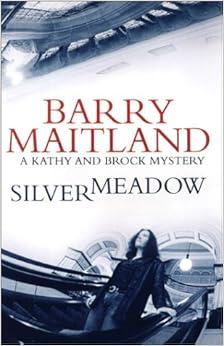
On the weekend before Christmas, robbers shoot two super-mall guards and disappear with a whole heap of money in Silvermeadow by Barry Maitland. Scotland Yard's DCI David Brock and Sgt. Kathy Kolla investigate the robbery, as well as the death of a young girl, which is tied into disappearances from the mall. I like the chemistry between Brock and Kolla, and I also like the information that writer/architect Maitland adds to his books. In this one, the fifth of the 12-book series (you don't have to read its predecessors to enjoy it), we learn about how malls are designed to encourage consumption.
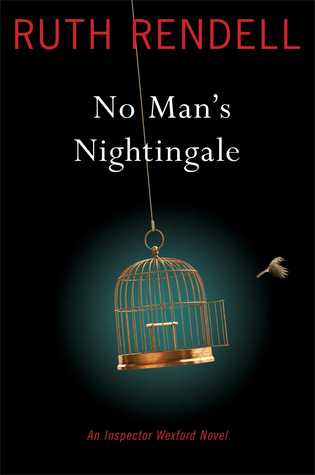
Ruth Rendell writes the excellent 24-book series featuring Chief Inspector Reginald Wexford. In the 2013 book, No Man's Nightingale (Scribner), Wexford has retired from the Kingsmarkham police force. Mike Burden brings him in as a consultant when the controversial vicar, Sarah Hussein, is murdered in her vicarage. This isn't among Rendell's best Wexford books, but it's still very enjoyable to spend time in the company of Wexford; Burden; Wexford's wife, Dora; and Rendell's other meticulously drawn characters.

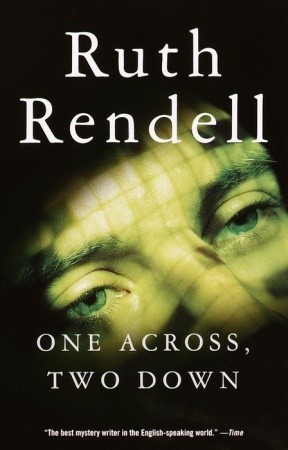
When I'm traveling by plane or train with my husband, we often work on a crossword puzzle together. We alternate between impressing and amusing each other with our right and wrong guesses. A good book après-crossword puzzle is Ruth Rendell's standalone of psychological suspense, One Across, Two Down. It features a no-good named Stanley Manning. Stanley is addicted to cross-word puzzles, and he can hardly wait for the mother of his long-suffering wife, Vera, to die so he can spend the inheritance.

Happy traveling, and happy reading!

Monday, April 7, 2014

Review of Vidar Sundstøl's The Land of Dreams

The Land of Dreams by Vidar Sundstøl

Over time, I have enjoyed reading authors who slip with ease into a different nationality and convince me to the core that they are native born. Donna Leon always comes to mind when I think of this skill. She is American by birth, but she demonstrates that she has a Venetian heart in her Commissario Guido Brunetti mysteries. Eliot Pattison is an American lawyer and author who has me totally convinced he is Chinese when he writes about investigator Shan Tao Yun, who began his fictional life imprisoned in a Himalayan labor camp after he displeased his superiors. I can't overlook Marylander Martha Grimes, who speaks with a distinctly British accent in her 22-book Superintendent Richard Jury of Scotland Yard series.

So I was exhilarated to come across The Land of Dreams, by Vidar Sundstøl (University of Minnesota, 2013). This is the first installment of his spine-chilling Minnesota Trilogy, and it is the flip side of what I was talking about. It is a book written by a Norwegian, telling an American tale with a Norwegian twist.

This is an account that begins on an ordinary summer day in the life of Lance Hansen, a U.S. Forest Service cop who patrols the area known as the arrowhead of Minnesota; the area located in the northeastern part of Minnesota on the north shore of Lake Superior, and it's so called because of its pointed shape.

Lance is better known to the locals as a historian and a genealogist with a great fount of knowledge about the origins and backgrounds of the local citizenry, who are predominantly Norwegian. Lance himself is of mixed ancestry, both Norwegian and French Canadian. He is a divorced man in his early 40s, who lives a solitary life. He sees his son, Jimmy, on alternate weekends and drives around with a picture of him taped on his steering wheel.

Baraga's Cross
There has been a report of a tent pitched illegally by Baraga's Cross on the shore of Lake Superior, and when Lance first gets there he comes across a lone white sneaker––and then a man covered in blood, whom Lance thinks is dead.

The man is actually in shock and when he speaks it comes out as gibberish, but Lance recognizes a Norwegian word–love. The man leads him to another man who had been bludgeoned to death. They are both nude.

Because this is federal land, the FBI agent, Bob Lecuyer, is in charge of the case. Eirik Nyland, a detective from the Norwegian police, also joins the team––bringing with him some Aquavit and lutefisk, which he has been assured is what everyone will expect as a gift from Norway.

This team approach is a good thing, because there has not been a murder in the area in recorded history. But Lance knows of the last man who disappeared in this same area about a hundred years ago. His name was Swamper Caribou, a well-respected medicine man of the time.

He was Ojibwe (known generally to the Europeans as Chippewa), and from what Lance has been able to piece together of the history, he is certain that Caribou was murdered, most likely by one of the small Norwegian community that existed at the time. But the secret of just what happened to Swamper Caribou has never been revealed.

Sundstøl spins a tale of Norwegian noir meeting Minnesota makeup––and by that I mean those qualities of Lance's that keep him evaluating all the threads tying his family, his community and his past and future together. He tries to balance what he knows with what he can tell.

There are some portions of this book that are somewhat historical and some that are entertaining travelogue, because the author incorporates real local eateries, bars, and activities such as a July Fourth celebration.

St. Urho
I loved being distracted by little historical vignettes, such as the one about a small town named Finland ensconced deep in the forest, which is inhabited by Finns, naturally. The first Finns who came to this beautiful area of the Baptism River Valley, uninhabited up until then, settled in. These early immigrants then sent home glowing reports to lure their friends and families to the north shore of Lake Superior. It was a fact that these letters contained not a single word of truth. The reality was that the land wasn't good for anything but growing potatoes, and even then there was no way to get the crops to market except piece by piece up and down steep slopes to Lake Superior.

Despite this, the Finnish community persists to this day and their main claim to fame is St. Urho's Day. Every year on March 16, the day before some minor saint is celebrated for driving snakes out of Ireland, St. Urho is celebrated for driving the grasshoppers out of Finland by saying "Grasshoppers, grasshoppers go to hell." According to Eirik Nyland, the people in Finland have never heard of St. Urho.

Some other parts of the book make us travel to some deeply troubled parts of the human heart and we may have to wait for our spirits to be lifted until the second part of the trilogy, The Dead, is translated by Tiina Nunnally. She does a wonderful job with The Land of Dreams.

While you are waiting, I recommend another taste of Minnesota which is just the opposite of noir, more like happy time. Take a side trip to Lake Wobegon (from the Indian "I waited all day for you in the rain"), Garrison Keillor's hometown, where the women are strong, all the men are good looking and the children are above average. Or slip down to St. Paul, where Keillor opened a bookstore in 2006 called Common Good Books and browse a bit there.

Keillor wrote this sonnet for the bookstore opening:
A bookstore is for people who love books and need
To touch them, open them, browse for a while,

And find some common good – that's why we read.

Readers and writers are two sides of the same gold coin.

You write and I read and in that moment I find

A union more perfect than any club I could join:

The simple intimacy of being one mind.

Here in a book-filled room on a busy street,
Strangers—living and dead—are hoping to meet.

skål

Friday, April 4, 2014

Review of Owen Laukkanen's Kill Fee

Kill Fee by Owen Laukkanen

People who say Kill Fee (Putnam, March 20, 2014) is implausible have a point. It's true that few already wealthy American businessmen will risk their necks moonlighting in violent crime, no matter how lucrative. But let's just assume only one greedy man among our wealthiest 1% seeks to fill the unmet demand for professional murder. That man could be much like Owen Laukkanen's Michael Parkerson, and he makes a dilly of a villain.

Parkerson is a dutiful husband and father at home, and an amoral executive who deals with "dollars, in and out" at his daytime workplace. He kids around with his secretary and attends a board meeting, even while sneaking in minutes on killswitch.com, the website forum for gun enthusiasts in which he anonymously and carefully handles orders for murder. Most of the time, Parkerson, who hates messes, manages to keep his own hands relatively clean. He does the organizing and planning while the dead-eyed "assets" do the actual work. (The despicable ways in which Parkerson recruits, trains, and manages these assets make a heck of a social statement.) Killswitch is several years old, and Parkerson is making a killing (sorry!) in profits. Things start to go wrong when Kirk Stevens and Carla Windermere witness Parkerson's asset, Malcolm Lind, shoot billionaire Spenser Pyatt outside a hotel in Saint Paul, Minnesota.

Stevens, of Minnesota's Bureau of Criminal Apprehension, and Windermere, a hotshot special agent for the FBI, have appeared in Laukkanen's terrific earlier books, The Professionals and Criminal Enterprise (see reviews here and here). They make an odd pair: Stevens is middle-aged, white, paunchy, and balding, while Windermere is young, black, and gorgeous. Because they work so well together at the exciting job of chasing criminals, they're attracted to each other. This is in spite of Stevens' happy home life as the father of two and husband of Nancy, a beautiful lawyer, and Windermere's fondness for Stevens' family. I am willing to buy this, but the extent to which they think about and discuss it in Kill Fee gets in the way of the plot and doesn't seem credible.

This is only a minor flaw, because Laukkanen writes thrillers whose action I can only liken to the completely head-spinning time I drove home from college in a Triumph Spitfire with a dachshund and a cat loose in the car. Shifting points of view crank up the tension: in Kill Fee, we follow Parkerson, unwilling to dismantle his profitable business, frantically trying to fix one Killswitch mess after another; several assets, including Lind, who attempts to avoid capture, yet stay on schedule, while trying to decide what to do about a pretty young Delta employee seeking to befriend him; and Stevens, Windermere, and her FBI colleague, Mathers, hot on the trail of the assets and trying to sniff out the man behind them.

This three-ring circus is made even more nerve-racking by the plot twists Laukkanen tosses in, his willingness to harm his characters, and the competing emotions generated by his villains. For the most part, they are ordinary Joes and Janes, who take to crime because they decide they need a lot of money, and then they find themselves in over their heads. Their human frailty, which Laukkanen emphasizes by showing how exhausted and beleaguered they are, makes us root for them despite our simultaneously rooting for them to be stopped. That said, I had little sympathy for the dastardly Parkerson, although no one could ever call that guy lazy, and a lot of sympathy for the assets, ordinary Joes in over their heads for other excellent reasons.

I also liked the people chasing Parkerson and his killers: Windermere, an attractive, ballsy woman who calls the shots; Stevens, a problem solver whose love for his family and fear of flying can't extinguish his excitement about the job; and Mathers, a young FBI agent who shows he can manage something other than Minnesota nice.

Like The Professionals and Criminal Enterprise, Kill Fee is teeth-rattling suspense and top-notch entertainment. It would be a perfect companion for a vacation or a long train ride, because you'll want to devour it in one or two gulps. After I read it, it made my day to hear Laukkanen is working on the fourth in this series. I can hardly wait.

Tuesday, April 1, 2014

Gleanings from the Golden Age

The Golden Age of mystery fiction is often defined as the period between the two great World Wars, although it actually lasted a little longer; from the late Edwardian period through the early Cold War Era. During this period, readers and writers in both Britain and the US went murder-mystery mad. Readers could not get enough of the authors' gentleman detectives and society ladies, as they turned their attention to the solutions of clever crimes that stymied the usually rather dull police. Classes were still well-defined; only gradually did the leveling effects of the first World War and the subsequent Great Depression erode the privileged status of the fortunate few. Today, these classic stories offer readers a glimpse into an age that looked golden indeed––at least for the wealthy few!

Most readers are familiar with Agatha Christie's Hercules Poirot and Miss Marple, the fastidious upper-class detectives of Dorothy Sayers and Ngaio Marsh, and John Dickson Carr's eccentric and curmudgeonly Dr. Gideon Fell. Many have chuckled over G. K. Chesterton's Father Brown, whose mysteries have been televised and are currently running on PBS. Josephine Tey wrote only a few mysteries, but her The Daughter of Time, The Singing Sands, and Brat Farrar are all unusual stories, among my favorite books. On this side of the pond, Erle Stanley Gardner churned out stories of Perry Mason and Bertha Cool, while Mary Roberts Rinehart kept readers enthralled with her romantic mysteries, and Ellery Queen and his father solved their tricky logic puzzles.

In addition to numerous novels and stories featuring her famous detectives, Agatha Christie also wrote a number of short stories about Parker Pyne, whose specialty was introducing a bit of mystery and romance into the lives of bored suburbanites. Most of these have been collected in Parker Pyne Investigates. Not murder mysteries, but if you have never read them, they are a charming treat. Almost uniquely among writers of this period, Christie was not a social snob; housemaids and struggling suburbanites were treated respectfully and sympathetically at her hands.

Have you ever heard of Clara Benson? I hadn't. Clara, born in 1890, wrote several mysteries featuring a society matron, Angela Marchmont, as protagonist. Clara wrote as a hobby, and passed her stories around among her friends. While they were good enough that friends urged her to publish them, she always declined, and it wasn't until 1965 that family members rediscovered her work and offered it to the public.

In The Mystery at Underwood House, Angela is begged by her friend Louisa Haynes to attend a semi-annual dinner with the extended Haynes family. The four children of the late Philip Haynes detested each other, but a stipulation in his will required the periodic meetings, which usually included their spouses and children. At each of the last three dinners, one of the siblings had died, apparently of an accident. Only Louisa's husband John is left, and Louisa is terrified for him. On each death, a large sum of money from the estate (the heirs had a life interest only) goes to the lawyer and executor, who is never present at the dinners. The story revolves around an obscure device in British law called a Secret Trust. Take a look at the Wikipedia description––it seems to offer the mystery author a number of delightful opportunities for crime and confusion. I'm surprised we haven't seen it used more often in Golden Age fiction.

Murders in these mysteries are always personal; the fictional psychopathic serial killer and drug-crazed random shooter or rapist are the products of a later and more cynical age. While the methods employed are clever and varied, readers of classic mysteries are not subjected to lengthy descriptions of skinned and rotting corpses, and forensics play a much smaller part than in today's crime stories. Most are fair play, which means that the reader is given all of the clues and can solve the mystery along with the detective. The supernatural, while sometimes invoked, is always a red herring, never part of the solution. Possibly the most satisfying thing about mysteries written during this period is that justice is always rendered in the end, usually––but not always––at the hands of the law.

Alan Hunter's series of police procedurals always makes me smile. DCI George Gently manages to appear both fuzzy and low-key, but his deductions are always strictly logical and based on his keen and unbiased powers of observation. His technique and success often manage to enrage local inspectors assigned to the case. Fortified with an unending supply of peppermint creams and accompanied by the rather dull Sergeant Dutt, Gently is sent for whenever a murder is too complex or politically hot for local police to solve. The author felt required to warn readers from the beginning that these are not typical whodunits, but tales of the painstaking building of evidence until a charge could be made. Many of the crimes he investigates take place on the beaches of East Anglia. Gently muses, 
"There seems to be some as-yet-undiscovered connection between coastal resorts and homicide, Dutt, have you noticed?... You mark my words, the sea has a bad influence on potential homicides, whether it's recognized or not."
A long-running British TV series was made of the Gently stories in the 1960s, starring Martin Shaw. I don't remember ever seeing it on PBS, but it is available on DVD for those interested.

Patricia Wentworth's Miss Maud Silver mysteries are very similar in mood and theme to Christie's Miss Jane Marple stories. Miss Silver, a governess turned private detective, is usually required to rescue a pair of innocent lovers, at least one of whom has been suspected of the crime. In The Chinese Shawl, Laura Fane has inherited little but a lovely country house from her parents. There is so little money that the house has been rented for many years to her remote cousin Angela, who had been engaged to her father at one time. When Angela's heir, beautiful Tanis, invites Laura for a visit, it will be the first time she has ever seen the house her father so loved. During the weekend the flirtatious Tanis is found murdered, a piece of the Chinese shawl Laura inherited from her mother clutched in her hand. Only Miss Silver, who seems to have educated many of the British upper classes in her governess days, can put the pieces together.

Until I began rummaging nostalgically around in this period, I had thought my supply of these gentle, civilized crime stories was exhausted. How wrong I was!  It will be a pleasure to search out, read, and share some of the dozens of lesser-known lights from this incredibly productive age.

Friday, March 28, 2014

Review of Robert Harris's An Officer and a Spy

An Officer and a Spy by Robert Harris

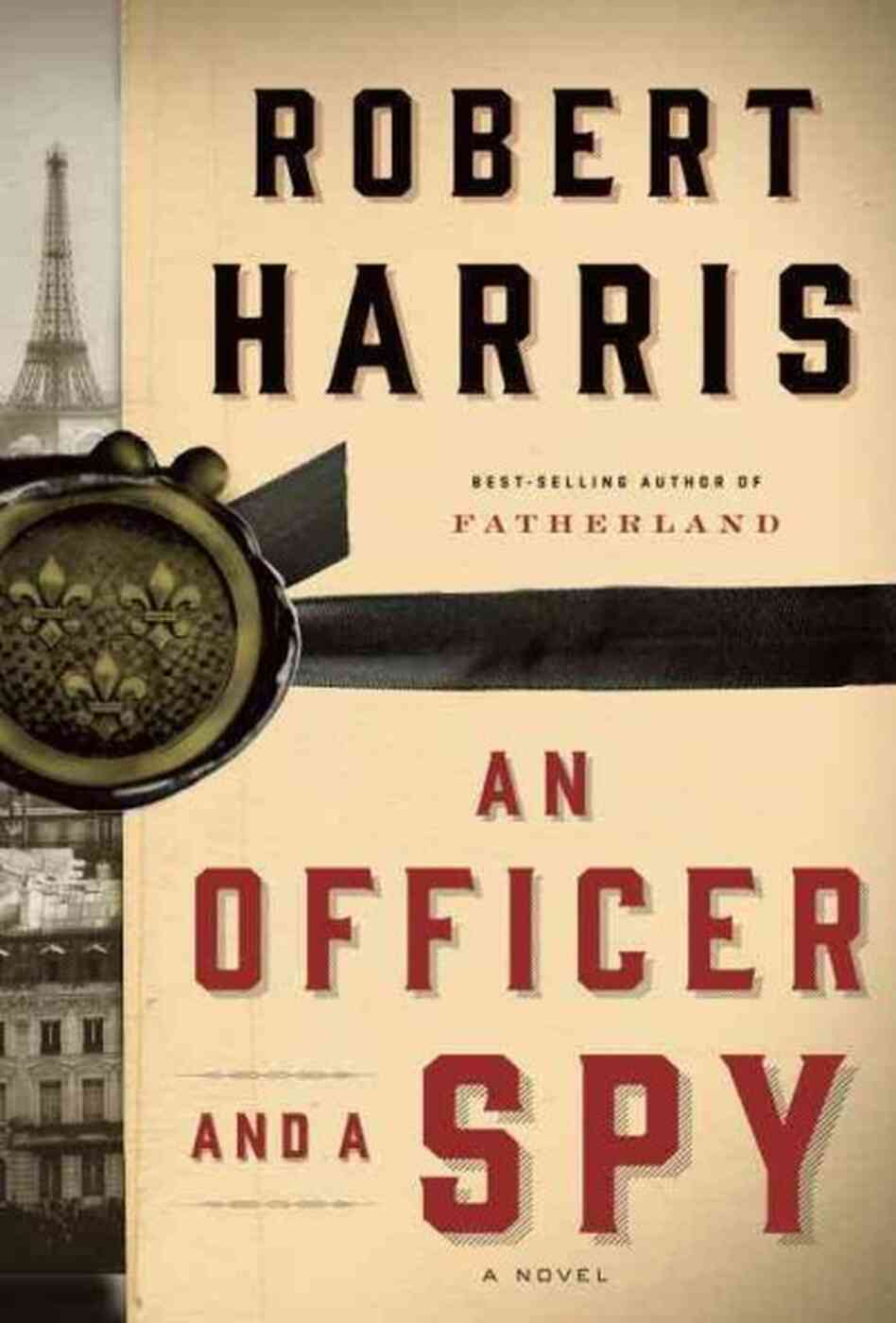
I knew the basics of the Dreyfus Affair, but what I didn't know is that the most interesting parts of the story happen when Captain Albert Dreyfus is offstage. First off, I should say that although An Officer and a Spy (Knopf, January 2014) is classified as fiction, author Robert Harris tells us that his goal is to use the techniques of a novel to retell the true story of the Dreyfus Affair. The characters and the events are real.

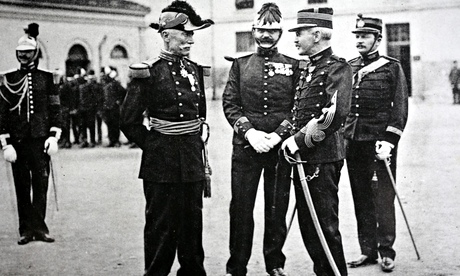
The central figure in this dramatic story is Colonel Georges Picquart. As someone who had become acquainted with Dreyfus some years earlier, when Dreyfus was a young officer training at the military college where Picquart taught, Picquart was present at Dreyfus's October 1894 arrest by the army on charges of passing secret military information to German agents. Picquart had no trouble believing in Dreyfus's guilt, in part because Picquart was an anti-Semite, as most soldiers were, unfortunately.

Dreyfus was convicted a few months later and sentenced to life imprisonment in terrible conditions on Devil's Island, 8,000 miles from France. He left behind a young wife, two small children and other family members who were determined to use the family's considerable wealth to exonerate Dreyfus.

None of this was of any particular interest to Picquart, until he was assigned, shortly after Dreyfus's conviction, to become the chief of the military's secret intelligence bureau, called the "Statistical Section." Almost by accident, Picquart soon discovered that the evidence against Dreyfus was almost nonexistent, but that there was good evidence that the real traitor was a womanizer, gambler and cheat, Major Walsin Esterhazy.

This is the set-up to what becomes a story that would be too unbelievable as an original piece of fiction. But it's only too plausible today, when we've become jaded by seeing how, all over the world, political, military, religious forces and their associates often place their own institutional interests above quaint concepts like truth, honor and justice. Dreyfus, Picquart and other individuals were just pawns in a chess game for the various institutions' visions of the future of France and its military. But chess game is putting it too politely. This was a game of double-dealing, dirty tricks, and possibly even murder.

The late 19th century was a time of ferment in France. The French Republic was in its infancy and besieged by monarchists, the Catholic Church and the military on one side, and socialists and anti-clericalists on the other. The Army, having suffered a humiliating defeat at the hands of Germany in the Franco-Prussian War of 1870/71, was rigid, hidebound and reactionary. The warring sides seized on the Dreyfus Affair to carry their messages, inciting a press war, whipping up the populace to riotous demonstrations and bringing the country to the brink of civil war.

Robert Harris, probably best known for his masterful novel of alternate history, Fatherland, has brought history vividly to life here. He slowly and deliberately establishes his story, but by about halfway through, events are rolling forward like a steam engine at peak running speed. Even if you already know exactly how the historical events unfolded, I think you'll find it as hard as I did to put the book down.

Harris's character portrait of Picquart paints him as more attractive than he probably was in real life. Harris doesn't make him an out-and-out hero, but he underplays Picquart's anti-Semitism as much as possible. He emphasizes that Picquart is an anti-clerical. I'm not at all sure there is much evidence for Picquart's anti-clericalism, but it helps illustrate the larger forces at work behind the Dreyfus case. And, although we don't get inside Picquart's heart and mind deeply, Harris so well describes the effect of him on the endless inquiries, trials and re-trials: "I am the founder of the school of Dreyfus studies: its leading scholar, its star professor--there is nothing I can be asked about my specialist field that I do not know: every letter and telegram, every personality, every forgery, every lie."

Harris also makes several of the Army officers almost comic-opera villains, especially Major Armand Mercier du Paty de Clam. Who knows, though; that may be accurate. Mercier du Paty de Clam (amazing name, isn't it?) was the officer principally responsible for identifying the officer who was passing secrets to the Germans. His choice of Dreyfus as the culprit seems to have been motivated by little more than Mercier du Paty de Clam's rabid anti-Semitism. And the apple didn't fall far from the tree. Mercier du Paty de Clam's son, Charles Armand Auguste Ferdinand Mercier du Paty de Clam, became Commissioner General for Jewish Affairs in the Nazi collaborationist Vichy government during World War II.

I wish Harris could have worked in more detail about the political ferment behind the events described in the book, but I recognize what a challenge that would have been. Despite not having that stronger historical foundation, and some possible oversimplification of the characters, this was a completely riveting read. It's the kind of book that will stay in my mind for hours or days to come.

Wednesday, March 26, 2014

Waiting for Spring

Hemingway
You could see the spring coming each day until a night of warm wind would bring it suddenly in one morning. Sometimes the heavy cold rains would beat it back so that it would seem that it would never come and that you were losing a season out of your life.  
                            ––Ernest Hemingway, A Moveable Feast

These days, hardly a week passes without the promise of another snowfall, and while I have been waiting for whatever is to follow storms Vulcan and Wiley, I have to hold myself back from sticking plastic yellow daffodils and silk flower lilacs in the ground to fool myself into thinking spring has sprung. But in the spirit of new beginnings, I have found several new series that are helping me pass the time.

The first is from Maurizio de Giovanni, who started his writing career in Naples, Italy, when he won a writing competition with a short story set in the 1930s about Commissario Luigi Ricciardi. He followed this up with a quartet of crime novels involving this extraordinary protagonist.

In the first book of the series, I Will Have Vengeance, Ricciardi is one of the most successful of the homicide detectives in the Naples police force. He is a man with no friends, no woman, no social life; just a bunch of scars on his lonely, tormented soul. Still, there is one of his co-workers who is genuinely attached to him, and that is Brigadier Rafaele Maione, his staunch ally and partner.

When he was just a boy, Ricciardi was walking in the woods when he saw a man sitting on the ground under a vine. There was a knife protruding from his chest and a puddle of dark fluid was on the ground. The man, who must have been dead, turned to Luigi Alfredo and said, "By God, I didn't touch your wife." Time stood still for the boy.

Later on, he always thought of the event as the Incident. He had more such incidents, but he learned to keep them to himself lest everyone think he was nuts. He accepted that he saw the dead. Not all of them, and not for long, and only those who had died violently. Even then, he saw the dead ones only for the short time, fraught with extreme emotion, as they revealed their final thought. Ricciardi felt that being a policeman was probably the only profession that could help him deal with the things he was seeing.

The action takes place during a bitter windy March in 1931 (I can sympathize), in an Italy that is struggling to come to grips with the changes brought by fascism. The police are particularly affected, because they have been told by the authorities that in a well-regulated society, there is no crime––since there is no need for it. Ricciardi, on the other hand, has learned from the Incident that hunger and love are the source of all atrocities––and he is not referring to the goings-on in the more famous Eden.

One evening at the Royal Theater of San Carlos during a double opera offering of Cavalleria Rusticana and Pagliacci, one of the foremost tenors in the world, Arnaldo Vezzi, is found murdered. Ricciardi, when he gets to the scene of the crime, has a few moments all alone with the victim and he listens to what the body has to say. In this case it sings, "I will have vengeance," some of the same words heard in the opera tonight.

Arnaldo Vezzi was adored by millions and hated by hundreds because he was arrogant, mean and brutal, but the powers that be are up in arms at losing such a famed Italian singer, and Ricciardi has his work cut out for him. In the end, I really wanted to introduce him to Harry Bingham's Fiona Griffiths, a Welsh detective who has something in common with him. She sees dead people too, and talks to them. She could pose the big question of whodunnit, and the corpse could give the answer to Ricciardi. These two detectives would complement each other beautifully and they could kiss their loneliness arrivederci.

If you liked other mysteries in the operatic vein, like Death at La Fenice by Donna Leon, Murder in the Pit by Erica Miner, Murder Duet: A Musical Case by Batya Gur, Barbara Paul's Opera series or Susannah Stacey's A Knife at the Opera, you might enjoy this story. It is, however, darker, more intense and very gripping. De Giovanni takes the reader back in time, with his descriptions of what ordinary life was like in this part of the world. He uses small details of hair grooming and clothing to help set the scenes in the days of the 1930s. I can't wait to get a copy of the next book, Blood Curse.

On the other hand, one person's spring is another person's dead of winter. Victoria Houston authors a series that plays out in the lake region of northern Wisconsin. When retired dentist Paul Osborne goes kayaking in late March, looking for likely fishing spots, he calls it spring. When I learned that it still dropped to ten below at night, I would have called it something else.

In Dead Angler, the first of the series, Paul is recuperating from the death of his wife, which had led him into an alcohol-fueled downward spiral. But now, in recovery, he has been tidying up his home that fronts on Loon Lake. Deciding to get rid of some fly-fishing gear that he had not used in a while, he takes it to a friend who convinces him to take up the sport again, and he sets Paul up for a few refresher lessons. His tutor turns out to be the recently-installed Chief of Police, Lewellyn Ferris, who just happens to be a female who can really show him a thing or two about fly fishing. The first thing Paul gets on his line, however, is a dead body, hardly recognizable, except that Paul thinks he recognizes the teeth. In his youth, Paul had been in the military and was experienced in forensic dentistry.

You guessed it! Paul teams up with Lew to help take a bite out of crime and the series is delightful, since it combines murder and mayhem with the poetry of fly fishing. On the breaks from investigating the murder, spending time in the water is the order of the day. Paul is reconnected with the harmony of nature, because he senses that only fly fishing can take you so close to the heart of the water. But he has a lot to learn. This type of fishing is defined by conventions more confusing than a game of bridge. The angler has to have an arcane knowledge of the life cycles of the insects hatching at that very moment––not 30 minutes earlier, and then select the perfect fly to match it.

There is a particular movement called "dancing the fly" in which fisherman chooses not to reel in, but to simply dance the dry fly across the currents to tantalize the big ones lurking below. Expert fly fisher that Lew is, she also uses this movement to lure the bad guys into giving themselves up.

Houston’s stories are original, with excellent plotting and while I am not in the mood to visit Wisconsin at the moment, I plan to trip my way through this series, because I've developed a small addiction to it.

If you are a fisherman, there is another series by Keith McCafferty that has a backdrop of fly fishing in Montana. It begins with The Royal Wulff Murders, which is a fantastic introduction both to the sport and this part of the country. It is endorsed by two of my favorite authors, Patrick McManus and Craig Johnson. The third in the series, Dead Man's Fancy, was published by Viking in January 2014. They feature Sheriff Martha Ettinger and Sean Stranahan, a fishing, painting PI.

I am taking heart from these words: "In those days, though, the spring always came finally but it was frightening that it had nearly failed." Ernest Hemingway, "Waiting on Spring," A Moveable Feast