Friday, February 21, 2014

Where, Oh Where, Has My Series Gone?

The Material Witnesses welcome back our friend Lady Jane Digby's Ghost with another guest appearance.

In my first guest post, I wrote about mystery series that I felt had "jumped the shark" and outlived their original promise. I gave some examples and readers submitted more series in the comments section. Now I'd like to write about mystery series that ended, but still had plenty of "oomph" in them. Again, the examples are mine and I do expect some disagreement.

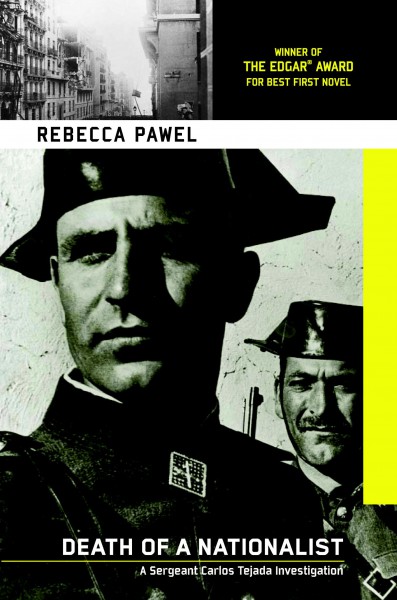
I'll start with a series I enjoyed 10 or so years ago. Young author Rebecca Pawel came up with a marvelous series set in Franco's Spain, right after the bloody Civil War. The first in the four-book series is Death of a Nationalist. Pawel's lead character, Madrid policeman Carlos Tejada, is part of the Nationalist Guardia Civil who finds himself investigating a murder of a suspected Republican. (Republicans, also called Loyalists, were loyal to the Spanish Republic, while Nationalists, led by Francisco Franco, overthrew the Republic in favor of an authoritarian regime.)

Tejada's investigation reveals a case much more complicated than a plain murder, and political ambiguities begin to appear. Rebecca Pawel is very daring in her use of a Nationalist as the protagonist, rather than a more conventionally sympathetic Republican. She continued her strong writing in three more books, the final one published in 2006.

And then Pawel stopped; nothing more since then other than an "Amazon single" e-book. I check the Soho Press catalog yearly to see if anything else is on the horizon, but . . . nada. (There was also a Tejada "single" self-published, which was disappointing, perhaps because it wasn't long enough to make much sense.)

One of my favorite authors is Rita Mae Brown. Now, I am a cat lover and am owned by two cats, but I don't read Brown's cozy series starring the tabby cat Sneaky Pie. I tend to be cozy-averse, but I do read her heavier series, set in Virginia and starring “Sister” Jane Arnold of the Jefferson Hunt Club. Brown, who is a Master of her Virginia hunt club, fills her books with dog breeding, horsemanship, local politics, and . . . murder. Usually, the culprits are easily teased out before the book's end, but her Sister Jane books are great fun. As I wrote in my first post, I love returning with an author to accompany old friends on new adventures. And so it is with Sister Jane and her crew, both human and animal. However, there are no new books in the offing.

(Also, and regrettably, Brown wrote two books set in Nevada; mysteries starring Magdalene “Mags” Rogers and her dogs, which I consider two of the worst-written books ever. Real stinkeroos, completely lacking Brown's usual strong sense of place and colorful, interesting characters. Don't buy them; don't read them. I'd like to forget that I ever did read them.)

Another police procedural/mystery writer I'm waiting for a new book from is Joseph Wambaugh. One of the best and toughest writers I've read, his four-book Hollywood Station cop-shop books are some of my all-time favorites. There really are no plots, to speak of, but his characters are brilliantly written. I'd love to return to Hollywood Station . . . but nothing new is forthcoming.

British psychologist Frank Tallis has written six books set in Vienna in the early 1900s. Starring Max Liebermann as a young psychoanalyst, and Oscar Reinhardt as a police detective, they team up to solve crimes that have baffled the Viennese authorities. The two are occasionally aided by Dr Sigmund Freud, who is mentoring Max Liebermann.

This is one of those series where you have to watch out for books having different titles in the UK and US. My concern is that it’s been a couple of years since the last book in the series, and the author's website appears to have been deactivated. I miss the Liebermann and Reinhardt characters, who use psychological know-how to solve crimes. I wish I could do the same to figure out whether and when they’ll reappear.

But along the same lines of the Frank Tallis Max Liebermann books is the new book, also set in Vienna in the early 1900s, by Richard Lord, called The Strangler's Waltz. I'm adding it to this list because it is part of the "Vienna Noir Quartet," though only Waltz has been published to date.

I sure hope Lord does continue with the series, and the remaining three books are published . . . and soon. The Strangler’s Waltz (Monsoon Books, 2013) is available in print and in e-book form, which is how I read it.

Why does an author stop writing a series? I suppose the author may have gotten bored with his characters, or the publisher sees a trend of declining sales and asks the author to try his hand at new characters. I think the five authors I've listed are all alive and presumably still able to write. The most curious example is Rebecca Pawel. She was young––in her 20s––when she wrote the Tejada books, which I felt were brilliantly conceived and written. Where is she? She had as good a future as I've seen for a young writer.

So, what series ended too abruptly for you? Give us some names.

Wednesday, February 19, 2014

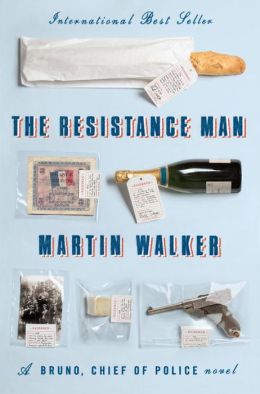
Springtime with Bruno: A Review of Martin Walker's The Resistance Man

The Resistance Man by Martin Walker

Ahhh, Dordogne on a spring morning, and Bruno Courrèges, Chief of Police in the picturesque village of St. Denis, is trying to teach his basset hound puppy that the chickens and ducks on his modest farm are neither food nor toys. While Balzac may be the most intelligent dog Bruno has ever known and can already sniff out truffles, his prey-seeking behavior still needs a lot of work.

Bruno's morning is interrupted by a phone call from Father Sentout, who has spent the night at the bedside of a dying man, a hero of the Resistance. Loic Murcoing had died clutching a beautiful antique banknote. Bruno has never seen its like, but the priest immediately recognized it as one from the daring train robbery at nearby Neuvic during World War II, when the men of the Resistance relieved their German occupiers of hundreds of millions of francs. To this day, it remains the greatest unsolved train robbery in history.

In Neuvic, according to the London Telegraph:
"No plaque recalls that right here, on July 26 1944, about 100 Resistance men pulled off the train heist of the 20th century, bagging the equivalent of £230 million [about $750 million in today's money] ... The train was ambushed at Neuvic at 7.38pm. By 8.15, two trucks carrying 150 sacks of money were making for a Resistance HQ in the forest near Cendrieux, 30 miles away. Official reports claimed the money was used legitimately. Historians and locals know better. Perhaps £50 million, perhaps more, evaporated. Political parties took handfuls and so did individuals."
(If you have ever thought, as I have, that some of the murders in the Bruno books seem unnecessarily violent, you might want to click on that link to the complete Telegraph article. There are some extremely tough people in this sleepy bucolic region, and they have very long memories––and knives.)

While Bruno is making arrangements for the appropriate funeral of a Resistance hero, he is notified of the break-in and theft of many valuable antiques in the chateau of a retired Englishman. This is the third such crime this month, but so far the police have no clue to the obviously professional criminals. This time, though, they have misjudged their target. Jack Crimson, the owner, is only recently retired from one of Her British Majesty's secret services. When another Englishman, an international antiques dealer, is found dead with his head battered almost beyond recognition, Bruno calls in the Police Nationale in the persons of Isabelle, Bruno's onetime lover, and her boss, J. J. Things are a little awkward for Bruno when Pamela, his current lover, returns from Scotland to find that Isabelle has returned, even temporarily.

While most of the Bruno mysteries include obscure bits of history and current politics, this one has a larger than usual and slightly bewildering number of characters and sub-plots. Bruno solves his current crimes and a long-ago one handily, but the true mystery of the train robbery and the missing millions remains, hélas, unsolved.

Of at least equal importance to the crimes and their resolutions in this series are the author's exquisite descriptions of the food and the meals, the quirky cantankerous residents and the evocative scents of fine cheeses and flowers that infuse all of these books. They keep me first in line, thrilled to read each new one as it comes out and sorry to have it end. It is a perfect way to enjoy a wonderful imaginary vacation in this seemingly endless winter as snow and sleet storms chase each other across the country.

Note: I received a free review copy of The Resistance Man, which will be released by Knopf on February 25, 2014.

Monday, February 17, 2014

Dazed and Confused on Presidents' Day

It's a state and federal holiday, but who knows exactly what we're celebrating today? It's Presidents, President's, or Presidents' Day. Here in California, we're honoring George Washington and Abraham Lincoln; if you live in Alabama, you might be saluting George Washington and Thomas Jefferson. Some parts of our country are generously honoring everyone who's ever held the office of United States President.

At Read Me Deadly, we'll focus on George Washington; however, we'll observe the confusion that's become traditional to the day. In other words, don't expect me to make perfect sense.

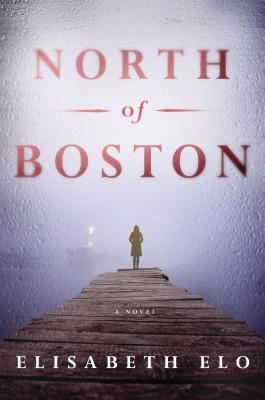
To honor Washington's military leadership during the American Revolution, you could read David McCullough's nonfiction book, 1776. Alternatively, you could strip off your clothes, close your eyes, and visualize Emanuel Gottlieb Leutze's 1851 painting of Washington's Delaware River crossing on Christmas night, 1776, before the Americans surprised the Hessians at the Battle of Trenton. Now, sing Yankee Doodle while you fill the bathtub with cold water and ice cubes. Clamp your teeth to stifle shrieks that would alarm your dog, and slip into the water with a mug of hot-buttered rum in one hand and the book of suspense perfect for today, Elisabeth Elo's North of Boston (Pamela Dorman Books/Viking, 2014), in the other hand. In the book, Boston perfume company heiress Pirio Kasparov does what few people could do: she survives four hours floating on a piece of wood in the frigid Atlantic after her friend Ned Rizzo's new lobster boat is sliced in half by an unidentified freighter. Pirio is rescued by the Coast Guard, but Ned is never found. As her father says, Sam Spade wouldn't let his friend go unavenged, and neither should Pirio. And, how can Pirio look Ned's young son, Noah, in the eye if she doesn't find out who killed his father?

I wanted to read this book as soon as I saw its synopsis, but I wasn't expecting the story-telling talent of first-time writer Elo. Pirio, who narrates, spent her rebellious childhood enduring punishment at boarding school. Now, she has complex relationships with people who seem real: her beautiful, enigmatic mother, dead since Pirio was 10; her self-absorbed Russian immigrant father and his second wife, whom he doesn't love; geeky Noah and his irresponsible, alcoholic mother, Thomasina, whom Pirio has known since boarding school; and her ex-lover, John Oster, a fisherman friend of Ned. This is a book that combines a quest with the examination of childhood memories, the compromises of growing old, and oceanic environmental issues. Pirio could have hired a private eye to look for Ned's killer, but that would have been a whole lot less fun. She's tough, smart, and tenacious—I hope we see more of her.

At first glance, the reason for reading Martha Grimes's satire, The Way of All Fish (Scribner/Simon & Schuster, 2014), to commemorate Washington may not be apparent. Trust me. Fish (you do remember the Delaware River, right?), the British (Washington fought 'em for our independence, and Grimes, an American, is famous for her series books named after English pubs, although this book is set in New York), hit men (think guns and the death of war), the world of publishing (Washington chopped down that cherry tree when he was a kid, and we all know trees turn into paper and books), and convoluted plots and lies (Washington didn't tell a lie when he confessed to felling that tree, but the truth is, he probably didn't chop down anything). We'll skip further sketchy evidence that Grimes's book is suitable for Presidents' Day and go directly to its first paragraph:

They came in, hidden in coats, hats pulled over their eyes, two stubby hoods like refugees from a George Raft film, icy-eyed and tight-lipped. From under their overcoats, they swung up Uzis hanging from shoulder holsters and sprayed the room back and forth in watery arcs. There were twenty or so customers—several couples, two business-men in pinstripes, a few solo diners who had been sitting, some now standing, some screaming, some crawling crablike beneath their tables.

Nobody got shot; it was the Clownfish Café's aquarium that exploded. Candy and Karl, contract killers whom we met in 2003's Foul Matter, had tailed literary agent L. Bass Hess into the café (Candy and Karl insist on getting to know a mark before they decide whether he deserves killing), and exchanged gunfire with the fleeing shooters. When they re-holstered their guns, they followed the lead of a blonde woman who had been reading and eating spaghetti alone. She tossed the wine out of her glass, filled it with water, and saved a fish. Pretty soon all the aquarium's fish were swimming in glasses and water pitchers, and Candy and Karl had a new interest: clown fish.

They are further interested when they discover the beautiful blond is the target of an outrageous lawsuit by Hess, who says she owes him money for a book written two years after she fired him. Candy and Karl decide to kill two birds with one stone: they'll neutralize (but not kill) Hess and rescue poor, innocent Cindy, who's been suffering from writer's block and victimized by lawyers, who may not be working entirely on her behalf. This involves recruiting Foul Matter's publishing titan Bobby Mackenzie and best-selling thriller writer Paul Giverney, and a host of other characters, such as a weed smoker who wrestles alligators in Florida during tourist season and a brainy Malaysian femme fatale so interested in the scheme that she's almost willing to work for free. If you haven't read Foul Matter, the references to that book's plot are a little confusing, but you're all smart people, capable of figuring it out, and, if you can't, well, President's, Presidents', or Presidents Day is a little confusing, too, and we're not talking about how you absolutely must understand this to the letter—we're not building a nuclear bomb here. Writer Grimes obviously had fun writing it, and I had fun reading this entertaining satire.

Happy holiday, no matter how you spell it or whom you're celebrating.

Friday, February 14, 2014

I See Dead People: The Fiona Griffiths Series


Awhile back, I complained that there weren't enough strong, smart, sassy female protagonists in crime fiction. Scratch that! I've definitely found one: Harry Bingham's young Detective Constable Fiona Griffiths, part of the Cardiff, Wales police force.

The series begins with Talking to the Dead (Delacorte, 2012), and the second, Love Story, with Murders, hits the shelves on February 18, 2014, from Delacorte. Because the books are first-person narratives, we experience the plot from inside Fiona's head, which is a weird and wonderful place.

Sometime in her childhood, Fiona suffered a deeply traumatic event, but exactly what happened is buried deep in her subconscious. Like a virus, though, it flares up from time to time, and in an unusual way. Fiona's post-traumatic stress flare-ups take the form of Cotard's syndrome, a condition in which dissociation and depression combine to make her lose touch with her physical and emotional feelings, turn the world into shades of gray and, at its worst stages, make her believe she is literally dead.

When I first heard about this new series featuring a lead with such an bizarre condition, I was dubious. I thought this sounded like too much of a gimmick. But author Harry Bingham doesn't fall into that trap. Fiona's condition isn't something that her co-workers even know about. They definitely think she's odd, but that's because she's a Cambridge University graduate, often seems to be in never-never land while she's thinking, has a contrary and smartarse personality, and a real knack for pushing other people's buttons––even people a lot higher up in the police hierarchy.

Readers only know about Fiona's condition because we hear her thoughts. Even though she's doing her best to be at resident of "Planet Normal," as she calls it, she knows that other detectives don't relate to, and even commune with the dead, as she does. She can sit with a murder victim's corpse (or even parts of one––yikes!) and feel the energy. Surprisingly, it's not usually a dark energy.

The way Fiona sees it––though she doesn't share her philosophy with her colleagues––the murder investigation isn't "only about finding the killers, but about giving peace to the dead. It's not primarily a question of justice. The dead don't care about that. The murder investigation, arrest, and conviction are just part of the funeral rite, the final acts of completion. Gifts I bring to the dead in exchange for the peace they bring me. The peace of the dead, which passeth all understanding."

Fiona is quite a bit nicer to the murder victims than to many of the living she encounters. While on a house-to-house search: "We do gardens. We're asked seven times if we want tea, and are told six times to be careful of various tedious-looking plants, which I make a point of standing on when no one's looking."

She's not a fan of profiling: "[P]sych briefing[s] . . . are normally mind-numbingly stupid, amounting to little more than 'I think your killer may not be quite right in the head.'"

You won't be surprised that she can be a handful for those on the wrong side of the law. She has an Israeli friend who taught her hand-to-hand combat methods and she doesn't hesitate to treat any threatening bad buys to broken noses and jaws, cracked kneecaps and severe damage to their nether regions.

Fiona is also a refreshing contrast to your all-too-common unsocial detective protagonist with a laundry list of bad habits. She has a loving family, a boyfriend (Detective Sergeant Buzz Brydon) she's getting serious with, and the only beverage she abuses is peppermint tea. True, her father has an inches-thick police file detailing all the organized crime activities he's suspected of having presided over for the last few decades. But at least he has no convictions and he's always happy to help the police with their inquiries.

Alright, enough about Fiona for a little bit. Let's talk about plots. In Talking to the Dead, Fiona is slogging through accounting records as she prepares for the trial of a former cop, Brian Penry, for financial fraud. That gets put on the back burner when the call comes in reporting the bodies of a young woman and her child found murdered in an abandoned house. Why was the ATM card of a very wealthy man, Brendan Rattigan, found in the house? Was the young woman a prostitute? Is her death related to Rattigan's spectacular death many months before?

In Love Story, with Murders, Fiona is on a team investigating a sensational case. A young woman's leg has been found in the garage freezer of an old lady who recently died. Next thing you know, more bits and pieces are found scattered all around the neighborhood, in the oddest places. Things get even stranger when another dismembered corpse is discovered. Are the two murders connected?

When Fiona's not putting in overtime hours on the murder/dismemberment case (which the team, with macabre humor, privately calls Stirfry), she has two other cases occupying her time––and a whole room in her house. Since her parents don't want to talk about the past, she's decided to investigate herself and find out just what happened to her as a child that left her so traumatized. She's also still pursuing the case that was officially wrapped up in Talking to the Dead. In her view, there were a lot of people on the periphery of that crime who need to be held responsible, and she's going to find out exactly who they are.

Though these books are strongly character-driven, both are also satisfying police procedurals with big splashes of heart-thumping action. Without falling too deeply into the too-stupid-to-live trap, Fiona manages to get herself into some life-threatening jams that had me re-thinking giving up biting my nails. I was taken with Fiona's James Bond-ian ingenuity in extricating herself from peril.

Although the crimes in these books are violent and quite often against women, Harry Bingham doesn't shove gore and brutality in the reader's face. He takes these crimes seriously, but he respects the victims and the reader too much to wallow in detailed descriptions of that grimness.

One final pleasure of this new series is the setting; principally Cardiff, but also quite often in its suburbs and in the Wales countryside. It's a treat to read about these settings and those wild Welsh names, like Cyncoed, Capel-y-ffin, Pen-y-Cwm, Brian ap Penri. I'm ready for another visit to Cardiff, and Fiona, whenever Harry Bingham can deliver.

Note: I received a free review copy of Love Story, with Murders. Versions of this review may appear on Amazon, goodreads and other reviewing sites under my usernames there.

Wednesday, February 12, 2014

Review of Peter May's Entry Island

Entry Island by Peter May

As I watch the intrepid athletes compete in the Sochi Olympics, I know that some would give anything for a "do over." It is a fantastic concept, but it is one that is only acceptable in children's games––and then only when played among forgiving friends. Real life is not forgiving. On the other hand, in fiction the rules can be bent and sometimes downright broken! Peter May teases us with this notion in his latest book Entry Island (Quercus, 2013).

"There has been a murder on the Magdalen Islands, out in the Gulf of St. Lawrence," are the first words that Sime Mackenzie hears after another tortuous night of twisting-and-turning insomnia. He is to be part of the investigation team sent from the Montreal police. This was the first murder in these islands since living memory. It took place on l'Île d'Entrée, better known to its inhabitants as Entry Island.

The Madelinots are French-speaking for the most part, but on Entry Island they speak only English. This explained Sime's inclusion on the team, because he was equally at home with French or English. Entry Island is about 900 miles from Montreal, although it is still part of the province of Québec. The police team must make the final leg of the trip by boat.

The victim, James Cowell, was a native of the Islands (called the Magdalens by the French speakers and the Madeleines by the English speakers) and a wealthy businessman who, among other things, ran half the lobster boats in the Madeleines. His wife Kirsty claimed there was an intruder in a mask who attacked her and, when Cowell came to help her, he was stabbed several times.  Most of the team thinks this will be an open-and-shut case, but Sime is unsure because, for one thing, Kirsty looks very familiar to him and she does look as if she has been beaten up.

Sime (pronounced Sheem) is not at the top of his game, because his personal problems are overwhelming him in his sleepless state, and when he does sleep, he is disturbed by vivid recollections of stories read to him by his grandmother, triggered by meeting Kirsty. His grandmother read these stories from an old family journal written by a Simon Mackenzie, written in the mid-1800s when the lands in the Outer Hebrides were being cleared of the starving, poverty-stricken Scottish sharecroppers by the English lords so they could raise sheep. What was it about this remote location that was triggering these memories of the Highland clearances?

There wasn't much on Entry Island except a dwindling population of about one hundred people, a few stores, a church, a school and a post office. So when Kirsty claims she has not left the island for 10 years, and says she never wants to leave, no one believes her. And since the area is so hard to get to, the police doubt the talk about an intruder.  The spotlight is focused solely on Kirsty, particularly when there is another disappearance and possible death of another of the island's inhabitants.

Remnants of a hurricane are barreling down on the islands, and the weather becomes a character in itself as it wreaks havoc, with mighty and furious winds and burning, spitting rain. Entry Island is temporarily cut off from the world as it hunkers down in the storm. I myself felt cold, damp and miserable as I was caught up in the descriptions of the tempest.

Peter May has written several very successful series. His first featured Li Yan, a detective in the Beijing police who has partnered with an American pathologist, Margaret Campbell, to solve some very unusual cases. Then May moved onto France, where Enzo Macleod, a Scottish biologist, took on several amazing cold cases. My favorite series has been the Lewis trilogy, in which Fin Macleod, a Detective Inspector in Edinburgh, returns to his birthplace on the Isle of Lewis in the Outer Hebrides of Scotland.

Entry Island is somewhat of a departure for Peter May, because the murder mystery takes a back seat to the history of the settlement of some of the Madeleine Islands. There is a focus on the very bad old days of the times between the forced dispersal of the Scots to the New World and the difficulties the immigrants faced when their welcome was not to be counted on. The story moves on at a slow pace, as Sime has repeated flashbacks to the days of his ancestors. I believe May's descriptions of the injustices and the inhumanity of the past kept my blood on the boil. It was due to the same Scot in me that makes me shiver when I hear the bagpipes.

Despite an exotic location and the distinctive individuals involved in the crime, the motives for murder are not that unusual. Sime Mackenzie faces a conflict between his professional duty and his personal desires and he is led down a path he could never have foreseen. If you enjoy your crime novels with connections to another time this book would be a great addition to a TBR pile.

Friday, February 7, 2014

Competitive Reading, the Other Olympic Games

I am the absolute worst at noticing that a holiday or special event is coming up, and thinking of mystery books that relate to that event. I think my more with-it compatriots here might be having an effect on me, though. It suddenly occurred to me last weekend that today, February 7, would be the date of the Opening Ceremonies of the Winter Olympics, and that suggested the obvious theme post.

Even though I couldn't think of any Olympics-themed mysteries off the top of my head, other than several books set at the infamous 1936 Berlin Olympics, I figured there must be a lot of them. After all, look at some of the sports, like the biathlon, with skiing and shooting. What could be a better set-up for a mysterious crime? If you move to the summer, how about archery, the javelin and the hammer throw? Limitless opportunities for a landscape(or competition field) strewn with dead bodies.

How about curling? That rock would make a heck of a classic blunt object, wouldn't it? I don't know, though. Curling seems to be most popular among people in the upper Midwest and midwestern Canada; areas legendary for their nice people. Just ask Garrison Keillor or Google "Minnesota nice."

Those judging panels for gymnastics and skating have always seemed like hotbeds of scheming and sabotage to me. And remember back when the Cold War would be played out in microcosm by the judges' scores? That would make an excellent scenario for an espionage novel, possibly complete with a defection.

Tonya Harding and Nancy Kerrigan
Figure skaters themselves have been known sometimes for their cutthroat behavior, and I can imagine "death spiral" taking on a whole new meaning in that environment. Alina Adams has a mystery series with a figure skating theme, but it looks like none of them take place at the Olympics. It may be just as well, since I doubt fiction could top the real-life shenanigans back in the Tonya Harding/Nancy Kerrigan era!

In spite of this wealth of possibilities, I didn't find as much as I expected when I went looking for Olympics-themed mysteries.

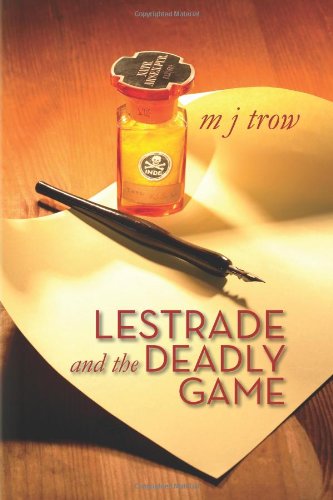
M. J. Trow's lengthy Lestrade series features Arthur Conan Doyle's Inspector Sholto Lestrade, whose name you'll recognize as often-reluctant colleague of Sherlock Holmes. In the seventh book of the series, Lestrade and the Deadly Game, it's 1908 and the Summer Olympics are coming to London. Lestrade is investigating the ostensible suicide of an aristrocatic athlete. Why would he commit suicide just before the Olympics, though? Well, he didn't. And soon, other British athletes are becoming murder targets.

Robert B. Parker's Spenser novel, The Judas Goat, takes Spenser on a globe-trotting quest to track down bombers who killed his client's family. The novel's thrilling close takes place at the 1976 Montreal Olympics. Recent reviewers write that despite this book's having been written over 30 years ago, it's aged well and is a classic early Spenser.

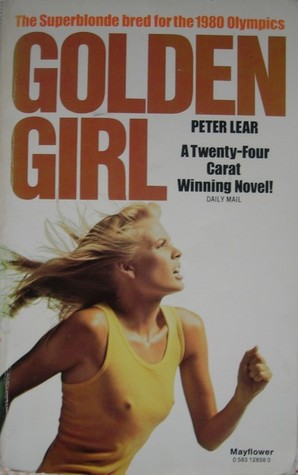
I had no idea that Peter Lovesey had written an Olympics-themed novel. This was in 1977, before he became well known, and he wrote the novel, titled Golden Girl, under a pen name, Peter Lear. In this era of nonstop scandals involving athletes using performance-enhancing drugs, you might be surprised to find that as a theme in a novel over 35 years old.

The "Golden Girl" of the title is Goldine Serafin, the adopted daughter of a physiologist who uses her as his guinea pig to prove his theories about developing superhumans. Not so much a daughter as a human experiment, Goldine is subjected to grueling training, psychological manipulation, electric shock, hormone treatments, and surgery, all as part of Serafin's plan for her to win three gold medals in track and field at the 1980 Moscow Olympics and gain massive publicity for Serafin.

This is more of a sci-fi-ish thriller than a mystery, and was adapted into a 1979 film of the same title. The film starred model Susan Anton and earned a favorable review from Vincent Canby in The New York Times.

Emma Lathen (the pen name for Mary Jane Latsis and Martha Henissart) wrote the long-running John Putnam Thatcher series, featuring a senior VP of the mega-bank Sloan Guaranty Trust. Number 18 in the series, Going for the Gold, is set at the 1980 Winter Olympics in Lake Placid. Thatcher is on the scene because Sloan has established a temporary branch at Lake Placid, and he finds himself with a double-barreled problem when the bank is robbed and a French skier is shot during competition.

The 1936 Berlin Olympics are arguably the most infamous in the Games' history. The Nazis had been in power for just a few short years and wanted to show their best face to the world. Anti-Jewish propaganda was toned down temporarily and the game sites were covered with Nazi flags, uniforms and gaudy demonstrations of the supposed superiority of the new order in Germany.

As you might imagine, there are many mystery and thriller novels set at the 1936 Berlin Olympics. Philip Kerr has used it in two of his Bernie Gunther novels, March Violets and If the Dead Rise Not. Rebecca Cantrell has her journalist Hannah Vogel in attendance in A Game of Lies. David John's Flight from Berlin is a thriller pairing a British journalist and an American swimmer whose circumstances are similar to the real-life Eleanor Holm, that party girl whose antics got her booted off the US swim team but who was so popular with the press that she joined them in Berlin. Both Flight from Berlin and A Game of Lies feature the famous Hindenburg zeppelin as well.

Well-known sports writer Frank Deford's Bliss, Remembered is a love story, not a mystery or thriller, but its female lead is also based on Eleanor Holm. Jeffery Deaver's Garden of Beasts tells the story of mob killer Paul Schumann, who is caught by the feds and given the option of prison or doing a secret hit for his country. Schumann masquerades as a journalist reporting on the Olympics, while his real assignment is to kill the architect of Germany's secret rearmament plans. Don't confuse this book with Erik Larson's In the Garden of Beasts, the stunning nonfiction story of a diplomatic American family in Berlin in the early days of the Nazis' coming to power.

There are other Olympics-themed mysteries, of course, but not all that many. The good news is that leaves the field wide open for when you want to write your thriller about poison-pen attacks on figure skating judges, a deadly tampering of a bobsled, use of an icicle as a deadly weapon, or whatever nefarious scheme your murderous imagination might devise. Or you could just watch the actual Olympics over the next couple of weeks and see some criminally bad costume designs.

Tuesday, February 4, 2014

Career Options for the Criminally Inclined

Despite the slowly recovering economy, career opportunities for ambitious and unscrupulous new graduates are not very inspiring. The get-rich-quick, get-out-first opportunities of the 1990s and early 2000s collapsed with the big banks and the sub-prime mortgage scandals.

Good hacking skills won't even guarantee a steady job with the NSA anymore, and all the more lucrative credit and bank card hacks seem to be coming from overseas. What's an aspiring criminal to do? The recent proliferation of books, both biographical and fictional, written from the criminal's perspective provide some interesting, if usually disastrous, suggestions.

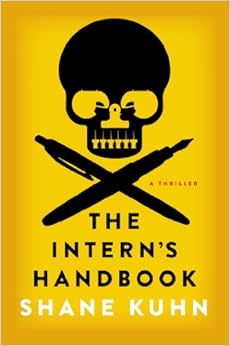
The Intern's Handbook by Shane Kuhn

At 24, John Lago is pushing the age limit for his extended career as unpaid intern and very well-paid assassin in some of the country's top corporations and law firms. He had been plucked from the juvenile justice and foster systems half his lifetime ago by Bob, founder and president of HR Inc., a very special staffing service. During the course of this, his last job for HR, John decides to write a manual for all the bright-eyed, trigger-happy hopefuls who will follow in his career path, taking them step-by-step through this last case.
"At the very least, you're embarking on a career that you will never be able to describe as dull. You'll meet unique and stimulating people from all walks of life. And kill them...
This work isn't for everyone. Most of you are going to find this out the hard way because you'll be dead by the end of the month. And that's still the training phase."
This particular job has an unusual wrinkle: John doesn't know which of the three senior partners at the prestigious law firm is his target. One of them has obtained a list of people in the FBI Witness Protection Program and is offering it to the highest bidder. Quite a brisk underworld auction is in progress, and John, with the help of HR's extensive resources, must identify and eliminate the seller before the list changes hands.

This is a fast moving, darkly humorous story, reminiscent of much of Christopher Moore's work. The author has written professional screenplays, and his visual background is apparent in the movie-like action scenes. Despite the story going a little off track for the last few chapters, as the final set of betrayals played out, I enjoyed it very much, but can't recommend it as an easy or pleasant path to career success. As part of his cover on various jobs, John has had to pass the bar exams four different times. Not the kind of skills you can readily pick up from video games!

Shane Kuhn is a co-founder of the Slamdance Film Festival which showcases independent film productions. The Intern's Handbook (UK title Kill Your Boss) is his first published novel.

Almost Criminal: A Crime in Cascadia Mystery by E.R. Brown

At 17, Tate MacLane can see no way out of the little town of Wallace in British Columbia. A bit of a prodigy, he had started college on a full scholarship at 15, but blew the scholarship and was sent home to his mother and younger sister. Elsbeth Templeton, or Beth, as both of her children call her, is an artist of some note, but little wealth. Just as her career was taking off, she developed cancer and couldn't paint for over a year. Tate, home from college, is now the sole support of the family. His job as part-time barista at Human Beans, the only coffee shop in town, isn't enough. He desperately wants another shot at college, but sees no way to accomplish it.

One day, a well-heeled regular customer asks Tate to secretly deliver a letter to a woman at another table. He leaves the envelope and a $20 tip. Randall Kennedy's yellow Porsche begins to appear regularly at the coffee shop, the driver always ordering his macchiato while surreptitiously checking Tate out. Kennedy appreciates Tate's care with his coffee, and gradually eases the boy into his business.

The countryside around Wallace is host to a number of marijuana growing sites. The draft dodgers of the Vietnam era who fled to Canada brought the habit and seeds with them. While they keep a low profile, marijuana use for medical purposes has been legal in Canada for a number of years, and more recently in several US states.

Kennedy runs a boutique marijuana operation; he is as much a perfectionist about his weed as about his coffee. He ships his specialty seeds all over the world via internet sales. The biker gang that controls distribution in that area is not too greedy, and there is no violence until the impending wider legalization in the US brings a bigger, nastier, and more professional set of thugs into sleepy Wallace.

This is not a story of addiction––few of the major characters in the book even use marijuana except very casually, but the economy of the entire area is heavily dependent on the product. From growing and harvesting, to packaging and running product, to laundering the cash, Tate learns that nearly everyone he knows is involved in some way. Unlike The Intern's Handbook, which cannot be considered anything but satire, Almost Criminal seems completely plausible. How many ignorant, impatient young people get slowly sucked into situations like Tate's and can't find their way out? Their stories can be read on police blotters and seen in chalk outlines on the evening news any day, in any community. A very poor career choice, but one that too many kids are choosing, for a variety of reasons.

Almost Criminal (Dundurn, 2013) is E.R. Brown's debut novel, and has been shortlisted for the 2014 Edgar Award for Best Paperback Original. I hope it wins; it offers a disturbing and honest look at a problem as huge and intractable as Prohibition was to an earlier generation.

Note: I received a free review copy of The Intern's Handbook, which will be released in the US by Simon and Schuster on April 8, 2014.